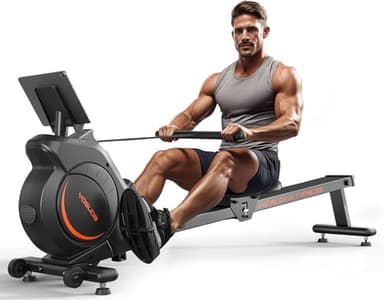
We earn a commission if you buy through the links on this page, at no cost to you. It has no effect on what we recommend or the order we recommend it in — we say “skip this one” on machines that pay us the same as the ones we like. How we’re funded.
There are 34 rowing machines on this site, from a $130 hydraulic machine that weighs less than a bag of shopping to a $2,200 connected rower with a 22-inch screen. Most of the difference between them comes down to four decisions, and if you make those four correctly the specific model matters much less than the internet suggests.
Decision one: where will it live?
This eliminates more machines than anything else, and it is the one people leave until last.
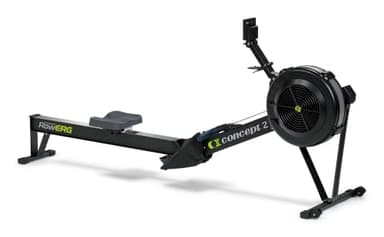
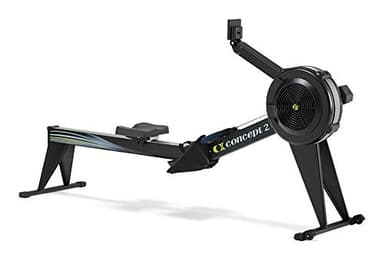
A rowing machine’s published length is not the floor it needs. Concept2 is the only manufacturer that publishes both figures — a 96-inch machine and a recommended 9 ft by 4 ft space — and the gap is a foot of length and two feet of width, for handle travel at the catch and elbows at the finish.
We apply that published relationship to every machine here and label it as our arithmetic. It means a 65-inch budget rower wants about 6.4 ft by 3.6 ft, and a 57.9-inch compact machine wants about 5.8 ft by 3.5 ft. The full table is here, and it is the first page to read.
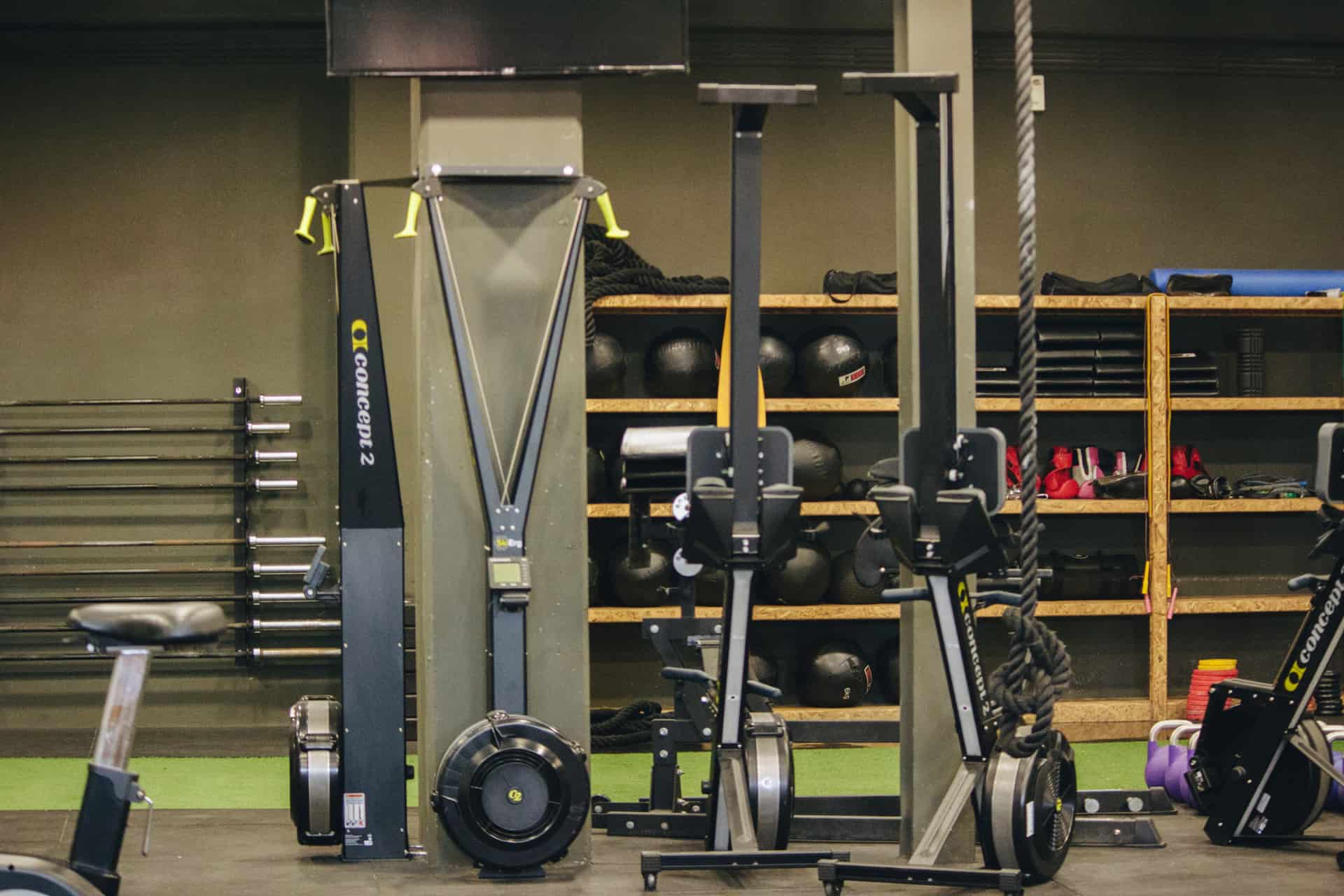
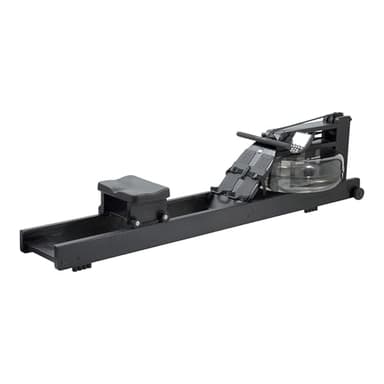
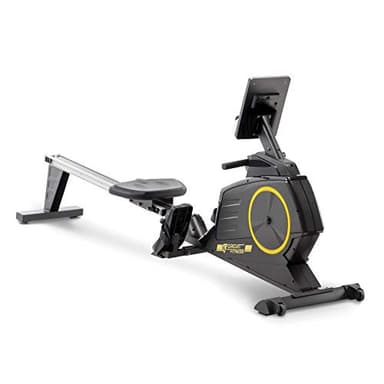
Then decide where the machine goes when you are not on it. This is the step that determines whether you still own it in a year. A WaterRower stands on end in about two square feet; a Concept2 splits into two pieces; most magnetic machines fold or store upright.
Decision two: who else can hear it?
If you share a wall, a ceiling or a household with someone who sleeps at different hours, this decides your resistance type.
Magnetic resistance makes no sound at all — everything you hear is the seat on the rails. Water makes a low-frequency whoosh that carries less than you would expect. Air is a fan, and a fan is broadband noise that travels through structure.
We checked all 17 manufacturers represented here for a published decibel figure and found zero, so anyone quoting you a specific number measured it themselves with a phone. Here is what to decide on instead. And whatever you buy: the thing your downstairs neighbor actually hears is impact through the floor, which a rubber mat fixes for a fraction of the price difference between any two machines.
Decision three: how long will you keep it?
This is the question that settles budget, and almost nobody asks it honestly.
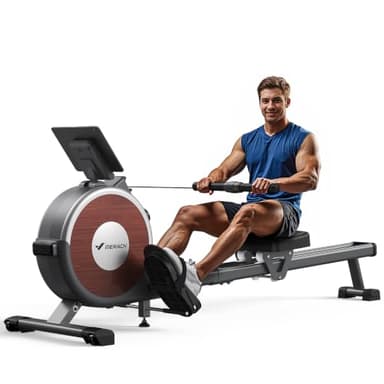
If you are genuinely unsure whether rowing will stick — and most first-time buyers are — spend about $200. The MERACH Q1S publishes a 350 lb capacity and a 6 ft 7 in height ceiling at that price, which is more disclosure than machines at twice the money. If rowing does not take, you are out less than a decent pair of running shoes.
If you already know you are the sort of person who keeps things, buy once. A Concept2 costs roughly five times as much and over five years costs less than two budget machines and a subscription, with a 500 lb capacity, a five-year frame warranty and parts available for machines built in the 1990s.
Decision four: will you pay monthly?
The biggest number in this category, and the one that never appears in a comparison table.
Of the 31 machines we can price here, 24 have no recurring cost at all. The rest run $29 to $50 a month — $1,740 to $3,000 over five years, frequently more than the machine itself costs.
That is not automatically bad value. A $3,000 machine you use beats a $990 machine you do not, and instructor-led classes genuinely get people onto equipment they would otherwise ignore. But make the decision with the five-year figure in front of you rather than the monthly one. The table is here.
The specifications that actually matter
Once those four are settled, sort on three published numbers and ignore everything else on the listing:
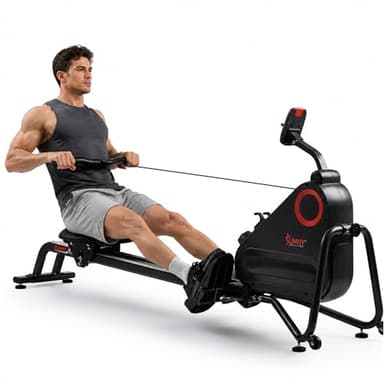
- Rail length. If your legs run out of travel before the seat does, you will finish the stroke with your lower back. Sunny publishes 48 and 50 inches; Concept2 publishes the inseam figure (38 in and up may need an extra-long monorail). Most brands publish nothing, and a brand that does not publish it is asking you to guess.
- Published weight capacity. The number matters if you are near it. Its existence matters regardless — a manufacturer that publishes one has had the frame rated by somebody.
- Resistance in pounds, not levels. Sixteen levels of a weak magnet is worse than eight of a strong one. YPOO publishes 99 lb achievable; MERACH publishes 80 lb peak. Almost nobody else does.
Everything below is ranked on those, with live prices and five-year costs attached.