Wood is the reason, not the resistance
It is worth stating plainly, because it changes how you should compare these machines. Water resistance behaves the same whether the tank sits in a wooden frame or a steel one: pull harder and the paddles meet more water, so the resistance scales with your effort and there is no ceiling to find. If that mechanism is what you are shopping for, you are really shopping the water category, where metal-framed machines sit alongside these.
What the wooden frame adds is not performance but permanence and presence. Ash and beech are dense, springy hardwoods that damp vibration well, which is part of why a wooden rower feels solid and quiet under a hard stroke. And because the frame is the product — not a cover over a metal skeleton — the machine reads as an object you keep rather than a device you store. The clearest way to see the two ends of that idea is our WaterRower versus YOSUDA comparison, which sets the hand-built machine against the budget one directly.
Why a wooden frame lasts
A wooden water rower is close to the simplest machine in this whole category. There is a hardwood rail, a molded seat on rollers, a sealed tank of water with paddles inside, and a monitor. There is no fan, no magnet assembly, no cable-and-dial to stretch, and no electronics doing the resistance — the water does that. Fewer moving parts is fewer things to fail, and the parts that do wear are the obvious, replaceable ones.
That simplicity is why longevity is a genuine argument here and not marketing. A hardwood frame does not fatigue the way a welded budget frame can, the tank is inert, and a monitor is a monitor. It is also why these machines store so gracefully: the WaterRower Natural stands on its end in about two square feet, so the machine that dominates the room during a session disappears against a wall after it.
Hand-built ash versus folding beech
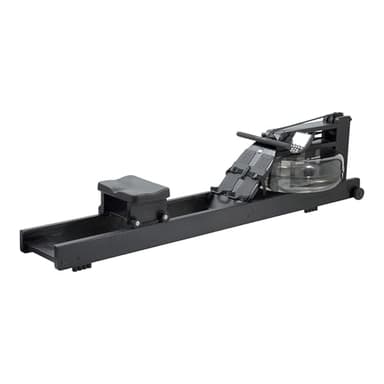
The WaterRower Naturalis the reference. It is hand-built in Rhode Island from sustainably sourced ash, measures 82 by 22 by 20 inches, and weighs about 103.5 lb once the tank is filled. It uses WaterRower’s S4 monitor, carries no subscription, and stands on end in roughly two square feet. At around $1,730 it is the most expensive machine on this page, and the price is the craftsmanship — the ash, the hand assembly, the finish.
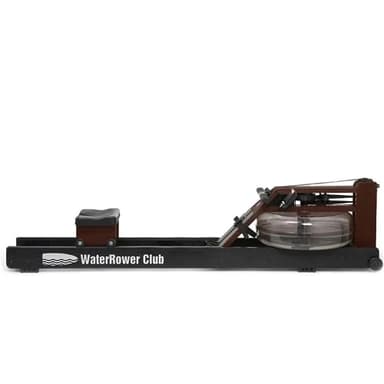
The WaterRower Clubis the interesting sibling, and at around $1,400 it is actually the cheaper of the two WaterRowers. It uses a commercial-spec frame at 83 by 24 by 21 inches and 117 lb, and adds an S4 BLE monitor with Bluetooth for connecting to apps. Its defining difference is a higher seat than the Natural, which makes getting on and off noticeably easier — the reason it is our pick for taller and stiffer rowers. One honest caveat: WaterRower does not publish a maximum user weight or height for either machine, so if a stated fit matters to you, note that the only rower on this page that publishes one is the budget YOSUDA.
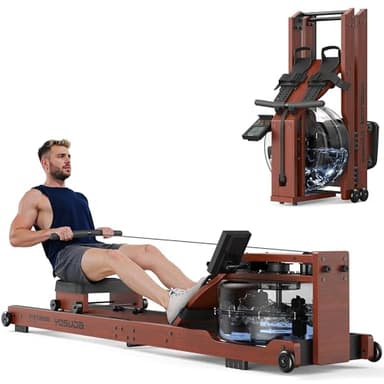
The YOSUDA Foldable Wooden Water Rower, at around $256, is the budget entry and does not pretend to be a WaterRower. It is built from 30 mm FSC-certified beech around a 22-liter tank, measures 74 by 16 by 15 inches, and weighs about 55 lb — roughly half the filled weight of a WaterRower, because the frame is lighter, which the price reflects. In exchange it does two things the WaterRowers do not: it folds 180 degrees and rolls away, and it publishes real numbers — a 400 lb capacity and a stated fit up to 6 ft 6 in. It carries a one-year parts warranty and a free app. It is the honest budget way to own a wooden rower.
The honest costs of wood and water
Three things temper the appeal, and you should weigh all of them.
Weight when filled. A water rower is light empty and heavy full. The WaterRower Natural is about 103.5 lb filled and the Club 117 lb, so while they stand on end easily, they are not machines you carry between rooms. The YOSUDA is the exception at 55 lb, which is much of its appeal.
Price, at the top.The WaterRower is a considered purchase at around $1,400 to $1,730. It is furniture-grade and built to last decades, but there is no getting around the fact that a capable magnetic machine costs a fraction of it. You are paying for the ash and the hand assembly, and that is a legitimate thing to want — just go in knowing it.
Water upkeep, and the lighter budget frame. The water needs the occasional purification tablet to keep it clear, a small ritual rather than a chore; our guide to cleaning a water rower covers it. And the YOSUDA’s lighter frame is the trade for its price: it looks the part and sounds the part, but it is not built to the standard of a hand-made Rhode Island machine, and it should not be judged as though it were.
Which wooden rower to buy
For most buyers who want a wooden rower and can spend at that level, the WaterRower Natural is the one: the hand-built ash machine that started the category, subscription-free and built to outlast the room it sits in. Our full WaterRower review makes the case in detail.
Choose the WaterRower Clubif the higher seat matters to you — taller rowers and anyone with stiff knees or hips will appreciate the easier on and off — and enjoy the fact that it is the cheaper of the two while adding Bluetooth. Choose the YOSUDAif you love the idea of a wooden rower but not the WaterRower’s price: it folds away, it weighs half as much filled, and it is the only machine here that publishes a capacity and a height fit. Just hold it to a budget standard, because that is what it is.