The best machine is the one you keep using
The most important property of an exercise machine bought for a consistency goal is boring: it is whether the thing is still in use in six months. Every pick here was chosen through that lens. Comfort matters because an uncomfortable machine gets skipped. A monitor matters because a session you can measure is a session you can repeat and improve. Low friction matters — a machine with no subscription barrier and a simple start is a machine you use on the days you almost did not.
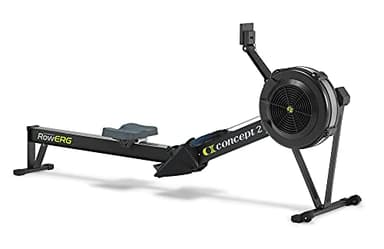
The Concept2 RowErg is the overall pick for exactly this reason. It is durable enough to survive years of frequent use, its PM5 monitor gives you clear, comparable numbers to pace against, and it has no subscription to lapse and no screen to go dark. It is the machine least likely to become an expensive coat rack. The full review is here.
Why resistance that scales suits interval work
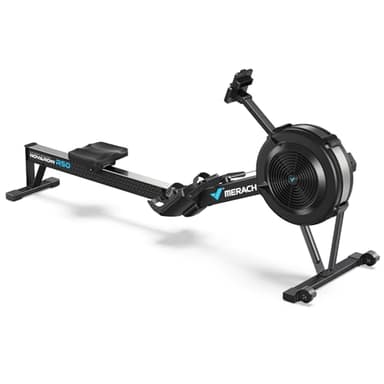
Interval training — short harder efforts alternated with easier recovery — is a large part of how people use a rower for a cardio goal, and it is where the resistance mechanism matters. On an air rower like the Concept2 or the MERACH R50 Pro, the resistance self-regulates: pull harder in the hard interval and the fan pushes back harder, ease off in the recovery and it lightens, with no dial to fumble mid-session. The machine simply matches whatever effort you give it.
The Aviron StrongGo is the interval-training pick because it pairs a hybrid air-and-magnetic frame offering up to 100 lb of resistance with content built around structured and gamified workouts. That range gives a strong rower a ceiling that is hard to hit, and the programming is designed to make intervals engaging rather than a chore. The trade is that its content requires a membership of around $29 a month and it needs mains power, so it is the pick for someone who wants the guided, game-style sessions specifically.
A monitor you can pace against
A machine you can measure is a machine you can be consistent on, because a target turns a vague “row for a while” into a repeatable session. The Concept2’s PM5 is the clearest example: it gives you split times and distance in a form that other rowers recognize, so a session is easy to reproduce and improvement is easy to see. The MERACH R50 Pro carries a competition-style monitor with more than twenty workout modes, and even the budget MERACH Q1S gives you the readouts to structure and repeat a session.
We are deliberately not quoting any calorie figure a monitor displays, because those estimates vary by machine and we have no source to stand behind them. Use the monitor to pace and to be consistent — to hold a split, to repeat an interval — rather than as a calorie authority.
Comfort for frequent, daily use
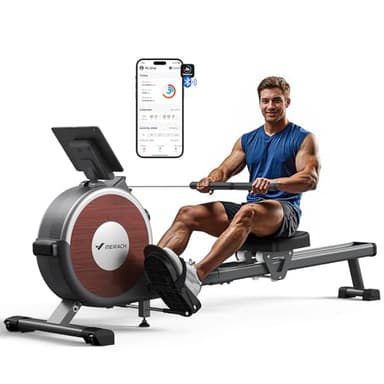
A machine used often has to be comfortable often, and small things decide that. A rail long enough for your legs keeps the stroke from cramping; a seat you do not dread returning to keeps you coming back; a quiet-enough machine can be used early or late without waking the house. The MERACH Q1S is the budget pick here partly for comfort: a dual slide rail for a stable stroke, 16 magnetic levels, a published 350 lb capacity and 6 ft 7 in fit, and near-silent magnetic resistance, all at around $190 with no subscription.
If you are new to the movement, learning it well also keeps you comfortable and consistent, because a cramped or ragged stroke is the thing most likely to make you stop. The four positions of the stroke and which muscles the movement uses are both worth reading before your first session.
Budget or buy-once, when consistency is the goal
The real decision is the same one that runs through this whole site: how long will you keep the machine. For a consistency goal that question is doubly important, because the machine only helps for as long as you use it. If you already know you keep things, the Concept2 at around $990 is durable, honest and subscription-free, and over years of frequent use it is the machine least likely to let you down.
If you are not yet sure the habit will hold, the MERACH Q1S at around $190 is the right amount to risk — enough machine to build a real routine, cheap enough that finding out is not costly. Whatever you choose, buy the machine you will actually use, not the one with the most impressive number on the listing. The budget roundup covers the affordable end in full.
Low friction is a feature
The quiet enemy of any exercise habit is friction — every small obstacle between the impulse to row and the first stroke. A machine that boots into a login, nags for a subscription, or has to be dug out and set up adds friction, and friction is what turns equipment into furniture. The machines here are chosen partly to keep that friction low: the Concept2 and both MERACHs start the moment you sit down, with no screen to load and, on the Concept2 and R50 Pro, no membership to lapse.
The Aviron is the deliberate exception, and it is an honest one. Its subscription and its games add a little friction and a recurring cost, but for the specific rower who will not train without external motivation, that structure is the thing that gets them onto the machine at all. That is a real trade, not a flaw — the right amount of friction is however much keeps you rowing, which is a different number for different people.
The through-line is consistency, not intensity. A machine you row four times a week at an easy pace does more for a cardio goal than a better machine you row twice and abandon, and none of that depends on a spec you can fabricate. If a lower price is what keeps the habit realistic, the budget end is a perfectly good place to start.