Rail length is the spec that matters most
More than resistance type, more than monitor features, more than weight: if the rail is too short for your legs you will never row well on the machine.
The mechanism is simple. At the catch your shins should be roughly vertical and your seat close to your heels; at the finish your legs should be flat. The distance the seat travels between those two positions is set by your inseam. If the rail runs out first, you stop the drive early and start pulling with your arms and lower back to make up the difference — which is exactly how people give themselves back trouble on a rowing machine.
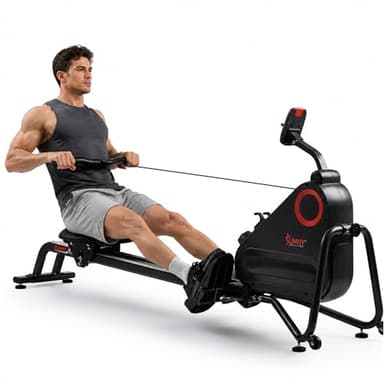
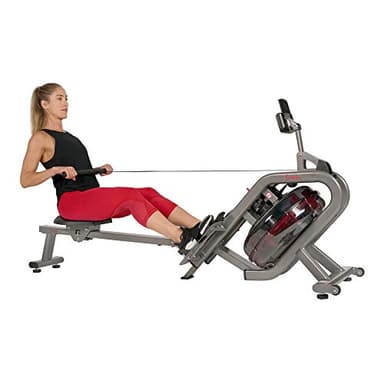
Sunny is unusually good about this. Its long-rail model publishes the rail length (48 in), the inseam clearance (44 in) and the maximum user height (6 ft 8 in) — three numbers most brands print none of. The Dual-Rail publishes 50 inches. If you are over about 6 feet, those two figures are the reason to choose between them.
What the extra $150 over the budget tier actually buys
- A dual rail instead of a single. Two rails stop the seat rocking laterally under load. On a single rail you feel it as a slight wobble at the catch; over a long session it is fatiguing.
- 16 resistance levels instead of 8.More useful than it sounds: with 8 levels the gap between “too easy” and “too hard” can fall inside one step.
- Covered rails.The Sunny Dual-Rail’s protective coverings are doing acoustic work, not decoration. Rolling noise on an uncovered rail is a real proportion of what your downstairs neighbor hears.
- Published numbers. Every machine on this page publishes at least a weight capacity. That is not true one tier down.
The air rower question
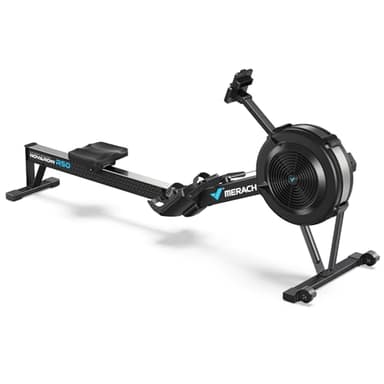
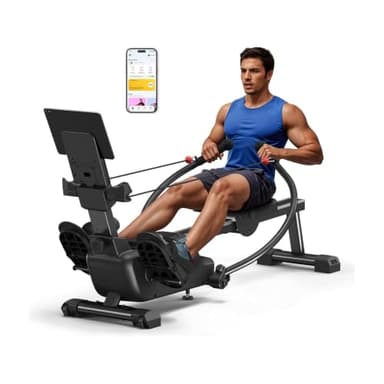
The MERACH R50 Pro is the interesting machine on this page. It is 95 inches long, 24 inches wide, and it splits into two sections for vertical storage — the same basic architecture as the machine that dominates this category.
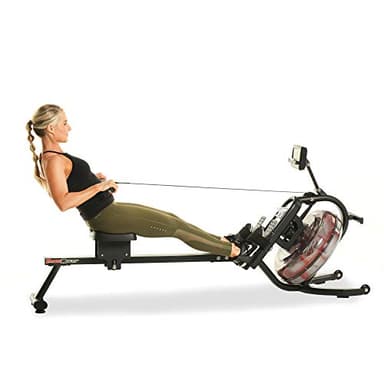
What it gives you that magnetic cannot: resistance that scales with effort. Pull harder and the fan spins faster and the air pushes back harder. There is no ceiling to find, which is why every competitive rowing test in the world happens on an air machine.
What it costs you: noise. Air resistance is a fan, and a fan is audible. No manufacturer here publishes a decibel figure, ours included, so we will not give you one — here is what we suggest deciding on instead. And MERACH does not publish a user weight limit for this model, which on an air rower is a more meaningful omission than usual.
Is this the tier to buy at?
For most people, yes. The step from $200 to $450 buys you specification you can verify and a machine you will not outgrow in a year. The step from $450 to $990 buys you a Concept2, and what that buys is a 500 lb capacity, a five-year frame warranty, parts availability measured in decades, and a monitor whose numbers mean something to other rowers.
Whether that second step is worth it depends entirely on how long you intend to keep the machine. The five-year table is the honest way to settle it.