The three numbers that separate these machines
Rail length
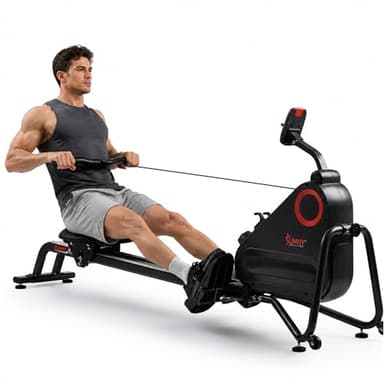
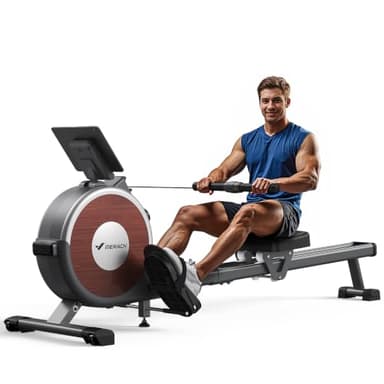
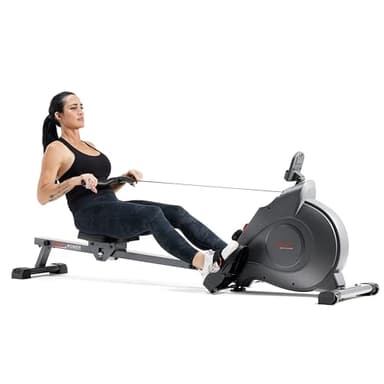
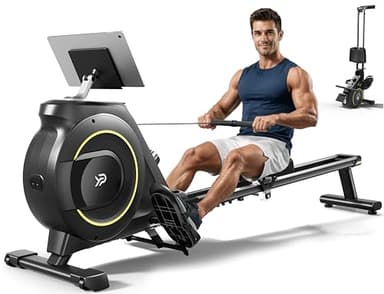
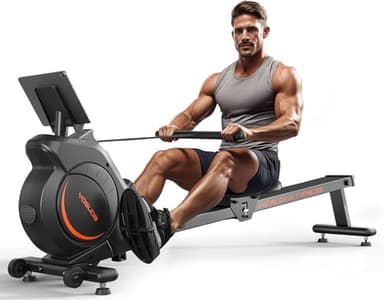
The most consequential specification, and the one most often omitted. A rail that is too short forces you to end the leg drive early and finish the stroke with your back. Sunny publishes 50 inches on the Dual-Rail and 48 inches on the long-rail model; YPOO publishes 46 inches. MERACH publishes overall machine length rather than rail length, which is less useful but at least it publishes something.
If you are over about 6 ft, this is the number to sort on. Sunny’s long-rail model also publishes 44 inches of inseam clearance and a stated fit up to 6 ft 8 in — the most complete tall-user disclosure at any price on this site.
Published weight capacity
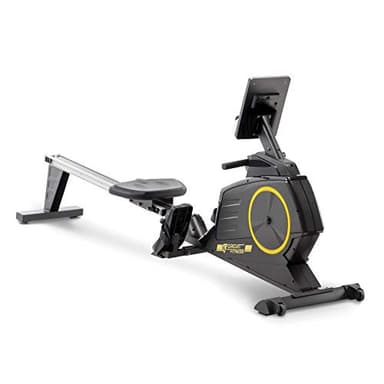
MERACH publishes 350 lb for the Q1S. YPOO publishes 350 lb. Sunny publishes 300 lb for the Dual-Rail and Circuit Fitness publishes 300 lb. YOSUDA publishes nothing for its magnetic machine, and Sunny publishes nothing for the long-rail model.
The number matters if you are near it. The fact that it exists matters regardless: a manufacturer that publishes a capacity has had the frame rated.
Peak resistance
Level counts are close to meaningless on their own — sixteen levels of a weak magnet is worse than eight of a strong one. What is useful is when a maker publishes actual force. YPOO states 99 lb of achievable resistance. MERACH states 80 lb of peak resistance on the R26 Sculls. Most brands state neither.
Electromagnetic versus mechanical magnetic
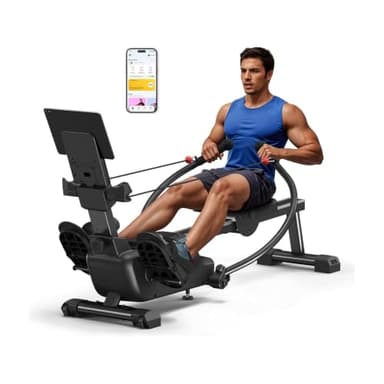
A distinction worth knowing before you shop. Cheap magnetic machines move the magnet with a cable and a dial — you turn a knob, a cable pulls, the magnet shifts. Electromagnetic machines vary the field electrically, which means resistance can change instantly, be controlled from the handle, and be driven by software.
MERACH publishes electromagnetic resistance with handle-mounted level buttons on some models. Every connected rower — Hydrow, NordicTrack, Echelon — uses electromagnetic resistance, which is what allows a class instructor to change your resistance mid-workout.
Electromagnetic machines need mains power. Mechanical magnetic ones do not, which is a genuine convenience if the machine lives somewhere without a socket.
The sculls exception
The MERACH R26 is on this page but it is not really the same kind of machine. It has two independent handles that swing through a 120-degree arc, so you can row one-armed, alternate, or pull both together. That is much closer to actual sculling than a single-handle rower gets, and it trains the upper back differently.
It is also 29.5 inches wide, because the arms need somewhere to go, and the stroke does not transfer to a Concept2. If you are training for indoor rowing specifically, this is a different sport. If you want a rowing-shaped full-body cardio machine, it is genuinely interesting.
Who should buy magnetic
Most people. If you live in an apartment, share a wall, row while somebody sleeps, or simply do not want a fan roaring in your spare room, magnetic is the right mechanism and nothing else is close.
Who should not: anyone training for erg tests, anyone who wants comparable split times, and anyone strong enough to top out a magnetic flywheel. The air rower page is for you.