Row & Recover

Air resistance

Best Air Rowing Machines

The competition standard, and the one mechanism that has no ceiling for a strong rower to find — with an honest account of the noise it costs you.

By Stephen V.An enthusiast who reads the manuals and does the math. Not a coach, not a lab.Last verified July 24, 2026.

We earn a commission if you buy through the links on this page, at no cost to you. It has no effect on what we recommend or the order we recommend it in — we say “skip this one” on machines that pay us the same as the ones we like. How we’re funded.

Air resistance has one property no other mechanism can imitate, and it is the reason every serious rowing test in the world happens on an air machine: it matches whatever you give it.

The mechanism is a caged fan. The handle pulls a chain wound around the fan axle, so pulling spins the fan, and a spinning fan has to shove air out of its way. Move it slowly and there is little air to move; move it fast and there is a great deal. Pull harder and the machine pushes back harder, stroke for stroke, with no dial to set and no ceiling for a strong rower to hit. A magnetic machine has a level 16 that a fit athlete will find. An air machine does not have a top.

That self-regulation is why air rowers are the competition standard and why a 2,000m piece on one is a real test rather than a setting. It is also why they are the loudest machines in the category, and why they take the most floor: a fan is broadband noise, and the frames that house a full-length chain drive tend to run past eight feet.

Four machines below. Two are the same Concept2 at different seat heights, one is a value air rower at roughly half the price, and one is a commercial-build machine made for people who row until it hurts. None carry a subscription of any kind, and every price is live from Amazon rather than remembered.

One framing helps before you read the rest. Because air resistance is generated by your own effort rather than a setting, the differences between these four machines are not really about how hard they can push back — every one of them can push back as hard as you can pull. The differences are about build quality, monitor honesty, seat height and what the machine costs you to keep, and that is what the ranking below actually turns on.

The short answer

Quick picks

Ranked on published specification, buyer fit and what each machine costs to keep over five years. Select a row to jump to the full write-up. We have not rowed on these machines — here is exactly what we do instead.

#MachineBest forPrice
1
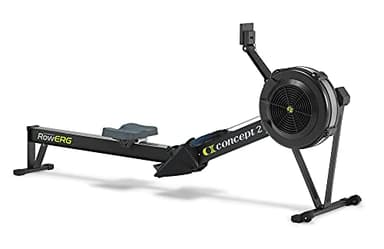
Concept2 RowErg

Concept2 RowErg

The machine every other rowing machine is measured against, and the only one here with no subscription, a 500 lb user limit and a five-year frame warranty at under a thousand dollars.

Best overall
2
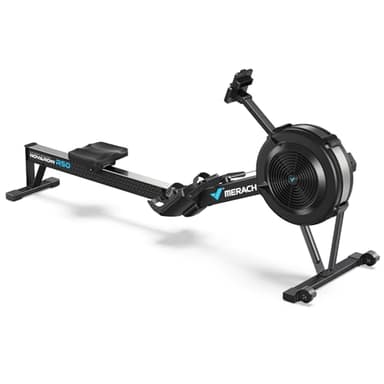
MERACH NovaRow R50 Pro

MERACH NovaRow R50 Pro

The closest thing to a Concept2 layout at roughly half the money — 95 inches, a 32-blade fan, ten resistance settings and a frame that splits for vertical storage.

Best value
3
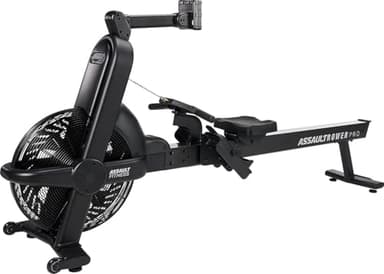
Assault Fitness AssaultRower Pro

Assault Fitness AssaultRower Pro

A commercial-gym air rower that folds, runs on no electricity at all, and asks nothing of you monthly — built for people who train hard rather than watch classes.

Best for hard training
4
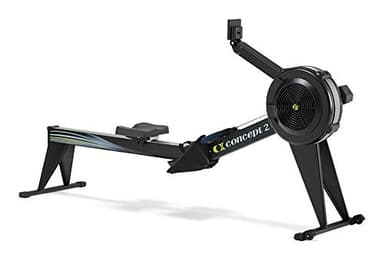
Concept2 RowErg with Tall Legs

Concept2 RowErg with Tall Legs

The same machine with the seat 6 inches higher. That one change is the difference between a rower you can get off unaided and one you cannot.

Best higher seat

In detail

Every pick, and what is wrong with it

Each machine below gets the same four things: what it does well, what it does not, the five-year cost of owning it, and the case for buying something else instead.

Concept2 RowErg rowing machine

1. Best overall

Concept2 RowErg

The machine every other rowing machine is measured against, and the only one here with no subscription, a 500 lb user limit and a five-year frame warranty at under a thousand dollars.

Floor space: about 9.0 ft by 4.0 ft once you allow for handle travel and elbow room — roughly 36 sq ft.

What is good

  • 500 lb published user capacity — the highest figure any manufacturer on this page prints
  • No subscription, ever. The PM5 records everything on its own and ErgData is free
  • Separates into two pieces in seconds for storage; front and rear sections stand upright
  • Five-year frame warranty, and a parts supply chain that still serves machines from the 1990s

What is not

  • 96 inches long in use, and Concept2 recommends a 9 ft x 4 ft footprint — it is not an apartment-corner machine
  • Air resistance is the loudest kind. Concept2 publishes no decibel figure and neither do we
  • The 14-inch seat is low; getting up off it is a real consideration if your knees are the reason you are rowing

Skip this one if: Skip it if your floor space is under 9 feet in one direction, or if you share a wall with someone who sleeps early — this is the loud one.

MERACH NovaRow R50 Pro rowing machine

2. Best value

MERACH NovaRow R50 Pro

The closest thing to a Concept2 layout at roughly half the money — 95 inches, a 32-blade fan, ten resistance settings and a frame that splits for vertical storage.

Floor space: about 8.9 ft by 4.0 ft once you allow for handle travel and elbow room — roughly 36 sq ft.

What is good

  • Full 95-inch competition-style geometry rather than a shortened budget rail
  • Frame separates into two sections and stores vertically
  • Ships 90% pre-assembled with a competition-style monitor and 20+ training modes

What is not

  • MERACH publishes no user weight limit for this model, which matters more on an air rower than most
  • Nothing like Concept2's parts availability if something breaks in year six
  • At 95 inches it needs the same floor as the machine it is undercutting

Skip this one if: Skip it if you were buying an air rower specifically for Concept2's decades-long parts support — that is the thing the discount is buying you out of.

Assault Fitness AssaultRower Pro rowing machine

3. Best for hard training

Assault Fitness AssaultRower Pro

A commercial-gym air rower that folds, runs on no electricity at all, and asks nothing of you monthly — built for people who train hard rather than watch classes.

Floor space: about 8.7 ft by 3.8 ft once you allow for handle travel and elbow room — roughly 33 sq ft.

What is good

  • Dual stage chain-and-belt drive, built for the abuse of interval work
  • Completely human-powered — no mains socket needed anywhere near it
  • Folds down for storage despite the 109 lb commercial build

What is not

  • 109 lb is a lot of machine to reposition, folding or not
  • The console is functional rather than rich; there is no class library and no app ecosystem
  • Assault publishes no user weight limit on this listing

Skip this one if: Skip it if you want guided workouts on a screen — this machine has no opinion about how you train.

Concept2 RowErg with Tall Legs rowing machine

4. Best higher seat

Concept2 RowErg with Tall Legs

The same machine with the seat 6 inches higher. That one change is the difference between a rower you can get off unaided and one you cannot.

Floor space: about 9.0 ft by 4.0 ft once you allow for handle travel and elbow room — roughly 36 sq ft.

What is good

  • 20-inch seat height instead of 14 — close to a dining chair, so you stand up rather than push up off the floor
  • Identical 500 lb capacity, PM5 monitor and no-subscription position as the standard RowErg
  • Easier transfer on and off makes it the sensible pick for older rowers and anyone rehabbing

What is not

  • Concept2 publishes 68 lb with tall legs against 57 lb standard — 11 lb more to move
  • Stored footprint grows to 27 x 47 x 54 in
  • Costs meaningfully more than the standard-leg model for one dimensional change

Skip this one if: Skip it if you have no trouble getting off a low seat — you are paying extra for height you do not need.

How to choose

What actually decides this

Why the damper is not the difficulty

The most common mistake on an air rower is treating the lever on the fan housing as a difficulty dial and setting it to 10. It is not that. The damper controls how much air reaches the fan on each stroke, which changes the character of the pull, not how hard the workout is. A high setting feels heavy and slow, like rowing a barge; a low setting feels light and quick, like a racing shell. Most competitive rowers train somewhere around 3 to 5, because that is where the stroke feels most like a boat.

This matters for choosing a machine because air resistance is driven by you, not by a number of levels printed on the box. There is no resistance range to compare across air rowers the way there is across magnetic ones. What you compare instead is fan and chain-drive smoothness, monitor honesty, and build. The damper is explained in full here, and it is worth ten minutes before you spend anything.

Standard legs, tall legs, or the value machine

Concept2 makes one rowing machine and sells it at two seat heights, and both are on this page because the choice is real. The standard RowErg sits at a 14-inch seat height, which is low — lower than most sofas. The tall-legs version raises that to 20 inches, roughly the height of a dining chair, at the cost of about eleven extra pounds of frame and a taller stored footprint. If getting up off a low seat is a struggle, the tall legs are the whole reason to spend more; if it is not, the standard machine is the one to buy. Everything else is identical: the same fan, the same PM5 monitor, the same published 500 lb capacity, the same five-year frame warranty.

The MERACH NovaRow R50 Pro is the machine that makes the Concept2 argue for itself. It is a 95-inch air rower with a competition-style monitor and more than twenty workout modes, it separates into two pieces and stores vertically, and it costs roughly half of what the Concept2 does. What it does not publish is a user weight limit, which on an air rower is a more meaningful omission than usual, and what it cannot match is Concept2’s parts catalog and its comparable numbers. It is an honest way to find out whether you are an air rower before paying full price to be one.

The machine built to be punished

The Assault Fitness AssaultRower Pro is a different animal from the other three. It is 109 lb of commercial-grade frame, it folds, and it runs on no electricity at all — nothing to plug in and nothing to subscribe to. It is built for the interval work that CrossFit-style training throws at a rower: short, violent efforts where the self-regulating resistance is doing exactly what air does best.

Assault does not publish a user weight capacity for it, which is a gap worth naming on a machine otherwise built like a tank. But if your training is hard intervals rather than long steady rows, and you want a frame that will shrug them off for years, it is the specialist choice here.

The floor an air rower needs

Air frames are long because the chain drive is long. The Concept2 is 96 inches, and Concept2 is the rare maker that also publishes the floor it wants: a recommended 9 ft by 4 ft, well past the machine’s own footprint, to leave room for the handle travelling forward at the catch and your elbows going out at the finish. The MERACH is 95 inches and the Assault is 92, so plan for close to nine feet of clear length for any of them.

All three break down for storage — the two Concept2s separate into two pieces in seconds, the MERACH splits and stands vertically, and the Assault folds. That helps with parking the machine, but none of it shortens the floor you need while you are actually rowing. The full clearance arithmetic is here. If length is your binding constraint, a compact magnetic machine will fit where an air rower cannot.

The noise, stated plainly

Every air rower on this page is loud, and none of their makers publish a decibel figure — not Concept2, not MERACH, not Assault. Neither will we, because a number measured with a phone app in a room you know nothing about is worse than no number at all. What we can tell you is the physics: a fan makes broadband noise, it gets louder the harder you row, and broadband noise travels through walls and floors more readily than the low whoosh of a water rower or the near-silence of a magnet.

If you share a wall or a floor with someone who has opinions, an air rower is the wrong machine, whatever else it does well. That is not a criticism of the type — it is the direct cost of the resistance that makes it worth training on. The full trade-off between the three mechanisms is here, and for a shared space it usually points somewhere quieter.

The five-year cost of an air rower

Air rowers reward being kept, which is why the honest way to compare them is over years rather than at the checkout. None of the four here carries a subscription, so the price you pay is close to the price you keep — there is no membership quietly adding up in the background the way there is on a connected screen. That single fact makes the category cheaper to live with than its sticker prices suggest.

Within the four, the Concept2 is the one built to still be here in a decade: it holds its value on the used market and Concept2 still supplies parts for machines built in the 1990s, so a repair is a part rather than a replacement. The MERACH undercuts it heavily at purchase, and for a rower who is not certain the habit will hold, that lower entry price is the sensible risk. The Assault sits between the two on price and above both on frame, built to absorb years of hard intervals. The full five-year table runs the arithmetic for every machine we can price, and for air rowers it usually favors buying once and keeping it.

Straight answers

Questions people actually ask

Are air rowing machines better than magnetic?

For training quality, usually yes; for a quiet home, usually no. Air resistance self-regulates - pull harder and the fan pushes back harder, with no ceiling a strong rower can top out - which is why every competitive erg test uses it. The cost is noise: a fan is broadband sound that travels, where a magnetic machine is near-silent. Choose air for the stroke and the training, magnetic for a shared wall.

Why are air rowing machines so loud?

Because they make resistance by moving air, and moving air makes noise. The fan spins faster the harder you pull, so the machine is loudest exactly when you are working hardest, and fan noise is broadband, which carries through walls and floors more than a low-frequency water whoosh. No manufacturer we cover publishes a decibel figure, so treat any specific number you read elsewhere with suspicion.

What damper setting should I use on an air rower?

Most rowers are best served somewhere between 3 and 5. The damper is not a difficulty dial - it sets how much air reaches the fan, which changes the character of the stroke rather than the intensity of the workout. A high setting feels heavy and slow like a barge; a low one feels light and quick like a racing shell. Setting it to 10 does not make you fitter, it just makes the catch heavy and your stroke rate low.

Do air rowing machines need electricity?

The resistance never does - the fan is powered entirely by your pull. The Concept2's PM5 monitor runs on batteries, and the AssaultRower Pro states it needs no electricity at all. That independence from a socket is a genuine convenience for a machine that lives in a garage or a spare room without a nearby outlet, and it is one reason air rowers hold up over time.

Is the MERACH R50 Pro as good as a Concept2?

As a stroke, it is close and it costs roughly half as much: a 95-inch air rower with a competition-style monitor that separates and stores vertically. What it does not give you is Concept2's decades-deep parts catalog, its published 500 lb capacity, or a monitor whose numbers other rowers recognize - and MERACH does not publish a user weight limit for it. It is a strong way to find out whether you will keep rowing before paying Concept2 money.

How much space does an air rowing machine need?

More than the machine's length. The Concept2 is 96 inches long and Concept2 recommends a 9 ft by 4 ft space - roughly a foot of extra length for handle travel at the catch and two feet of extra width for your elbows at the finish. The MERACH and Assault frames are 95 and 92 inches, so plan for close to nine feet of clear floor for any air rower on this page.

The honest part

What we did not do

We have not rowed on these machines. We do not own them, there is no test lab here, and nobody writing this holds a coaching certification. Every ranking on this page is an argument from published specification and buyer fit, not from a stopwatch.

What we did do is read each manufacturer’s own published figures, record the ones they decline to publish, compute the floor space and the five-year cost, and date all of it. The full method is here so you can check our working or disagree with it.

Show your working

Sources

Keep going

Read next