Seat height is the first thing to measure
Before resistance, before monitor, before price: how high is the seat, and can you get on and off it comfortably. A low seat asks your legs to press you up from near the floor at the end of a session, when you are most tired, and for many older rowers that single moment is the deciding factor in whether the machine gets used.
The simplest test is the one you already do with chairs. If you can rise from a low sofa without pushing off with your hands, a standard 14-inch rowing seat is probably fine. If you prefer a firmer, higher chair, choose a machine that sits the seat higher — and buy the machine that makes the easy part easy, because the machine you dread getting off is the machine you stop using.
The two machines that publish a high seat
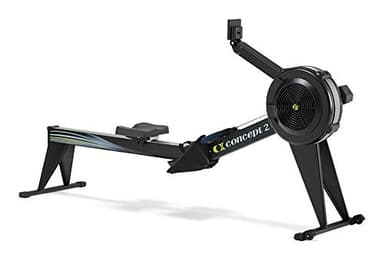
Two picks here are chosen specifically for how high the seat sits. The Concept2 RowErg with tall legs raises the seat to 20 inches, roughly the height of a dining chair, while keeping everything else about the RowErg identical — the same PM5 monitor, the same published 500 lb capacity, the same five-year frame warranty. It is the highest seat on this page and the reason the tall-legs version exists. The full RowErg review is here.
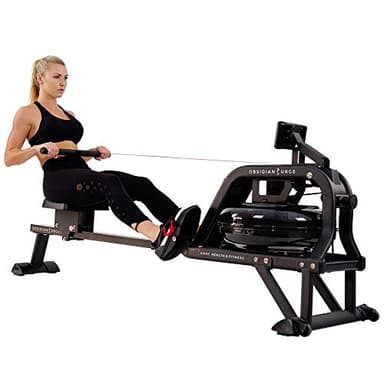
The Sunny Obsidian Surge water rower sits its seat at 17 inches, which Sunny describes as high and easy to step onto rather than lower down to. It is a water machine, so the resistance self-regulates gently to whatever pace you set, the sound is a soft whoosh rather than a fan, and it stores upright when you are done. For a rower who wants an easy step-on and a calm, low-effort stroke, it is the pick.
Rail length, so the stroke stays comfortable
A comfortable stroke needs a rail long enough for your legs to extend without the seat running out first. If the rail is short, you finish the movement cramped and start compensating — which is uncomfortable and, over time, tiring in the lower back. For a taller rower this is the second number to check after seat height.
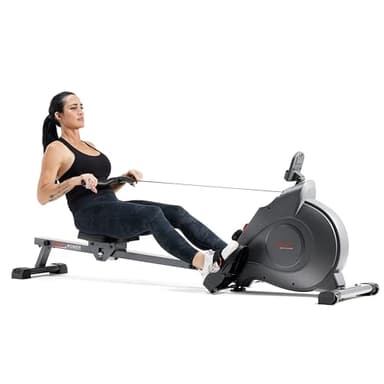
Sunny publishes the clearest figures here. The Extra Long Rail model states a 48-inch rail, 44 inches of inseam clearance and a fit up to 6 ft 8 in — the most complete tall-user disclosure at any price on the site — and the Dual-Rail model publishes a 50-inch rail. If you are tall, the long-rail machine is the one that lets you row through a full, relaxed stroke rather than a cramped one. Note that Sunny does not publish a weight capacity for the long-rail model, so if that number matters to you, weigh its silence accordingly.
Quiet, simple, and easy to run every day
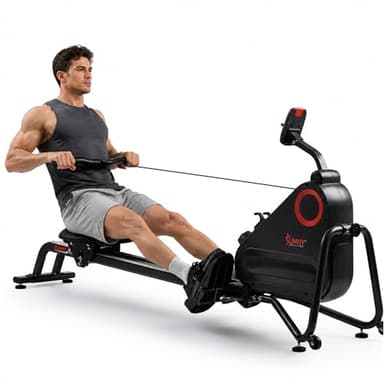
A machine used daily should be quiet and uncomplicated. Both Sunny magnetic picks are near-silent by mechanism — a magnet near a flywheel makes no sound, and the Dual-Rail adds covered rails that keep even the rolling noise down, which is why it is the quiet-magnetic pick here. There is no fan to fill the room, nothing to plug in for the resistance, and a straightforward console rather than a subscription-gated touchscreen.
The magnetic machines also keep the resistance exactly where you set it, session after session, which makes a gentle, repeatable daily row easy to dial in. If you want the water feel instead, the Obsidian Surge trades silence for a pleasant whoosh. The four positions of the stroke are worth ten minutes before your first session, whichever machine you choose.
Matching the machine to the rower
Put the four together and the choice is usually quick. If getting on and off is the concern, start with the highest seat — the Concept2 tall legs at 20 inches, or the Obsidian Surge at 17 inches for an easy step-on. If you are tall, let rail length decide, and the Sunny long-rail model’s 48 inches and 6 ft 8 in fit is the clearest answer. If quiet daily use in a shared home is the priority, the Sunny Dual-Rail’s covered magnetic rails are the calmest option.
None of these machines requires you to chase a resistance ceiling or a fast split, which is exactly the point — the right machine for an older rower is the comfortable, quiet, easy-access one you will actually use. The beginners page covers the same access-first thinking for anyone new to the movement.
A few practical extras worth having
Beyond seat height, rail length and quiet, a handful of small features make a rower easier to live with day to day. A machine that rolls or is light to reposition means it can be moved to a comfortable spot rather than rowed wherever it happens to sit. A simple, readable console beats a subscription-gated touchscreen when the goal is to start rowing without navigating menus. And a machine with no membership to manage is one less thing to think about.
It is also worth setting the machine up somewhere with room to get on and off from either side, and on a stable, level floor. A rubber mat underneath adds grip and steadies the frame, which makes the moment of sitting down and standing up feel more secure — a small change that does a lot for confidence. None of this is exotic; it is the ordinary business of making a machine easy to use, which is the whole point of this page.
Above all, buy the machine that removes the obstacle you actually have. If the obstacle is getting up off a low seat, the higher seat is worth more than any other feature; if it is a cramped stroke, rail length is; if it is noise in a shared home, the quiet magnetic frame is. Match the machine to the barrier, and the barrier stops deciding whether you row. Learning the four positions of the stroke keeps every session that follows smoother and steadier.