Row & Recover

Under $1,500

Best Rowing Machines Under $1,500

The tier where a hand-built WaterRower, a commercial air rower and a full connected machine all become affordable - six picks, one honest drawback each.

By Stephen V.An enthusiast who reads the manuals and does the math. Not a coach, not a lab.Last verified July 24, 2026.

We earn a commission if you buy through the links on this page, at no cost to you. It has no effect on what we recommend or the order we recommend it in — we say “skip this one” on machines that pay us the same as the ones we like. How we’re funded.

There is a real change that happens to the rowing-machine market somewhere around a thousand dollars, and this is the page that lives on the far side of it. Below it, almost every machine is a compromise you can name in one sentence: a short rail, an unpublished weight limit, a plastic flywheel, or a screen that is really just a subscription with a stand attached. Cross into the $1,000-to-$1,500 band and the sentence changes. This is where a genuine, hand-built water rower first becomes affordable, where a commercial air rower built for interval abuse fits the budget, and where a full connected machine with a real screen stops feeling like a stretch.

It is also, and we want to be honest about this from the first paragraph, the exact price band where the sticker on the machine stops telling you what the machine costs. Three of the six picks below are built around a monthly membership, and over five years that membership can add more than the hardware did. A rower that looks like the bargain of the group on day one can quietly become the most expensive thing on the page by year three. So the job of this list is not only to rank the machines — it is to separate the price you pay once from the price you keep paying.

We ranked these six the way we rank every list on this site: on the numbers the makers are actually willing to print — published weight capacity, resistance type, monitor, footprint — and we marked each one down for the numbers it leaves off the sheet. Where a manufacturer does not publish a user-weight limit or a decibel figure, we write that it does not, rather than inventing one. No machine here publishes a loudness rating, so you will not find one quoted below.

Every pick fits under about $1,500. That rules out one machine people expect to see: the WaterRower Natural in ash sits above this tier, closer to $1,700, so the WaterRower that earns a place here is the steel-framed Club, which slips in just under the ceiling. Live prices sit in the cards above; the brackets in the text are there only to tell you where in the band each machine lands.

The short answer

Quick picks

Ranked on published specification, buyer fit and what each machine costs to keep over five years. Select a row to jump to the full write-up. We have not rowed on these machines — here is exactly what we do instead.

#MachineBest forPrice
1
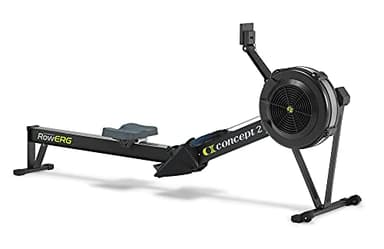
Concept2 RowErg

Concept2 RowErg

The machine every other rowing machine is measured against, and the only one here with no subscription, a 500 lb user limit and a five-year frame warranty at under a thousand dollars.

Best overall
2
WaterRower Club

WaterRower Club

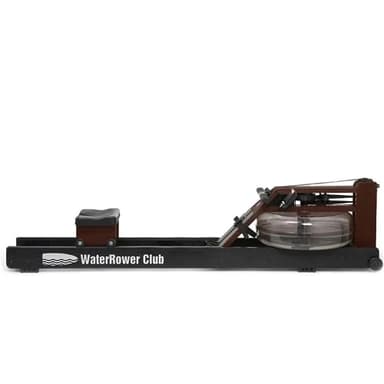
The commercial-spec WaterRower — a taller seat, a heavier frame and the Bluetooth S4, for people who found the Natural a touch low.

Best water rower
3
Aviron StrongGo

Aviron StrongGo

The screenless Aviron: same 100 lb dual resistance and the highest published user capacity here at 507 lb, with your own iPad doing the display work.

Best gamified
4
NordicTrack RW300

NordicTrack RW300

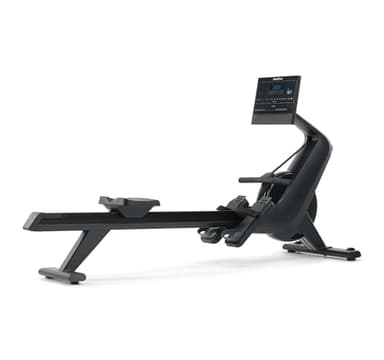
The NordicTrack that does not need a subscription to be a rowing machine — a plain 5-inch LCD, 26 manual resistance levels and a device shelf for your own tablet.

Best guided value
5
Assault Fitness AssaultRower Pro

Assault Fitness AssaultRower Pro

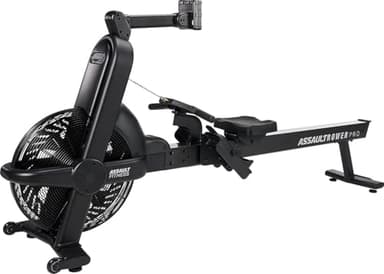
A commercial-gym air rower that folds, runs on no electricity at all, and asks nothing of you monthly — built for people who train hard rather than watch classes.

Best for hard training
6
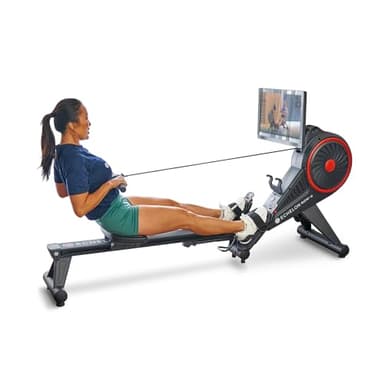
Echelon Row-S

Echelon Row-S

A 22-inch rotating screen and handlebar resistance controls at a machine price well under Hydrow's — with $39.99/month attached that closes most of the gap over five years.

Best budget connected

In detail

Every pick, and what is wrong with it

Each machine below gets the same four things: what it does well, what it does not, the five-year cost of owning it, and the case for buying something else instead.

Concept2 RowErg rowing machine

1. Best overall

Concept2 RowErg

The machine every other rowing machine is measured against, and the only one here with no subscription, a 500 lb user limit and a five-year frame warranty at under a thousand dollars.

Floor space: about 9.0 ft by 4.0 ft once you allow for handle travel and elbow room — roughly 36 sq ft.

What is good

  • 500 lb published user capacity — the highest figure any manufacturer on this page prints
  • No subscription, ever. The PM5 records everything on its own and ErgData is free
  • Separates into two pieces in seconds for storage; front and rear sections stand upright
  • Five-year frame warranty, and a parts supply chain that still serves machines from the 1990s

What is not

  • 96 inches long in use, and Concept2 recommends a 9 ft x 4 ft footprint — it is not an apartment-corner machine
  • Air resistance is the loudest kind. Concept2 publishes no decibel figure and neither do we
  • The 14-inch seat is low; getting up off it is a real consideration if your knees are the reason you are rowing

Skip this one if: Skip it if your floor space is under 9 feet in one direction, or if you share a wall with someone who sleeps early — this is the loud one.

WaterRower Club rowing machine

2. Best water rower

WaterRower Club

The commercial-spec WaterRower — a taller seat, a heavier frame and the Bluetooth S4, for people who found the Natural a touch low.

Floor space: about 7.9 ft by 4.0 ft once you allow for handle travel and elbow room — roughly 32 sq ft.

What is good

  • Higher seat than the Natural, which makes getting on and off noticeably easier
  • S4 BLE monitor pairs with phone apps out of the box
  • Built for club use, so the frame is specified for far more hours than a home machine needs

What is not

  • 117 lb before you add water
  • No published user weight limit on this listing
  • Costs more than the Natural for a specification most home rowers will never exhaust

Skip this one if: Skip it if the Natural fits you — the Club's extra durability is aimed at a gym's usage, not a spare bedroom's.

Aviron StrongGo rowing machine

3. Best gamified

Aviron StrongGo

The screenless Aviron: same 100 lb dual resistance and the highest published user capacity here at 507 lb, with your own iPad doing the display work.

Floor space: about 8.0 ft by 4.3 ft once you allow for handle travel and elbow room — roughly 34 sq ft.

What is good

  • 507 lb published weight capacity — the highest figure on this entire site
  • Same dual air-and-magnetic system as the Strong Series without paying for the panel
  • Bring your own iPad, so the screen is one you already own and can replace

What is not

  • You still need the membership for the content that makes an Aviron an Aviron
  • 27 inches wide, same as its screened sibling
  • No integrated display means an iPad mount is now a load-bearing part of your setup

Skip this one if: Skip it if you do not own a tablet — budget for one before comparing this against the screened models.

NordicTrack RW300 rowing machine

4. Best guided value

NordicTrack RW300

The NordicTrack that does not need a subscription to be a rowing machine — a plain 5-inch LCD, 26 manual resistance levels and a device shelf for your own tablet.

Floor space: about 7.8 ft by 4.1 ft once you allow for handle travel and elbow room — roughly 32 sq ft.

What is good

  • Rows perfectly well with no membership at all — the LCD and the 26 levels are self-contained
  • Device shelf means you supply the screen, so the recurring cost is whatever you already pay for
  • Silent magnetic resistance with pivoting pedals

What is not

  • A 5-inch LCD after you have seen the RW900's 24-inch panel is a plain thing
  • SmartAdjust and the AI coaching still sit behind a membership
  • No published user weight limit on this listing

Skip this one if: Skip it if you actually want the class library — you will end up paying the membership anyway and wishing you had the screen.

Assault Fitness AssaultRower Pro rowing machine

5. Best for hard training

Assault Fitness AssaultRower Pro

A commercial-gym air rower that folds, runs on no electricity at all, and asks nothing of you monthly — built for people who train hard rather than watch classes.

Floor space: about 8.7 ft by 3.8 ft once you allow for handle travel and elbow room — roughly 33 sq ft.

What is good

  • Dual stage chain-and-belt drive, built for the abuse of interval work
  • Completely human-powered — no mains socket needed anywhere near it
  • Folds down for storage despite the 109 lb commercial build

What is not

  • 109 lb is a lot of machine to reposition, folding or not
  • The console is functional rather than rich; there is no class library and no app ecosystem
  • Assault publishes no user weight limit on this listing

Skip this one if: Skip it if you want guided workouts on a screen — this machine has no opinion about how you train.

Echelon Row-S rowing machine

6. Best budget connected

Echelon Row-S

A 22-inch rotating screen and handlebar resistance controls at a machine price well under Hydrow's — with $39.99/month attached that closes most of the gap over five years.

Floor space: about 8.1 ft by 3.7 ft once you allow for handle travel and elbow room — roughly 30 sq ft.

What is good

  • Resistance controls sit on the handlebar, so you change load mid-stroke instead of reaching
  • 22-inch rotating HD screen at a hardware price roughly a third below the comparable Hydrow
  • Folds for storage at 20.5 inches wide

What is not

  • $39.99/month Premier is what makes the screen useful; five years of it is roughly $2,400
  • 120 lb machine weight
  • Echelon does not publish a user weight limit on this listing

Skip this one if: Skip it if you want to own your workout data long-term — everything here lives behind a subscription that can change price.

How to choose

What actually decides this

What crossing a thousand dollars actually buys you

The honest answer is: fewer omissions and more machine. In the sub-$1,000 world you are usually choosing which compromise you can live with. Up here you stop choosing compromises and start choosing priorities. The clearest illustration is the machine that sits at the very floor of this tier, the Concept2 RowErg, which is our best overallpick and lands at just under a thousand dollars — leaving room in a $1,500 budget rather than consuming it. It is the machine the entire sport is measured against: a published 500 lb user capacity, the highest figure any maker on this page prints; the PM5 monitor that competitive rowing uses as its common language; no subscription of any kind, because the PM5 records every session on its own and the ErgData app is free; a five-year frame warranty; and a parts supply chain that still serves machines built in the 1990s. Its honest cons are physical, not financial: it is 96 inches long and Concept2 recommends roughly a nine-by-four-foot footprint, so it is not an apartment-corner machine; air resistance is the loudest kind there is, and Concept2 publishes no decibel figure, so neither do we; and the 14-inch seat is low, which matters if stiff knees or hips are the reason you are shopping.

That is what the money buys in the abstract: a machine with nothing important left off the spec sheet, that you will not outgrow, and that owes you nothing every month. Everything else on this page is measured against it.

The subscription trap hiding in this tier

Here is the single most important thing to understand before you spend in this band. The machine price and the machine’s true cost start to diverge sharply once screens and classes are involved, and this is the first tier where that gap gets large enough to change the ranking. Our five-year cost breakdownlays out the arithmetic in full, but the short version is this: a membership at roughly $30 to $40 a month adds somewhere between $1,800 and $2,400 over five years — often more than the hardware cost in the first place.

The connected pick that feels like the deal of the group is the best budget connectedmachine, the Echelon Row-S: a 22-inch rotating HD screen and resistance controls built into the handlebar, at a hardware price around $750 that undercuts every other big-screen rower here. The catch is the whole point of it. The screen is only useful with Echelon’s Premier membership at about $40 a month, which over five years is roughly $2,400 — so the cheapest machine on the page can end up costing more across its life than the subscription-free Concept2. Its other honest cons: it is a 120 lb machine, Echelon publishes no user-weight limit on this listing, and your workout history lives behind a subscription whose price can change.

The best gamifiedpick takes a different, more defensible approach to the same problem. The Aviron StrongGo is the screenless Aviron: you supply your own iPad, and it pairs a combined air-and-magnetic system that reaches up to 100 lb of resistance with the highest published user capacity on this entire site, a stated 507 lb. Aviron’s membership is the lowest of the connected group, around $29 a month, and it is what powers the games and programs that are the reason to buy an Aviron at all. The cons are real: you still need that membership for the content, so this is not a subscription-free machine dressed up as one; it is 27 inches wide, the widest here, which is a genuine constraint in a narrow room; and because there is no built-in display, an iPad mount becomes a load-bearing part of your setup.

The machine that threads this needle best is the best guided value pick, the NordicTrack RW300, at around $900. It is the NordicTrack that does not need a subscription to be a rowing machine: a plain 5-inch LCD, 26 manual resistance levels, silent magnetic resistance and pivoting pedals, plus a shelf for your own tablet. It rows perfectly well with no membership at all. The honest cons: after you have seen the brand’s 24-inch panels the 5-inch LCD is a plain thing; the actual coached content — the AI guidance and SmartAdjust — still sits behind an iFIT membership at about $39 a month; and NordicTrack publishes no user-weight limit on this listing. As a self-contained rower it costs nothing monthly; as a coaching device it is a subscription like the rest.

Resistance type: what you are really choosing between

Under $1,500 you can, for the first time, have essentially any resistance mechanism you like without settling for a poor example of it. The full mechanism comparison covers the trade-offs, but here is how the three play out among these picks.

Water is the smoothest and most natural-feeling, and this is the tier where a genuine WaterRower finally fits. The best water rowerhere is the WaterRower Club, the commercial-spec model at around $1,400: a higher seat than the ash Natural, which makes getting on and off noticeably easier, a heavier frame specified for club hours rather than a spare bedroom’s, and the Bluetooth S4 monitor that pairs with phone apps out of the box — all with no subscription attached. Its honest cons: it weighs 117 lb before you add water, WaterRower publishes no user-weight limit on this listing, and you are paying for a durability rating most home rowers will never exhaust. If you want the wooden Natural specifically, note it lives above this tier; the Club is the WaterRower that fits the budget.

Air is the athlete’s choice: the resistance scales with your own effort, so it never runs out, and it is the mechanism competitive training is built on. Alongside the Concept2, the best for hard trainingpick is the Assault AssaultRower Pro at around a thousand dollars — a commercial-gym air rower with a dual-stage chain-and-belt drive built for the abuse of interval work, that folds for storage and runs on no electricity at all, with nothing to pay monthly. Its cons are the flip side of that focus: it is 109 lb of machine to reposition, folding or not; the console is functional rather than rich, with no class library and no app ecosystem; and Assault publishes no user-weight limit on this listing. It is a machine with no opinion about how you train, which is exactly the point.

Magnetic is the quiet, consistent option, and it is what the two connected picks above — the NordicTrack RW300 and the Echelon Row-S — use, holding a fixed level you set on a dial or a screen from the first minute to the last. The Aviron adds magnetic braking to its air system to push the resistance ceiling far past what a pure budget magnet reaches. If a shared wall or a sleeping household is your real constraint, magnetic and water are the neighbors’ friends here; air is the one to audition for noise first.

So which one

If you want the machine you will never outgrow and never pay to use, the Concept2 RowErg is the answer, and it leaves money in a $1,500 budget rather than spending all of it — just measure your floor and know it is the loud one. If you want the smoothest, most beautiful stroke and can house a heavier frame, the WaterRower Club is the water rower that fits under the ceiling. If you train in hard intervals and want nothing between you and the work, the Assault Pro is built for it; if you want that same seriousness with a genuine class library and gentler resistance, look hard at whether you will actually use the membership before you buy the Aviron or the Echelon. And if you want guidance without being forced into a subscription on day one, the NordicTrack RW300 rows fine on its own and lets you add coaching later. Two last reads make the decision cheaper: the tier just below this one, in case the extra few hundred dollars is not buying you anything you will use, and the commercial machines if you already know you train hard enough to want a gym-grade frame. And before you commit to anything with a screen, run it through the five-year cost math— at this price it is the number that decides which machine is actually the expensive one.

Straight answers

Questions people actually ask

What does a rowing machine under $1,500 get you that a sub-$1,000 one does not?

Mostly fewer missing specs and more machine. Below a thousand dollars you are usually accepting a compromise you can name in a sentence - a short rail, an unpublished weight limit, or a screen that is really a subscription. In the $1,000 to $1,500 band you can have a genuine hand-built water rower, a commercial air rower built for interval work, or a full connected machine with a real screen, without settling for a poor example of any of them.

Which rowing machines under $1,500 have no subscription?

The Concept2 RowErg, the WaterRower Club and the Assault AssaultRower Pro carry no membership at all. The NordicTrack RW300 rows perfectly well with no subscription too - only its AI coaching and SmartAdjust features sit behind iFIT. The Echelon Row-S and the Aviron StrongGo are the two that effectively require a membership to be worth owning, since the screen and the games are the product.

Can I get a real WaterRower for under $1,500?

Yes, but not the ash Natural, which sits above this tier at closer to $1,700. The steel-framed WaterRower Club fits under the ceiling at around $1,400. It has a higher seat than the Natural, a heavier commercial-spec frame, and the Bluetooth S4 monitor, with no subscription attached. Its honest trade-offs are that it weighs 117 lb before water and WaterRower publishes no user-weight limit on the listing.

Which machine here has the highest weight capacity?

The Aviron StrongGo, at a published 507 lb, which is the highest figure on this entire site. The Concept2 RowErg is next at a published 500 lb. Several other picks in this range - the WaterRower Club, the NordicTrack RW300, the Assault Pro and the Echelon Row-S - do not publish a user-weight limit on their listings, which is worth factoring in if you are a heavier rower.

Why can a $750 rower cost more than a $1,000 one over time?

Because of the membership. The Echelon Row-S has the lowest hardware price here at around $750, but its screen is only useful with a roughly $40-a-month Premier plan, which adds about $2,400 over five years. A subscription-free Concept2 near a thousand dollars costs nothing after you buy it. Our five-year cost breakdown shows how the ranking flips once you count the recurring fee.

The honest part

What we did not do

We have not rowed on these machines. We do not own them, there is no test lab here, and nobody writing this holds a coaching certification. Every ranking on this page is an argument from published specification and buyer fit, not from a stopwatch.

What we did do is read each manufacturer’s own published figures, record the ones they decline to publish, compute the floor space and the five-year cost, and date all of it. The full method is here so you can check our working or disagree with it.

Show your working

Sources

Keep going

Read next