Row & Recover

First machine

Best Rowing Machines for Beginners

Your first machine has two jobs: teach you the stroke, and survive you learning it. Most machines sold to beginners do neither well.

By Stephen V.An enthusiast who reads the manuals and does the math. Not a coach, not a lab.Last verified July 24, 2026.

We earn a commission if you buy through the links on this page, at no cost to you. It has no effect on what we recommend or the order we recommend it in — we say “skip this one” on machines that pay us the same as the ones we like. How we’re funded.

The advice beginners usually get is “buy cheap and upgrade later.” It is not wrong, but it skips the part that matters: some cheap machines actively teach you a bad stroke, and undoing that is harder than learning it right.

The mechanism is straightforward. A rowing stroke is a leg drive followed by a body swing followed by an arm pull, in that order, and about 60% of the power comes from your legs. If the rail is too short, your legs run out of travel before the stroke is done, and you finish the movement with your lower back instead. Do that a few thousand times and you will have opinions about rowing machines and your back.

So the first specification to check is not price, resistance type or monitor. It is rail length, and whether the manufacturer publishes it at all.

The second is whether the machine has a published weight capacity, because that tells you whether anyone rated the frame. Everything below publishes at least one of those two numbers, and the top picks publish both.

The short answer

Quick picks

Ranked on published specification, buyer fit and what each machine costs to keep over five years. Select a row to jump to the full write-up. We have not rowed on these machines — here is exactly what we do instead.

#MachineBest forPrice
1
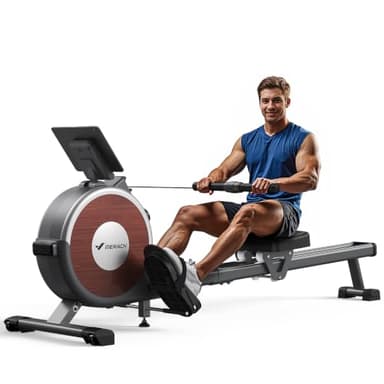
MERACH Q1S

MERACH Q1S

The budget rower that publishes the numbers the others hide: 350 lb capacity, users to 6 ft 7 in, 65 inches long, 58.9 lb — all stated on the listing.

Best first rower
$189.99 · Check price on Amazon

$259.9927% off

Price as of July 24, 2026. #ad How we’re funded

2
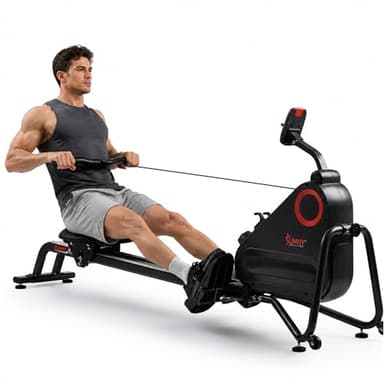
Sunny Health & Fitness Smart Dual-Rail Rower

Sunny Health & Fitness Smart Dual-Rail Rower

A 50-inch rail, 16 magnetic levels and a published 300 lb capacity, with covered dual rails that keep the running noise down.

Best to grow into
3
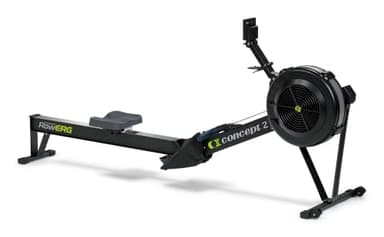
Concept2 RowErg

Concept2 RowErg

The machine every other rowing machine is measured against, and the only one here with no subscription, a 500 lb user limit and a five-year frame warranty at under a thousand dollars.

Best buy-once option
4
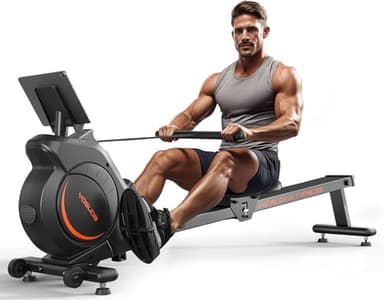
YOSUDA Magnetic Rower

YOSUDA Magnetic Rower

At 57.9 inches long and 43 lb it is the smallest full-stroke rower here — the one that fits a studio flat without a conversation about it.

Best if space is tight
$189.98 · Check price on Amazon

$237.9920% off

Price as of July 24, 2026. #ad How we’re funded

5
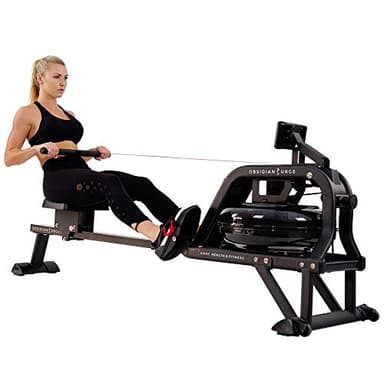
Sunny Health & Fitness Obsidian Surge

Sunny Health & Fitness Obsidian Surge

Water resistance and a 17-inch seat at roughly a quarter of a WaterRower's price, in steel rather than ash.

Best water starter
6
Sunny Health & Fitness Smart Compact Hydraulic Rower

Sunny Health & Fitness Smart Compact Hydraulic Rower

22.4 lb and 58 inches long — the cheapest and lightest way to start rowing, with all the compromises that implies.

Cheapest way to try

In detail

Every pick, and what is wrong with it

Each machine below gets the same four things: what it does well, what it does not, the five-year cost of owning it, and the case for buying something else instead.

MERACH Q1S rowing machine

1. Best first rower

MERACH Q1S

The budget rower that publishes the numbers the others hide: 350 lb capacity, users to 6 ft 7 in, 65 inches long, 58.9 lb — all stated on the listing.

Five years of ownership: $190 — all of it the machine, none of it a subscription. See the full table

Floor space: about 6.4 ft by 3.6 ft once you allow for handle travel and elbow room — roughly 23 sq ft.

What is good

  • 350 lb capacity and 6 ft 7 in maximum user height, both published — unusual candour at this price
  • Dual slide rail is more stable than the single rail most budget machines use
  • 16 magnetic levels and no subscription of any kind

What is not

  • 65 inches of rail is short if you are near the 6 ft 7 in ceiling — the limit and the comfortable limit are different numbers
  • Magnetic resistance does not build with stroke rate the way air does; hard efforts feel capped
  • 1-year manufacturer warranty

Skip this one if: Skip it if you plan to train intervals seriously — magnetic resistance at this price runs out of top end.

$189.99 · Check price on Amazon

$259.9927% off

Price as of July 24, 2026. #ad How we’re funded

Sunny Health & Fitness Smart Dual-Rail Rower rowing machine

2. Best to grow into

Sunny Health & Fitness Smart Dual-Rail Rower

A 50-inch rail, 16 magnetic levels and a published 300 lb capacity, with covered dual rails that keep the running noise down.

Five years of ownership: $400 — all of it the machine, none of it a subscription. See the full table

Floor space: about 7.6 ft by 3.6 ft once you allow for handle travel and elbow room — roughly 28 sq ft.

What is good

  • 50-inch rail — long enough for a full leg drive on most adults
  • Dual rails with protective coverings; the covers are doing acoustic work, not just cosmetic
  • 300 lb capacity published, and the SunnyFit app is free

What is not

  • 36.4 inches tall in use
  • 68 lb
  • 300 lb ceiling is lower than the MERACH Q1S at a higher price

Skip this one if: Skip it if you need more than 300 lb of capacity — the rail is excellent but the frame rating is the binding constraint.

Concept2 RowErg rowing machine

3. Best buy-once option

Concept2 RowErg

The machine every other rowing machine is measured against, and the only one here with no subscription, a 500 lb user limit and a five-year frame warranty at under a thousand dollars.

Five years of ownership: $990 — all of it the machine, none of it a subscription. See the full table

Floor space: about 9.0 ft by 4.0 ft once you allow for handle travel and elbow room — roughly 36 sq ft.

What is good

  • 500 lb published user capacity — the highest figure any manufacturer on this page prints
  • No subscription, ever. The PM5 records everything on its own and ErgData is free
  • Separates into two pieces in seconds for storage; front and rear sections stand upright
  • Five-year frame warranty, and a parts supply chain that still serves machines from the 1990s

What is not

  • 96 inches long in use, and Concept2 recommends a 9 ft x 4 ft footprint — it is not an apartment-corner machine
  • Air resistance is the loudest kind. Concept2 publishes no decibel figure and neither do we
  • The 14-inch seat is low; getting up off it is a real consideration if your knees are the reason you are rowing

Skip this one if: Skip it if your floor space is under 9 feet in one direction, or if you share a wall with someone who sleeps early — this is the loud one.

YOSUDA Magnetic Rower rowing machine

4. Best if space is tight

YOSUDA Magnetic Rower

At 57.9 inches long and 43 lb it is the smallest full-stroke rower here — the one that fits a studio flat without a conversation about it.

Five years of ownership: $190 — all of it the machine, none of it a subscription. See the full table

Floor space: about 5.8 ft by 3.5 ft once you allow for handle travel and elbow room — roughly 20 sq ft.

What is good

  • 57.9 inches long is close to two feet shorter than a Concept2
  • 43 lb, so one person can stand it up and move it without planning
  • 16 magnetic levels, PU rollers, and a genuinely quiet action

What is not

  • YOSUDA does not publish a user weight limit for this model
  • A short machine means a short stroke — taller rowers will feel it
  • The app is a companion, not a class library

Skip this one if: Skip it if you are over about 6 feet — measure your own leg extension against 57.9 inches before you order.

$189.98 · Check price on Amazon

$237.9920% off

Price as of July 24, 2026. #ad How we’re funded

Sunny Health & Fitness Obsidian Surge rowing machine

5. Best water starter

Sunny Health & Fitness Obsidian Surge

Water resistance and a 17-inch seat at roughly a quarter of a WaterRower's price, in steel rather than ash.

Five years of ownership: $450 — all of it the machine, none of it a subscription. See the full table

Floor space: about 7.7 ft by 3.8 ft once you allow for handle travel and elbow room — roughly 29 sq ft.

What is good

  • 17-inch seat height is unusually high for a budget machine — an easy step on and off
  • 16 hydro blades give the water sound and progressive resistance people buy water rowers for
  • Stores upright, and the SunnyFit app carries no membership fee

What is not

  • Steel frame rather than wood; the aesthetic that sells WaterRowers is not the point here
  • Sunny does not publish a user weight limit for this model
  • 34 inches tall in use, so it does not slide under anything

Skip this one if: Skip it if the wooden-rower look is half the reason you want one — no steel machine delivers that.

Sunny Health & Fitness Smart Compact Hydraulic Rower rowing machine

6. Cheapest way to try

Sunny Health & Fitness Smart Compact Hydraulic Rower

22.4 lb and 58 inches long — the cheapest and lightest way to start rowing, with all the compromises that implies.

Five years of ownership: $129 — all of it the machine, none of it a subscription. See the full table

Floor space: about 5.8 ft by 3.7 ft once you allow for handle travel and elbow room — roughly 21 sq ft.

What is good

  • 22.4 lb. You can pick it up with one hand and put it behind a sofa
  • 12 hydraulic resistance levels and a device holder
  • Free SunnyFit app, no membership

What is not

  • Hydraulic cylinders heat up during longer sessions and the resistance drifts as they do
  • No published user weight limit
  • The stroke is nothing like a real rowing stroke; this is a cardio machine that resembles one

Skip this one if: Skip it if you want to learn to row properly — buy the cheapest magnetic machine instead, not this.

How to choose

What actually decides this

What a first machine actually needs

  • A rail long enough for your legs. Around 46 inches works for most people up to about 6 ft; over that, look for 48 inches or more. If a listing does not state rail length, treat the machine as unknown rather than adequate.
  • A published weight capacity. Not because you are near it, but because publishing it means the frame was rated by somebody.
  • Resistance that stays where you put it. Magnetic does. Hydraulic drifts as the cylinders warm, which makes it hard to tell whether you are improving or the machine is just getting easier.
  • No subscription. You do not know yet whether you will still be rowing in six months. Committing to $39 a month before you know that is the expensive version of this mistake.

The three things beginners get wrong

Pulling with the arms first

The order is legs, then back, then arms — and on the recovery it reverses: arms, then back, then legs. Almost every new rower bends their arms too early, which both robs the stroke of power and puts the load on the smallest muscles involved. The four positions are worth ten minutes before your first session.

Setting the damper to 10

On an air rower the lever on the flywheel housing is not a difficulty dial. It changes how much air reaches the fan, which changes the character of the stroke, not how hard the workout is. Most competitive rowers train around 3 to 5. Setting it to 10 does not make you fitter; it makes the catch heavier and your stroke rate lower. The full explanation is here.

Rowing too hard, too early

Rowing is unusually good at letting you work hard before your technique can support it, because the machine does not care how you produce the force. Twenty minutes at a conversational pace, three times a week, builds a stroke. Two all-out sessions build a sore back.

Buy cheap, or buy once?

This is the real decision, and the honest answer depends on a question only you can answer: will you still be rowing in three years?

If you genuinely do not know — and most people genuinely do not — the MERACH Q1S at around $190 is the right amount to risk. It publishes 350 lb of capacity and a 6 ft 7 in maximum user height, it has a dual rail and 16 magnetic levels, and it costs nothing per month. If rowing does not stick, you are out less than a pair of running shoes.

If you already know you are the sort of person who keeps things, buy the Concept2 now. It costs roughly five times as much, and over five years it costs less than two budget machines and a subscription. The table shows this plainly.

Straight answers

Questions people actually ask

What is the best rowing machine for a complete beginner?

The MERACH Q1S is the sensible first machine: around $190, no subscription, a dual slide rail, 16 magnetic resistance levels, and published figures for both capacity (350 lb) and maximum user height (6 ft 7 in). It teaches a real stroke and it costs little enough that discovering rowing is not for you is not an expensive discovery.

How long should I row as a beginner?

Twenty minutes at a pace where you could still hold a conversation, three times a week, is a good starting point. Rowing lets you work hard before your technique can support it, which is how new rowers end up with sore backs. Build the stroke first; the intensity is easy to add later and hard to recover from if you add it too early.

Should a beginner buy a cheap rowing machine or an expensive one?

It depends on one question: will you still be rowing in three years? If you do not know, spend around $200 on a machine with a published rail length and capacity, and find out. If you already know you keep things, the Concept2 costs roughly five times as much and over five years works out cheaper than two budget machines and a subscription.

What damper setting should a beginner use?

Between 3 and 5 on an air rower. The damper is not a difficulty dial - it controls how much air reaches the flywheel, which changes the character of the stroke rather than the difficulty of the workout. Most competitive rowers train in that 3 to 5 range. Setting it to 10 makes the catch heavy and your stroke rate low, which is not the same as working harder.

Is rowing bad for your back?

Rowing with a short rail or poor sequencing can be. The stroke is legs, then body, then arms, with roughly 60% of the power from your legs. If the rail is too short for your inseam your legs run out of travel and you finish the movement with your lower back instead. That is why rail length is the first specification to check, ahead of price or resistance type. This is general information, not medical advice - if you have an existing back condition, talk to a doctor before starting.

Do I need a subscription to use a rowing machine?

No, and as a beginner you should avoid one. Every machine on this page except the Concept2 costs under $500 and none of them carry a recurring fee. Subscriptions appear on connected rowers at $29 to $50 a month, which over five years can exceed the price of the machine - a large commitment before you know whether rowing will stick.

The honest part

What we did not do

We have not rowed on these machines. We do not own them, there is no test lab here, and nobody writing this holds a coaching certification. Every ranking on this page is an argument from published specification and buyer fit, not from a stopwatch.

What we did do is read each manufacturer’s own published figures, record the ones they decline to publish, compute the floor space and the five-year cost, and date all of it. The full method is here so you can check our working or disagree with it.

Show your working

Sources

Keep going

Read next