Row & Recover

Fit, space and stature

Best Rowing Machines for Women

A rowing machine is not a gendered product. What actually varies is stature, floor space and preference - so this page ranks on rail length, step-over height and how the machine fits a real home.

By Stephen V.An enthusiast who reads the manuals and does the math. Not a coach, not a lab.Last verified July 24, 2026.

We earn a commission if you buy through the links on this page, at no cost to you. It has no effect on what we recommend or the order we recommend it in — we say “skip this one” on machines that pay us the same as the ones we like. How we’re funded.

Let us start with the honest answer the title invites: there is no such thing as a women’s rowing machine. The flywheel does not know or care who is pulling the handle, and no manufacturer here builds a separate model by gender. A rowing stroke is the same movement — roughly sixty percent legs, twenty percent core and back, twenty percent arms — whether the person doing it is five foot two or six foot four. So if you arrived expecting a gendered spec sheet, we are going to talk you out of it and into something more useful.

The reasons people run this search are real and practical, though, not imaginary. Shorter or more petite buyers want a stroke that does not run out of rail halfway through the leg drive, and a seat that is easy to step over rather than a low platform to lower yourself onto. Many people shopping this list are buying for a shared living space, where whether the machine wakes a partner or a sleeping child matters as much as any performance figure. And guided, class-based rowing is genuinely popular. Those are the things that vary from buyer to buyer, so those are what this page ranks on. Our how-to-choose guide lays out the same four decisions in order.

Concretely, this comes down to three things and nothing gendered: stature-fit (does the rail length match your leg drive, and can you get on and off the seat comfortably), footprint and storage (does it fit your room and go away afterward), and noise (can you use it without clearing the house first). The single number that decides more of it than any other is rail length measured against your own leg extension — get that wrong and even a great machine has you finishing the stroke with your back. Our space-requirements guide has the tape-measure math.

The short answer

Quick picks

Ranked on published specification, buyer fit and what each machine costs to keep over five years. Select a row to jump to the full write-up. We have not rowed on these machines — here is exactly what we do instead.

#MachineBest forPrice
1
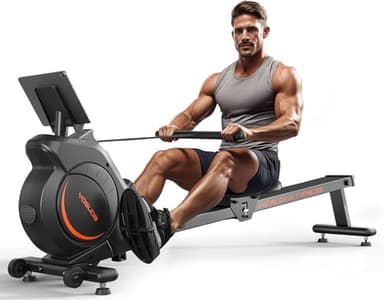
YOSUDA Magnetic Rower

YOSUDA Magnetic Rower

At 57.9 inches long and 43 lb it is the smallest full-stroke rower here — the one that fits a studio flat without a conversation about it.

Best for petite and shorter frames
2
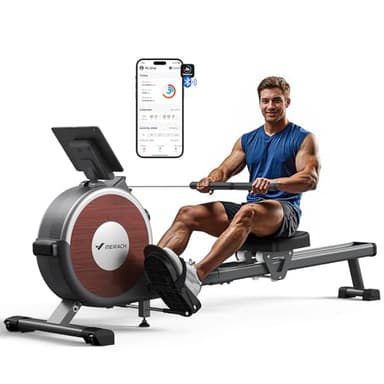
MERACH Q1S

MERACH Q1S

The budget rower that publishes the numbers the others hide: 350 lb capacity, users to 6 ft 7 in, 65 inches long, 58.9 lb — all stated on the listing.

Best value all-rounder
3
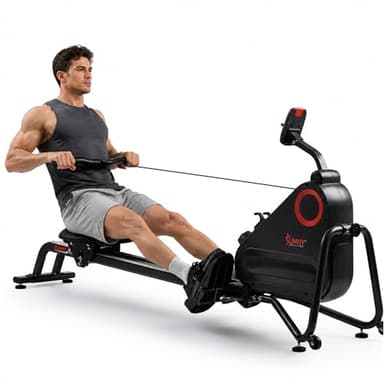
Sunny Health & Fitness Smart Dual-Rail Rower

Sunny Health & Fitness Smart Dual-Rail Rower

A 50-inch rail, 16 magnetic levels and a published 300 lb capacity, with covered dual rails that keep the running noise down.

Quietest for a shared home
4
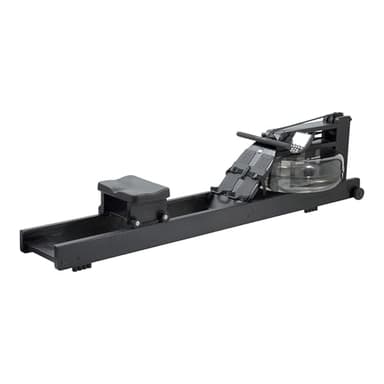
WaterRower Natural (Ash)

WaterRower Natural (Ash)

Hand-built in Rhode Island from sustainably sourced ash, stores on end in about two square feet, and has no subscription attached to it at all.

Best for a living room
5
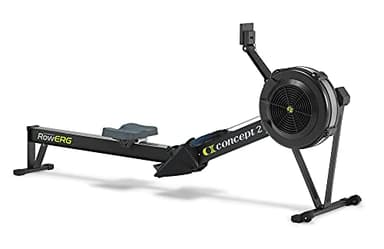
Concept2 RowErg

Concept2 RowErg

The machine every other rowing machine is measured against, and the only one here with no subscription, a 500 lb user limit and a five-year frame warranty at under a thousand dollars.

Best to grow into
6
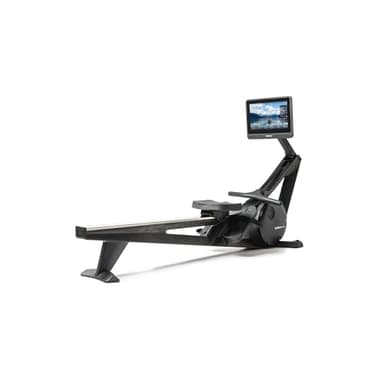
Hydrow Wave

Hydrow Wave

The narrowest serious connected rower at 19 inches wide, and the one whose five-year cost is dominated by the membership rather than the machine.

Best for guided classes

In detail

Every pick, and what is wrong with it

Each machine below gets the same four things: what it does well, what it does not, the five-year cost of owning it, and the case for buying something else instead.

YOSUDA Magnetic Rower rowing machine

1. Best for petite and shorter frames

YOSUDA Magnetic Rower

At 57.9 inches long and 43 lb it is the smallest full-stroke rower here — the one that fits a studio flat without a conversation about it.

Floor space: about 5.8 ft by 3.5 ft once you allow for handle travel and elbow room — roughly 20 sq ft.

What is good

  • 57.9 inches long is close to two feet shorter than a Concept2
  • 43 lb, so one person can stand it up and move it without planning
  • 16 magnetic levels, PU rollers, and a genuinely quiet action

What is not

  • YOSUDA does not publish a user weight limit for this model
  • A short machine means a short stroke — taller rowers will feel it
  • The app is a companion, not a class library

Skip this one if: Skip it if you are over about 6 feet — measure your own leg extension against 57.9 inches before you order.

MERACH Q1S rowing machine

2. Best value all-rounder

MERACH Q1S

The budget rower that publishes the numbers the others hide: 350 lb capacity, users to 6 ft 7 in, 65 inches long, 58.9 lb — all stated on the listing.

Floor space: about 6.4 ft by 3.6 ft once you allow for handle travel and elbow room — roughly 23 sq ft.

What is good

  • 350 lb capacity and 6 ft 7 in maximum user height, both published — unusual candour at this price
  • Dual slide rail is more stable than the single rail most budget machines use
  • 16 magnetic levels and no subscription of any kind

What is not

  • 65 inches of rail is short if you are near the 6 ft 7 in ceiling — the limit and the comfortable limit are different numbers
  • Magnetic resistance does not build with stroke rate the way air does; hard efforts feel capped
  • 1-year manufacturer warranty

Skip this one if: Skip it if you plan to train intervals seriously — magnetic resistance at this price runs out of top end.

Sunny Health & Fitness Smart Dual-Rail Rower rowing machine

3. Quietest for a shared home

Sunny Health & Fitness Smart Dual-Rail Rower

A 50-inch rail, 16 magnetic levels and a published 300 lb capacity, with covered dual rails that keep the running noise down.

Floor space: about 7.6 ft by 3.6 ft once you allow for handle travel and elbow room — roughly 28 sq ft.

What is good

  • 50-inch rail — long enough for a full leg drive on most adults
  • Dual rails with protective coverings; the covers are doing acoustic work, not just cosmetic
  • 300 lb capacity published, and the SunnyFit app is free

What is not

  • 36.4 inches tall in use
  • 68 lb
  • 300 lb ceiling is lower than the MERACH Q1S at a higher price

Skip this one if: Skip it if you need more than 300 lb of capacity — the rail is excellent but the frame rating is the binding constraint.

WaterRower Natural (Ash) rowing machine

4. Best for a living room

WaterRower Natural (Ash)

Hand-built in Rhode Island from sustainably sourced ash, stores on end in about two square feet, and has no subscription attached to it at all.

Floor space: about 7.8 ft by 3.8 ft once you allow for handle travel and elbow room — roughly 30 sq ft.

What is good

  • Stands on end when you are done — the stored footprint is roughly 22 by 20 inches
  • Wood absorbs vibration in a way steel does not; the sound is water, not a fan
  • No subscription. The S4 monitor is self-contained and always has been

What is not

  • 103.5 lb filled with water, which is what you are moving when you stand it up
  • WaterRower does not publish a user weight limit on this listing
  • Water needs topping up and occasional purification tablets — a small but real running cost

Skip this one if: Skip it if you want split times and watts to compare against other rowers — the S4 is a fine monitor but the Concept2 PM5 is the sport's common language.

Concept2 RowErg rowing machine

5. Best to grow into

Concept2 RowErg

The machine every other rowing machine is measured against, and the only one here with no subscription, a 500 lb user limit and a five-year frame warranty at under a thousand dollars.

Floor space: about 9.0 ft by 4.0 ft once you allow for handle travel and elbow room — roughly 36 sq ft.

What is good

  • 500 lb published user capacity — the highest figure any manufacturer on this page prints
  • No subscription, ever. The PM5 records everything on its own and ErgData is free
  • Separates into two pieces in seconds for storage; front and rear sections stand upright
  • Five-year frame warranty, and a parts supply chain that still serves machines from the 1990s

What is not

  • 96 inches long in use, and Concept2 recommends a 9 ft x 4 ft footprint — it is not an apartment-corner machine
  • Air resistance is the loudest kind. Concept2 publishes no decibel figure and neither do we
  • The 14-inch seat is low; getting up off it is a real consideration if your knees are the reason you are rowing

Skip this one if: Skip it if your floor space is under 9 feet in one direction, or if you share a wall with someone who sleeps early — this is the loud one.

Hydrow Wave rowing machine

6. Best for guided classes

Hydrow Wave

The narrowest serious connected rower at 19 inches wide, and the one whose five-year cost is dominated by the membership rather than the machine.

Floor space: about 7.7 ft by 3.6 ft once you allow for handle travel and elbow room — roughly 27 sq ft.

What is good

  • 19 inches wide and 80 long — it genuinely fits rooms that a Concept2 does not
  • Electromagnetic resistance is near-silent compared with any air rower
  • Stores upright, which is the difference between owning one in a flat and not

What is not

  • The membership is the product. At $50/month it adds $3,000 over five years — more than most rowers on this page cost outright
  • 1-year manufacturer warranty against Concept2's five on the frame
  • Hydrow does not publish a user weight limit for the Wave on this listing

Skip this one if: Skip it if you will not use classes. Without the membership you are left with a heavy magnetic rower and a dark screen.

How to choose

What actually decides this

Stature and stroke length

The most practical difference for a shorter buyer is how long the machine is and how long a stroke it allows. The YOSUDA magnetic rower is the shortest full-stroke machine on this list at 57.9 inches long — close to two feet shorter than a Concept2. For a shorter or petite frame that is a double win: your leg drive is shorter to begin with, so you give up nothing in stroke, and the machine takes far less floor. It is also light, at 43 pounds, so one person can stand it up against a wall without a second set of hands. That combination is why it takes best for petite and shorter frames.

The caveat is the honest one, and it cuts the other way. A short machine means a short rail, and a short rail is a problem for a tall rower: when your legs run out of track before they run out of extension, you finish the drive by reaching with your back — the rounded, lower-spine-loaded position nobody wants. YOSUDA does not publish a maximum user height, so if you are near or over six feet, measure your own leg extension against 57.9 inches before you order rather than trusting a general reassurance. Taller buyers have better-fitting options: the MERACH Q1S publishes users up to 6 feet 7 inches, the Concept2 RowErgcomfortably fits rowers well over six feet, and Concept2 sells that same machine on tall legs. The point is not that shorter people need a special machine — most rowers fit a wide range of heights — it is that stature, not gender, is the variable that actually decides fit.

Getting on and off: seat height

For some buyers the harder question than the stroke is the transfer — sitting down onto the seat and standing back up off it. Here we have to be straight about a gap in the data: most of the machines on this page do not publish a seat height at all. The MERACH Q1S, the YOSUDA, the Sunny Dual-Rail and the WaterRower Natural all leave it off the listing, so we will not invent a number for them.

The two machines that do publish it are both Concept2s, and they sit at opposite ends. The standard Concept2 RowErg has a 14-inch seat, which is low — closer to a footstool than a chair — so standing up means pushing up from near the floor. The same machine on tall legs raises that to 20 inches, roughly dining-chair height, so you sit and stand the way you would from any chair. If an easy step-over is genuinely your priority, that six-inch difference is the clearest published lever you have. For everyone else the advice is old-fashioned: if you can sit on a machine in a store before you buy, do it, because transfer ease and seat comfort are individual and no spec sheet captures them.

A shared home: quiet and storage

If the machine lives in a room other people use or sleep near, two things matter more than any performance figure: how loud it is and where it goes when you are done. On noise, magnetic resistance is the quiet winner. It is near-silent by design — a level dial sets the resistance and there is no fan to whoosh — which is why three of the six picks are magnetic. The YOSUDA has a genuinely quiet action, and the Sunny Dual-Rail goes further still: its rails are covered, and those covers are doing acoustic work rather than just looking tidy, which is why it takes quietest for a shared home. Water rowers like the WaterRower Natural are not silent but they are pleasant — a low water whoosh rather than a mechanical noise. Air rowers such as the Concept2 are the loudest kind; the resistance is a fan, and the sound carries. No manufacturer in this category publishes a decibel figure, so we do not quote one.

On storage, the WaterRower Natural is the standout: it stands on end in about two square feet, which is what earns it best for a living room — it looks like furniture and stores like a bookshelf. The Concept2 separates into two pieces in seconds and both halves stand upright. The magnetic machines all tip up onto a base wheel. A rower you have to walk around all day is a rower you resent; a rower that tucks away is one you keep. If space and quiet are your binding constraints, the apartment and quiet lists go deeper on exactly this.

What the resistance type changes

Resistance type is really a decision about noise, feel and upkeep, not about who is using the machine. Magnetic is quiet, consistent, cheap and folds away, with the resistance set by a dial; its honest limit is the top end, because it does not build with your stroke rate the way air does, so hard interval efforts feel capped. Water is self-scaling — the harder you pull, the more it pushes back — with a pleasant whoosh and upright storage, at the cost of weight and the occasional purification tablet in the tank. Air, the choice for competitive training, is the loudest and also self-regulating. For most buyers on this page, quiet and compact point to magnetic; a smoother, more organic stroke and living-room looks point to water; and wanting to train to a standard the whole sport shares points to the air Concept2.

Budget versus buy-once

Price splits this list into two honest camps. If you are not yet sure rowing will stick, the MERACH Q1S is the value all-rounder: it publishes the numbers cheaper machines hide — a 350-pound capacity, users to 6 feet 7 inches, 16 magnetic levels — and asks for no subscription. It is the sensible way to find out whether you will actually row before you spend real money.

The other camp is buy-once. The Concept2 RowErg and the WaterRower Natural cost more up front, but neither carries a subscription and both last for years, which is why we call the Concept2 the one to grow into — it is the machine the whole sport is measured against, with a 500-pound capacity and a five-year frame warranty. Over a five-year horizon a durable no-subscription machine can cost less than a cheaper one paired with a monthly membership, because the membership never stops. Our five-year cost breakdown shows the arithmetic, and the no-subscription list collects every machine here with no monthly cost at all.

Guided classes, honestly

If what draws you to rowing is a coach on a screen and a class to follow, the Hydrow Wave is the pick, and it happens to suit a shared home for reasons unrelated to classes: at 19 inches wide it is the narrowest serious connected rower, it is near-silent electromagnetic, and it stores upright. That is why it takes best for guided classes.

But be clear-eyed about the model. With a connected rower the membership is the product, and Hydrow’s runs about $50 a month — roughly $3,000 over five years, more than most machines on this page cost outright — and without it you are left with a heavy magnetic rower and a dark screen. That is not a reason to avoid it; classes keep some people rowing who would otherwise quit, and adherence is the whole game. It is a reason to count the real cost before you commit. The connected rowers list compares the screens and the monthly fees side by side.

So which one

For a petite or shorter frame in a small room, the YOSUDA magnetic is the natural fit. For the best all-round value while you find out whether rowing sticks, the MERACH Q1S. For the quietest option in a shared home, the Sunny Dual-Rail. For a living room where the machine has to look like furniture, the WaterRower Natural. For a machine to grow into for years, the Concept2 RowErg — just know its seat is low. And for guided classes, the Hydrow Wave, membership counted. None of that is gendered advice; it is fit advice, and fit is individual — if you can sit on a machine before you buy it, that half-hour tells you more than any paragraph here can.

Straight answers

Questions people actually ask

Is there a difference between men's and women's rowing machines?

No. Rowing machines are unisex - no manufacturer here builds a separate model by gender, and the rowing stroke is the same movement regardless of who does it. Choose on fit, not sex: the rail length against your leg drive, how easily you can get on and off the seat, the footprint in your room and the noise in your home. Those vary by stature and situation, not by gender.

What is the best rowing machine for a shorter or petite person?

Look for the shortest full stroke and an easy step-over. The YOSUDA magnetic is the shortest full-stroke machine here at 57.9 inches, so a shorter leg drive loses nothing and the machine saves floor space, and at 43 lb one person can move it. If you want a higher seat that is easier to stand up from, Concept2 sells its RowErg on tall legs with a 20-inch seat against the standard 14 inches. If you are near six feet, measure your own leg extension before buying a short machine.

Are rowing machines good for weight loss or toning for women?

Rowing is full-body, low-impact cardio for anyone - it works the legs, core, back and arms in one stroke and does not pound the joints, since you sit and the seat carries your weight. The benefits are the same regardless of gender. We do not publish calorie-burn figures because they depend entirely on the individual and the effort, and no honest number can be printed for a machine in the abstract.

Which rowing machine is quietest for an apartment?

Magnetic machines are the quietest - the resistance is set by a dial and there is no fan, so they are near-silent. Among these picks the Sunny Dual-Rail is the quietest for a shared home because its dual rails are covered, which cuts the running noise, and the YOSUDA is also genuinely quiet. Air rowers like the Concept2 are the loudest kind. No manufacturer publishes a decibel figure for this category, so we do not quote one.

The honest part

What we did not do

We have not rowed on these machines. We do not own them, there is no test lab here, and nobody writing this holds a coaching certification. Every ranking on this page is an argument from published specification and buyer fit, not from a stopwatch.

What we did do is read each manufacturer’s own published figures, record the ones they decline to publish, compute the floor space and the five-year cost, and date all of it. The full method is here so you can check our working or disagree with it.

Show your working

Sources

Keep going

Read next