The only score that transfers is a Concept2 score
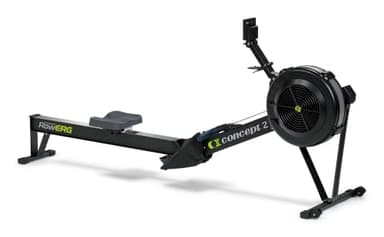
Comparability is the entire reason the Concept2 RowErg wins this page. A 2k or a 5k is a number about you only if the conditions behind it are the same as everyone else’s, and that is what a single dominant machine buys a sport. Concept2 states the RowErg “has become the standard for training, testing and racing” in its own published specifications, and every squad erg test and indoor race you will be entered into assumes it.
The PM5 monitor is the other half of that. Concept2’s free ErgData app connects to any Concept2 machine with a PM5 and, in Concept2’s words, “automatically syncs both ways with your Logbook.” It records drive length, drive time, drive speed, stroke count, drag factor, peak force and average force — which is the difference between doing a piece and being able to look at what your stroke actually did afterwards. Note the hardware requirement honestly: the current version of ErgData does not support the older PM3 and PM4 monitors, so a secondhand erg with an older head unit does not get you this. What counts as a good 2k and how to read a 500m split both assume the same machine underneath.
Log the drag factor, not the damper
The damper lever is the most misunderstood part of an air rower, and on-water rowers arrive with more baggage about it than anyone. Concept2 numbers the lever 1–10 and describes the feel rather than the resistance: “at a damper setting of 1–4, the indoor rower feels like a sleek racing shell; at the higher numbers, the indoor rower feels like a slow rowboat.” Its own advice is to start at 3–5, not to crank the lever to 10 because that is what the strong-looking person at the gym does.
The number worth writing in your log is the drag factor, because the same damper setting produces different drag factors on different machines — temperature, altitude and how clean the flywheel screen is all move it. Drag factor explained covers the arithmetic, and the damper setting guide covers the lever. If you take one habit from this page into your winter, make it that one: record the drag factor beside the split.
Water resistance buys feel, not comparability
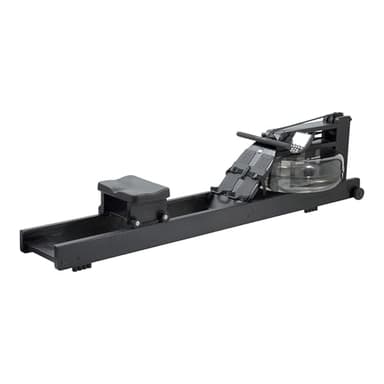
The WaterRower Natural is here because a paddle turning in a tank of water loads the stroke the way water does — the resistance rises with how hard you pull rather than sitting at whatever the lever was left on, and the sound is water instead of a fan. It is hand-built in Rhode Island from sustainably sourced ash, stands on end in roughly a 22-by-20-inch footprint, and has no subscription attached to it. For a rower who spends the season on the water and wants the off-season to feel less like a treadmill, that is a real argument.
The honest limit: an S4 monitor does not produce a number anyone else can check, so a water rower is a training machine, not a testing one. WaterRower also does not publish a user weight limit on this listing, and the machine is 103.5 lb once it is filled — which is what you are lifting when you stand it up. The full water-rower roundup goes deeper, and our WaterRower review covers the range.
If you scull, two handles behave like two oars
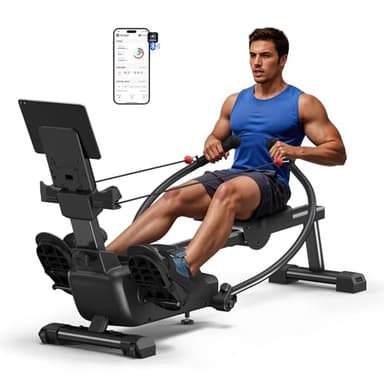
Every erg in the paragraphs above gives you one handle, which is a sweep-shaped movement pretending to be everything. The MERACH R26 Sculls is the one machine in this registry that does not: two independent handles moving through a 120-degree arc, so you can row alternating, one-armed or synchronized, with 80 lb of peak magnetic resistance across 16 levels. MERACH publishes a 6 ft 4 in fit and 60.6 x 29.5 x 28.3 in dimensions.
Read its cons before you get excited, because they are the point: the stroke is not the one you will meet on a Concept2, so times do not transfer; it is 29.5 inches wide because the arms need somewhere to go; and there is no published user weight limit. If your winter is scored on 2k tests, this is the wrong machine. If your winter is about keeping a sculling-shaped movement alive and giving your upper back a different stimulus, nothing else here does it.
Full compression is a geometry question
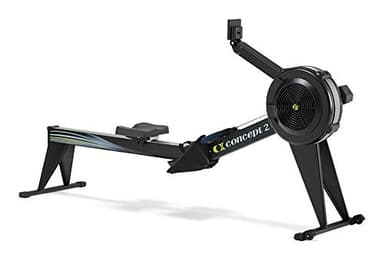
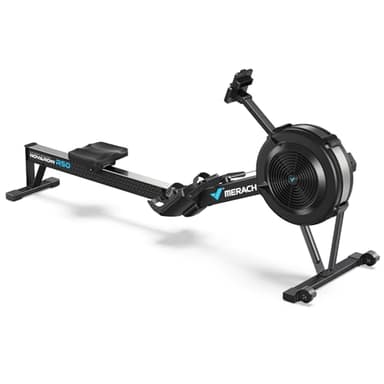
A rowing stroke needs enough rail for your shins to come vertical at the catch and your legs to go flat at the finish. Concept2 publishes a 54-inch monorail and states that users with an inseam of 38 inches or more may require an extra-long monorail — the most precise fit guidance anyone in this category prints. The tall-legs RowErg does not change the rail; it raises the seat from 14 inches to 20, which is about getting on and off, not about stroke length. The MERACH R50 Pro is on this page because it publishes full 95-inch competition-style geometry rather than a shortened budget rail, which is the specification most cheap machines quietly cut. Our tall-user picks deal with the rest of that arithmetic.
Winter volume without a club membership
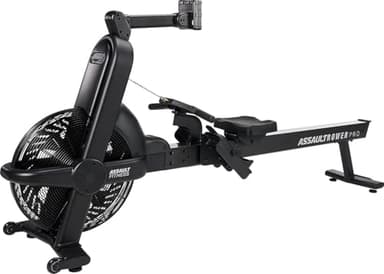
If the machine is for base mileage in a cold garage rather than for testing, the Assault Rower Pro is the durable answer: a dual-stage chain-and-belt drive built for interval abuse, completely human-powered so it needs no socket anywhere near it, and foldable despite a 109 lb commercial build. The honest cons are that 109 lb is a lot of machine to move, the console is functional rather than rich, and Assault publishes no user weight limit on this listing. The air-rower roundup and the commercial-grade list both cover the same machines from a different angle.
What no erg will do for you
Worth saying plainly on a page aimed at people who race boats: an ergometer builds the engine and nothing else. It does not teach blade work, it does not punish poor balance, it does not steer, and it will never ask you to time a catch with seven other people. Rowers who improve over a winter do it because the erg made them fitter and because they went back to the water and rowed. How much rowing-machine work actually transfers to the boat is the honest version of that argument, and it is worth reading before you spend anything.