How to think about a rowing brand
A useful way to read this category is that brands cluster into three rough camps, and knowing which camp you belong in narrows the field faster than any spec. There are the training brands, which build bare, durable machines with excellent monitors and no monthly fee, and expect you to bring your own motivation. There are the connected brands, which build the screen and the class library first and the rower second, and whose real product is the membership. And there are the value brands, which get you a competent, subscription-free machine for the least money, accepting that some published numbers will be missing and some parts will not last a decade. None of these is wrong; they are answers to different questions. What follows is the flagship of each brand that matters, and who it is for.
Concept2: the standard everything else is measured against
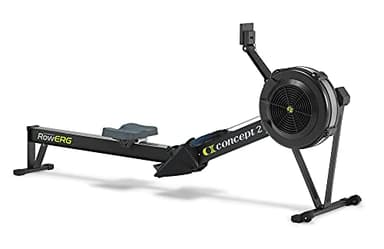
If you asked a room of competitive rowers which brand to buy, most would name Concept2 before you finished the sentence, and the Concept2 RowErg is why it is our best for training pick. This is the machine the sport standardizes on: a published 500 lb user capacity, the PM5 monitor that every erg race and online leaderboard speaks, no subscription ever, a five-year frame warranty, and a parts chain that still supports machines from the 1990s. It separates into two pieces in seconds for storage. The honest weakness is not quality but living-room manners: air resistance is the loudest mechanism there is, and Concept2 publishes no decibel figure; the machine is 96 inches long and wants a nine-by-four-foot footprint; and the 14-inch seat sits low to the floor. You buy a Concept2 to train and to keep it for decades, not to hide it in a corner or watch a class on it. Our full Concept2 buyer’s guide covers the standard-versus-tall decision.
WaterRower: the machine you would leave out in the living room
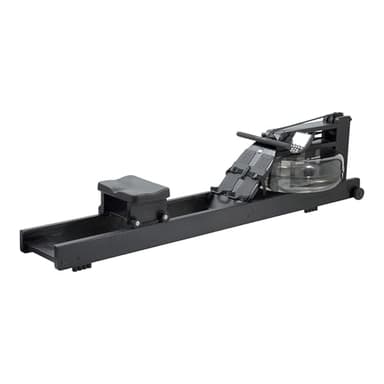
WaterRower is the brand that treats a rowing machine as furniture, and the WaterRower Natural in ash is our best wooden waterpick for exactly that reason. It is hand-built from sustainably sourced hardwood, it stands upright on end in about two square feet when you are done, the paddle moving through real water gives a smooth, self-matching stroke and a sound that is water rather than a fan, and there is no subscription attached — the S4 monitor has always been self-contained. The honest weaknesses: it is the priciest machine among these brand flagships; it weighs over a hundred pounds filled with water, which is what you are lifting when you stand it up; WaterRower publishes no user-weight limit on this listing; and the water itself needs occasional topping up and purification tablets. If split times you can compare against the wider sport matter more than the object itself, the Concept2 PM5 is the common language the S4 is not. See the water rower roundup for how it compares to steel-framed rivals.
Hydrow: the class experience, first and foremost
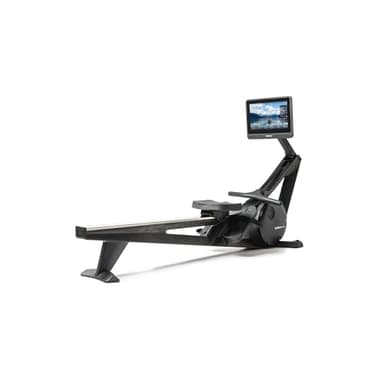
Hydrow builds the studio-class experience before it builds the rower, and the Hydrow Wave is our best classes pick: a bright, near-silent electromagnetic machine, unusually narrow at 19 inches wide so it fits rooms a Concept2 cannot, that stores upright and puts a 16-inch screen of on-the-water and studio content in front of you. The honest weakness is the one Hydrow is least eager to foreground: the membership is the product. At around $50 a month it adds roughly $3,000 over five years — more than most machines on this site cost outright — the manufacturer warranty is one year against Concept2’s five on the frame, and Hydrow publishes no user-weight limit for the Wave on this listing. Without the membership you are left with a heavy magnetic rower and a dark screen. This is a brand for people who know they are buying classes and will use them. The Hydrow cost breakdown has the full five-year figure.
NordicTrack: guided workouts on a big screen
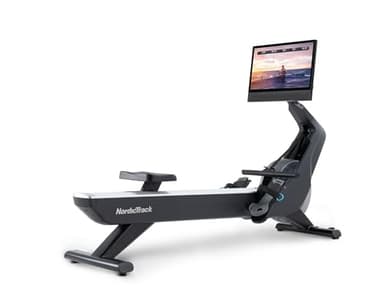
NordicTrack’s pitch is coached, scenic workouts on the largest screens in the category, and the NordicTrack RW900 is our best guided workoutspick: a 24-inch pivoting touchscreen, the biggest here, that turns to face the floor for off-rower classes, 26 digital resistance levels with SmartAdjust changing them mid-workout, and silent magnetic resistance that is a genuinely different noise profile from air. The honest weakness is stated on the machine’s own listing: the connected features require an iFIT membership at about $39 a month, which is most of what you are buying; the machine is 145 lb and stands over four feet tall with the screen up; and NordicTrack publishes no user-weight limit here. If recurring fees bother you, this is a brand designed around one — though its cheaper sibling, the RW300, is the way into NordicTrack without the mandatory subscription, as our connected roundup explains.
Sunny Health & Fitness: the value brand that still publishes its numbers
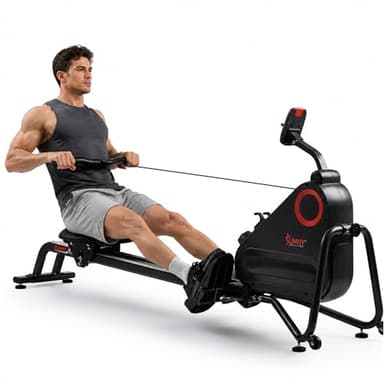
Sunny is the brand for buyers who want a competent, subscription-free machine and are not prepared to spend Concept2 money, and the Sunny Smart Dual-Rail is our best value brand pick because it does the thing budget brands usually will not: it prints the numbers. A 50-inch rail, long enough for a full leg drive on most adults, 16 magnetic resistance levels, a published 300 lb capacity, covered dual rails that are doing acoustic work rather than just looking tidy, and a free SunnyFit app with no membership fee. The honest weaknesses: that 300 lb ceiling is lower than some cheaper machines publish and is the binding constraint on the frame; it stands about three feet tall in use; and the fit and finish are value-grade, not heirloom. Sunny is where your money goes furthest without walking into unpublished-spec territory, and we put it head to head with the standard in our Concept2 versus Sunny comparison.
MERACH: budget air that copies the right homework
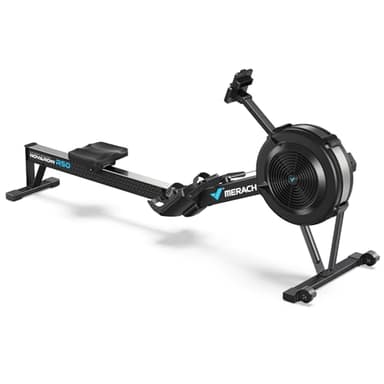
MERACH is the value brand that aims higher than most, and the MERACH NovaRow R50 Pro is our best budget airpick because it reproduces a competition layout at roughly half the money: a full 95-inch, Concept2-style geometry rather than a shortened budget rail, a 32-blade fan for air resistance that scales with your effort, a frame that separates into two sections and stores vertically, and a competition-style monitor with more than twenty training modes, shipping mostly pre-assembled. The honest weaknesses are the ones that separate a value air rower from the reference: MERACH publishes no user-weight limit for this model, which matters more on an air rower than most; there is nothing like Concept2’s decades-long parts availability if something fails in year six; and at 95 inches it needs the same generous floor as the machine it undercuts. It is the closest the budget end gets to an air-rower feel, with the parts-support gap as the trade. Compare it against the field in the air rower roundup.
YOSUDA: the small-room specialist
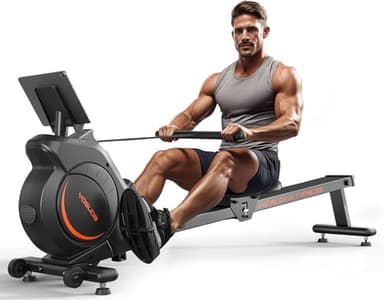
YOSUDA is built around a single, unfashionable virtue — fitting — and the YOSUDA Magnetic Rower is our best compact pick because it is the smallest full-stroke machine here: 57.9 inches long, close to two feet shorter than a Concept2, and just 43 lb, so one person can stand it up and move it without a plan. It offers 16 magnetic levels, PU rollers and a genuinely quiet action, which is what a shared flat needs. The honest weaknesses follow from the size: YOSUDA publishes no user-weight limit for this model; a short machine means a short rail, so rowers much over six feet will feel the stroke run out; and the app is a companion, not a class library. If your real constraint is square footage rather than budget or training goals, this is the brand that solves it, and the magnetic roundup lists the quiet alternatives.
So which brand is for you
Match the brand to your camp and the choice makes itself. If you are here to train and keep the machine for years, Concept2 is the standard for a reason and its parts will not be discontinued out from under you. If you want the machine to be a beautiful object you leave on display, WaterRower. If you know you will show up for classes and the membership is a feature rather than a tax, Hydrow for the studio feel or NordicTrack for the biggest guided screen. If you want the most machine for the least money without walking into missing specs, Sunny; if you specifically want an air-rower feel on a budget, MERACH; and if the room is the whole problem, YOSUDA. Whichever badge wins, buy it for the strength that fits your camp and go in clear-eyed about the flaw that comes with it — there is no brand here without one.