Row & Recover

Low-impact, supportive

Best Rowing Machines for Back Pain

Six machines ranked for a back-sensitive buyer on the specs that actually help — seat height, resistance smoothness and rail length — framed as equipment choice, not medical advice.

By Stephen V.An enthusiast who reads the manuals and does the math. Not a coach, not a lab.Last verified July 24, 2026.

We earn a commission if you buy through the links on this page, at no cost to you. It has no effect on what we recommend or the order we recommend it in — we say “skip this one” on machines that pay us the same as the ones we like. How we’re funded.

Let us be clear about what a rowing machine is and is not. None of the six below will treat a sore back, and no line on any spec sheet is a substitute for advice from someone who has examined yours. What a machine can do is make a good rowing stroke easier to hold — and a good stroke is a hip hinge and a leg drive that keeps the load off your lower spine, rather than a round-backed heave that puts it there.

That is why, for a back-sensitive buyer, the brand on the flywheel matters less than the movement you make on it. Rowing done well is one of the more back-friendly cardio options there is; rowing done badly, on any machine, is a way to aggravate the thing you were trying to work around. The single biggest variable is your form, and form is free. Our form guide and the longer piece on rowing and your back cover it in detail.

The equipment still counts, though, in four specific ways. A seat you can get on and off without twisting or dropping to the floor. Resistance that builds smoothly through the stroke instead of snatching at the catch. A rail long enough to let your legs reach full extension, so you are not cutting the stroke short and compensating with your back. And a seat that supports you for twenty minutes rather than numbing you in five. We ranked these six on the published versions of those attributes — seat height, resistance type, rail length — and named what each maker leaves off the sheet.

Where a manufacturer does not publish a seat height, a rail length or a user-weight limit, we write “not published” rather than guess. For a buyer whose back is the reason they are shopping, an omitted number is itself worth knowing.

The short answer

Quick picks

Ranked on published specification, buyer fit and what each machine costs to keep over five years. Select a row to jump to the full write-up. We have not rowed on these machines — here is exactly what we do instead.

#MachineBest forPrice
1
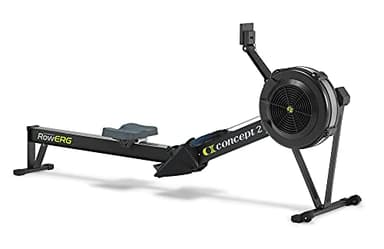
Concept2 RowErg

Concept2 RowErg

The machine every other rowing machine is measured against, and the only one here with no subscription, a 500 lb user limit and a five-year frame warranty at under a thousand dollars.

Best for learning good form
2
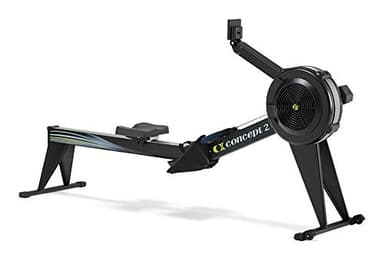
Concept2 RowErg with Tall Legs

Concept2 RowErg with Tall Legs

The same machine with the seat 6 inches higher. That one change is the difference between a rower you can get off unaided and one you cannot.

Easiest to get on and off
3
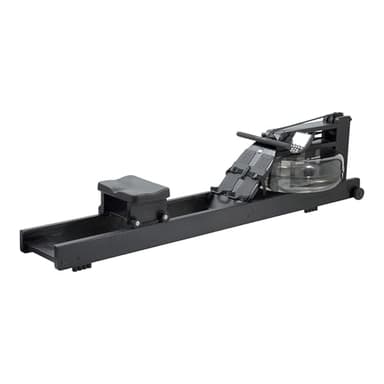
WaterRower Natural (Ash)

WaterRower Natural (Ash)

Hand-built in Rhode Island from sustainably sourced ash, stores on end in about two square feet, and has no subscription attached to it at all.

Smoothest, most natural stroke
4
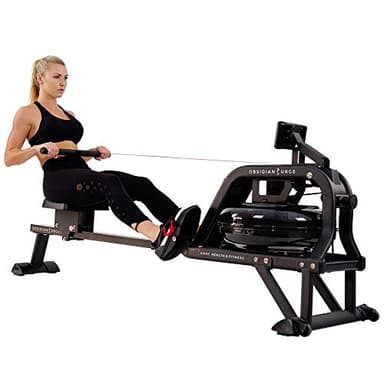
Sunny Health & Fitness Obsidian Surge

Sunny Health & Fitness Obsidian Surge

Water resistance and a 17-inch seat at roughly a quarter of a WaterRower's price, in steel rather than ash.

Highest seat for the money
5
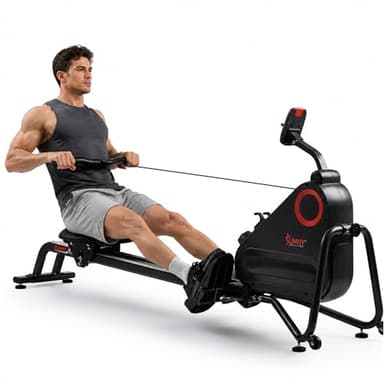
Sunny Health & Fitness Smart Dual-Rail Rower

Sunny Health & Fitness Smart Dual-Rail Rower

A 50-inch rail, 16 magnetic levels and a published 300 lb capacity, with covered dual rails that keep the running noise down.

Best budget pick
6
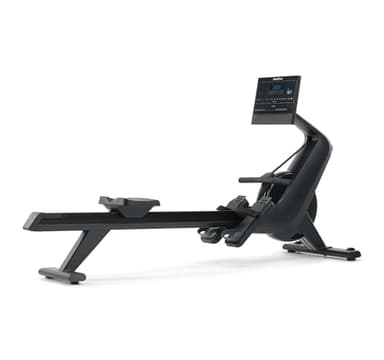
NordicTrack RW300

NordicTrack RW300

The NordicTrack that does not need a subscription to be a rowing machine — a plain 5-inch LCD, 26 manual resistance levels and a device shelf for your own tablet.

Best guided form coaching

In detail

Every pick, and what is wrong with it

Each machine below gets the same four things: what it does well, what it does not, the five-year cost of owning it, and the case for buying something else instead.

Concept2 RowErg rowing machine

1. Best for learning good form

Concept2 RowErg

The machine every other rowing machine is measured against, and the only one here with no subscription, a 500 lb user limit and a five-year frame warranty at under a thousand dollars.

Floor space: about 9.0 ft by 4.0 ft once you allow for handle travel and elbow room — roughly 36 sq ft.

What is good

  • 500 lb published user capacity — the highest figure any manufacturer on this page prints
  • No subscription, ever. The PM5 records everything on its own and ErgData is free
  • Separates into two pieces in seconds for storage; front and rear sections stand upright
  • Five-year frame warranty, and a parts supply chain that still serves machines from the 1990s

What is not

  • 96 inches long in use, and Concept2 recommends a 9 ft x 4 ft footprint — it is not an apartment-corner machine
  • Air resistance is the loudest kind. Concept2 publishes no decibel figure and neither do we
  • The 14-inch seat is low; getting up off it is a real consideration if your knees are the reason you are rowing

Skip this one if: Skip it if your floor space is under 9 feet in one direction, or if you share a wall with someone who sleeps early — this is the loud one.

Concept2 RowErg with Tall Legs rowing machine

2. Easiest to get on and off

Concept2 RowErg with Tall Legs

The same machine with the seat 6 inches higher. That one change is the difference between a rower you can get off unaided and one you cannot.

Floor space: about 9.0 ft by 4.0 ft once you allow for handle travel and elbow room — roughly 36 sq ft.

What is good

  • 20-inch seat height instead of 14 — close to a dining chair, so you stand up rather than push up off the floor
  • Identical 500 lb capacity, PM5 monitor and no-subscription position as the standard RowErg
  • Easier transfer on and off makes it the sensible pick for older rowers and anyone rehabbing

What is not

  • Concept2 publishes 68 lb with tall legs against 57 lb standard — 11 lb more to move
  • Stored footprint grows to 27 x 47 x 54 in
  • Costs meaningfully more than the standard-leg model for one dimensional change

Skip this one if: Skip it if you have no trouble getting off a low seat — you are paying extra for height you do not need.

WaterRower Natural (Ash) rowing machine

3. Smoothest, most natural stroke

WaterRower Natural (Ash)

Hand-built in Rhode Island from sustainably sourced ash, stores on end in about two square feet, and has no subscription attached to it at all.

Floor space: about 7.8 ft by 3.8 ft once you allow for handle travel and elbow room — roughly 30 sq ft.

What is good

  • Stands on end when you are done — the stored footprint is roughly 22 by 20 inches
  • Wood absorbs vibration in a way steel does not; the sound is water, not a fan
  • No subscription. The S4 monitor is self-contained and always has been

What is not

  • 103.5 lb filled with water, which is what you are moving when you stand it up
  • WaterRower does not publish a user weight limit on this listing
  • Water needs topping up and occasional purification tablets — a small but real running cost

Skip this one if: Skip it if you want split times and watts to compare against other rowers — the S4 is a fine monitor but the Concept2 PM5 is the sport's common language.

Sunny Health & Fitness Obsidian Surge rowing machine

4. Highest seat for the money

Sunny Health & Fitness Obsidian Surge

Water resistance and a 17-inch seat at roughly a quarter of a WaterRower's price, in steel rather than ash.

Floor space: about 7.7 ft by 3.8 ft once you allow for handle travel and elbow room — roughly 29 sq ft.

What is good

  • 17-inch seat height is unusually high for a budget machine — an easy step on and off
  • 16 hydro blades give the water sound and progressive resistance people buy water rowers for
  • Stores upright, and the SunnyFit app carries no membership fee

What is not

  • Steel frame rather than wood; the aesthetic that sells WaterRowers is not the point here
  • Sunny does not publish a user weight limit for this model
  • 34 inches tall in use, so it does not slide under anything

Skip this one if: Skip it if the wooden-rower look is half the reason you want one — no steel machine delivers that.

Sunny Health & Fitness Smart Dual-Rail Rower rowing machine

5. Best budget pick

Sunny Health & Fitness Smart Dual-Rail Rower

A 50-inch rail, 16 magnetic levels and a published 300 lb capacity, with covered dual rails that keep the running noise down.

Floor space: about 7.6 ft by 3.6 ft once you allow for handle travel and elbow room — roughly 28 sq ft.

What is good

  • 50-inch rail — long enough for a full leg drive on most adults
  • Dual rails with protective coverings; the covers are doing acoustic work, not just cosmetic
  • 300 lb capacity published, and the SunnyFit app is free

What is not

  • 36.4 inches tall in use
  • 68 lb
  • 300 lb ceiling is lower than the MERACH Q1S at a higher price

Skip this one if: Skip it if you need more than 300 lb of capacity — the rail is excellent but the frame rating is the binding constraint.

NordicTrack RW300 rowing machine

6. Best guided form coaching

NordicTrack RW300

The NordicTrack that does not need a subscription to be a rowing machine — a plain 5-inch LCD, 26 manual resistance levels and a device shelf for your own tablet.

Floor space: about 7.8 ft by 4.1 ft once you allow for handle travel and elbow room — roughly 32 sq ft.

What is good

  • Rows perfectly well with no membership at all — the LCD and the 26 levels are self-contained
  • Device shelf means you supply the screen, so the recurring cost is whatever you already pay for
  • Silent magnetic resistance with pivoting pedals

What is not

  • A 5-inch LCD after you have seen the RW900's 24-inch panel is a plain thing
  • SmartAdjust and the AI coaching still sit behind a membership
  • No published user weight limit on this listing

Skip this one if: Skip it if you actually want the class library — you will end up paying the membership anyway and wishing you had the screen.

How to choose

What actually decides this

First, the part no machine can do for you

This is general information about choosing equipment, not medical advice. If you have back pain or a spinal condition, check with a doctor or physiotherapist before starting to row.

With that said, the mechanics are simple enough to describe. A rowing stroke drives from the legs, opens at the hips, and finishes with a light pull of the arms; the spine stays long and braced throughout and does very little of the work. The way people get hurt is by reversing that order — yanking with the arms and lower back while the legs trail — or by rounding forward at the catch to squeeze out a longer reach. Neither of those is a machine problem, and neither is solved by spending more. It is worth learning the sequence slowly, before you add resistance or pace. The form guide walks through it.

Seat height: getting on and off without twisting

For a lot of back-sensitive rowers, the hardest moment of the session is the first one and the last one — lowering onto the seat and getting back up off it. That is a seat-height question, and it is the clearest published difference between these machines.

The standard Concept2 RowErgsits at a 14-inch seat height. It is a superb machine — a 500 lb user capacity, the PM5 monitor the whole sport uses, and a five-year frame warranty — which is exactly why we named it the best of the six for learning a clean stroke. But 14 inches is low, closer to a footstool than a chair, and standing up off it means pushing up from near the floor. That is the machine’s honest drawback for this particular buyer.

The fix is the same machine on tall legs. The Concept2 RowErg with Tall Legs raises the seat to 20 inches — roughly dining-chair height — so you sit down onto it and stand up off it the way you would any chair, without dropping to and pushing off the floor. That six-inch difference is the single most useful change on this page for a stiff back, which is why it wins “easiest to get on and off.” The cons are money and mass: Concept2 publishes 68 lb for the tall version against 57 lb standard, and it costs meaningfully more for one dimensional change. If a low seat is genuinely the obstacle, it is money well spent; if it is not, you are paying for height you do not need.

In the middle sits the Sunny Obsidian Surge, a water rower with a published 17-inch seat — unusually high for a machine at its price, and the highest seat you can get here without paying the tall-Concept2 or WaterRower premium. That is why it takes “highest seat for the money.” Its honest cons: Sunny does not publish a user-weight limit for it, it stands 34 inches tall in use so it will not tuck under anything, and the steel frame is not the ash-wood object a WaterRower is. Note that the WaterRower Natural and the Sunny Dual-Rail below do not publish a seat height at all — so if a specific step-on height is the thing you need to plan around, the two Concept2 machines and the Obsidian Surge are the ones that actually tell you.

The seat itself, not just how high it sits

Height gets you onto the machine; the seat surface is what keeps you there in one position. A hard, flat or narrow seat pushes you to shift and hunt for a comfortable spot mid-row, and every shift is a small chance to lose the braced, neutral spine you set at the catch. A contoured seat that carries your weight evenly lets you sit still and think about the stroke instead of the pad.

Here is the honest problem: almost no manufacturer publishes anything measurable about the seat surface — no shape, no padding depth, no material spec — so it is the one comfort factor you genuinely cannot rank from a spec sheet. The WaterRower and the two Concept2 machines have long reputations for seats people tolerate for years, but that is reputation, not a published number, and we will not dress it up as one. If long sessions are the plan and your back is the reason, budget for a slim rowing seat pad from the start; it is a cheap fix that works on any of these six, and it can turn a fifteen-minute machine into a forty-minute one. The seat-comfort guide has the detail.

A smooth catch, not a jerk

The catch — the moment your legs change direction and start the drive — is where a back gets jarred if the resistance snatches at you. Smoother, more progressive resistance loads the stroke gradually and gives you a beat to keep your spine braced. That is where mechanism type earns its place in the decision. The mechanism comparison is here.

Water is the smoothest of the three, and the WaterRower Naturalis the smoothest example of it — the paddle meets real water resistance that builds and eases with your own effort, with none of the on-off feel a cheap magnetic dial can have. That fluid, self-matching stroke is why it wins “smoothest, most natural stroke.” It is hand-built from ash and stands on end in about two square feet. Its cons are real, though: WaterRower does not publish a user-weight limit on this listing, it weighs 103.5 lb filled with water when you go to stand it up, and the water needs occasional topping up and purification tablets. For a back-first buyer, the missing capacity figure is the one to weigh.

Magnetic resistance is the quiet, consistent alternative, and it holds the level you set from the first minute to the last. Both magnetic picks here row smoothly; the difference from water is that a dial fixes the resistance rather than the water matching your effort. If the water upkeep or the WaterRower price rules it out, a good magnetic machine gives you most of the smoothness without either. What you want to avoid, for a sensitive back, is the cheapest end of the market, where a warm hydraulic piston or a coarse magnet can hand you a jerky, uneven pull.

Rail length, and the back that compensates

A rail that is too short is a quiet cause of bad strokes. When your legs run out of track before they run out of extension, you stop the drive early and start reaching with your back to make up the length — exactly the rounded, lower-back-loaded position you are trying to avoid. A full-length rail lets the legs do the whole stroke, so the spine never has to reach for it.

Of the six, the Sunny Smart Dual-Railis the one that publishes the number: a 50-inch rail, long enough for a full leg drive on most adults, with 16 magnetic levels and covered dual rails that keep the running noise down. At its price, that makes it our best budget pick for this list. Its cons are a published 300 lb capacity — lower than some cheaper machines — and a seat height it does not publish, so you cannot plan the step-on the way you can with the two Concept2 machines. The Concept2 RowErg and the WaterRower Natural do not print a rail-length figure either, but both are long machines — 96 and 82 inches respectively — with track to spare for a full stroke; the Concept2 in particular comfortably fits rowers well over six feet.

When you would rather be talked through it

Some people hold better form when a screen is counting the stroke for them. The NordicTrack RW300is the pick there: silent magnetic resistance, 26 levels, pivoting pedals, and a 5-inch display with a shelf for your own tablet, so on-screen guidance becomes a way to keep the sequence honest rather than freelancing it. That is why it takes “best guided form coaching.” Be clear on the cons, though: the genuinely coached content — the AI guidance and SmartAdjust — sits behind an iFit membership, the panel is a plain 5-inch LCD next to the brand’s bigger screens, and NordicTrack publishes no user-weight limit on this listing. As a self-contained rower it works with no membership at all; as a coaching device it is a subscription.

So which one

If the seat is your problem, the Concept2 RowErg with Tall Legs solves it most directly at 20 inches; the Obsidian Surge is the cheaper way to a high seat at 17. If a smooth, non-jarring stroke is the priority, the WaterRower Natural is the one, with the missing capacity figure as the trade. If you want the longest published rail for the least money, the Sunny Dual-Rail; if you want a screen keeping your sequence honest, the NordicTrack RW300; and if you simply want to learn the cleanest stroke and grow into it, the standard Concept2 RowErg is the machine the sport is measured against — just know its seat is low. Whichever you choose, the stroke is what protects your back, so learn it first. Our full how-to-choose guide and the bad-knees and seniors lists are the natural next reads.

A last reminder, because it matters more than any spec on this page: this is general information about choosing equipment, not medical advice. If you have back pain or a spinal condition, talk to a doctor or physiotherapist before you start.

Straight answers

Questions people actually ask

Can a rowing machine help with back pain?

This page is about choosing equipment, not treating a condition, and no machine here treats a back. What rowing can offer is low-impact cardio in which the legs do most of the work and the spine stays braced, provided the stroke is done well. Whether that is appropriate for your back is a question for a doctor or physiotherapist, not a spec sheet. If you are cleared to row, the equipment factors that help are a seat you can get on and off easily, smooth progressive resistance and a rail long enough for full leg extension.

What seat height is easiest to get on and off with a stiff back?

Higher is easier, because you sit down onto it and stand up off it rather than dropping to and pushing off the floor. Among these six, the Concept2 RowErg with Tall Legs publishes the highest seat at 20 inches, roughly dining-chair height. The Sunny Obsidian Surge publishes 17 inches, which is high for its price. The standard Concept2 RowErg is 14 inches, which is low. The WaterRower Natural and Sunny Dual-Rail do not publish a seat height at all.

Is a water rower or a magnetic rower smoother on the back?

Water resistance builds and eases with your own effort, so the stroke is progressive and self-matching with no on-off feel, which is why the WaterRower Natural earns the smoothest-stroke spot here. Good magnetic machines are also smooth and hold a fixed resistance you set on a dial; the difference is that the dial sets the level rather than your effort setting it. Both are far smoother than a warm hydraulic piston. The mechanism comparison covers the trade-offs in full.

Does rail length matter for back comfort?

Yes. If the rail is shorter than your leg drive, you run out of track before your legs finish extending, and the usual compensation is to reach with the back at the catch, which rounds the spine. A full-length rail lets the legs complete the stroke. The Sunny Dual-Rail publishes a 50-inch rail; the Concept2 RowErg and WaterRower Natural do not print a rail figure but are long machines with room to spare.

Do I need a coached screen to protect my back?

No. Form is what protects your back, and you can learn it from a free guide and hold it on the plainest monitor. Some people simply concentrate better when a screen counts the stroke, which is what the NordicTrack RW300 offers, though its AI coaching sits behind an iFit membership. If you would rather not pay a subscription, learn the sequence slowly on any machine and check yourself against a form guide.

Which of these has the highest published weight capacity?

The Concept2 RowErg and the RowErg with Tall Legs both publish 500 lb, the highest here by a wide margin. The Sunny Dual-Rail publishes 300 lb. The WaterRower Natural, Sunny Obsidian Surge and NordicTrack RW300 do not publish a user-weight limit on their listings, which for a back-first buyer is worth factoring in.

The honest part

What we did not do

We have not rowed on these machines. We do not own them, there is no test lab here, and nobody writing this holds a coaching certification. Every ranking on this page is an argument from published specification and buyer fit, not from a stopwatch.

What we did do is read each manufacturer’s own published figures, record the ones they decline to publish, compute the floor space and the five-year cost, and date all of it. The full method is here so you can check our working or disagree with it.

Show your working

Sources

Keep going

Read next