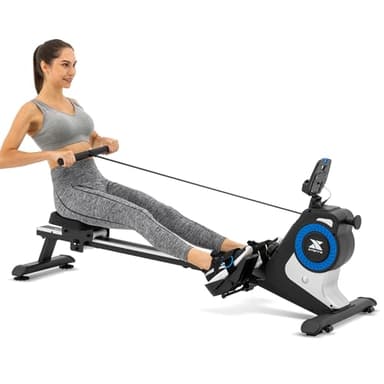
Four things decide this, and the first one is the only one most listings let you check.
Published length, machine weight, user weight capacity, maximum user height and mains-power requirement for the five picks on this page| Machine | Length | Machine weight | Capacity as published | Max user height | Needs mains power |
|---|
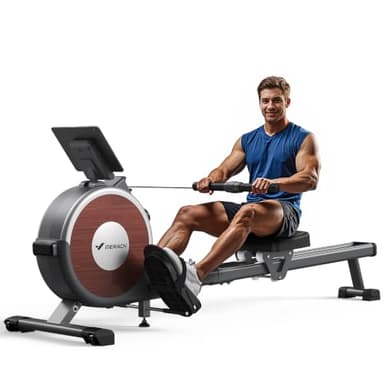
| MERACH Q1S | 65 in | 58.9 lb | 350 lb | 79 in | No |
|---|
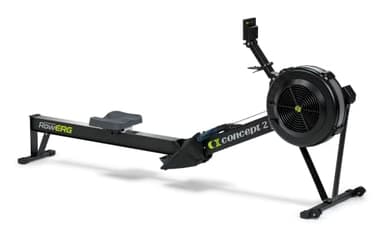
| Concept2 RowErg | 96 in | 57 lb | 500 lb | Not published | No |
|---|
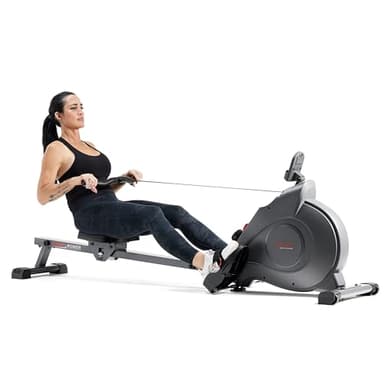
| Sunny Health & Fitness Smart Magnetic Rower, Extra Long Rail | 81.7 in | 62.9 lb | Not published | 80 in | No |
|---|
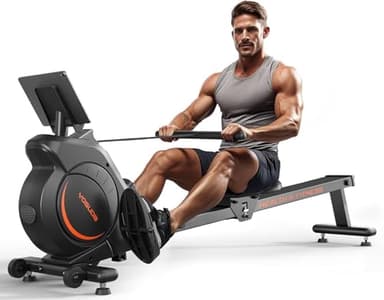
| YOSUDA Magnetic Rower | 57.9 in | 43 lb | Not published | Not published | No |
|---|
| XTERRA Fitness ERG180 | 68.3 in | 50.7 lb | Not published | Not published | Not published |
|---|
1. Whether the maker publishes a fit range at all. Two of the five above print a maximum user height and a weight capacity: the MERACH Q1S at 350 lb and 6 ft 7 in, and Sunny’s extra-long-rail rower at 6 ft 8 in. Concept2 publishes a 500 lb capacity and no height ceiling. The YOSUDA magnetic rower publishes neither figure. A brand willing to print a number has had the frame rated and will stand behind it; a brand offering “heavy-duty steel” and no figure has made a choice about what to tell you. That split is the most useful signal in the whole budget tier, and it is the same one our under-$300 roundup ranks on.
2. Rail length, which is the growth question. A 13-year-old who is 5 ft 2 in today may be 6 ft at 17, and the rail is the part that cannot be extended. Sunny publishes a 48-inch rail on the extra-long-rail machine and a 6 ft 8 in ceiling with it, which is why it is the pick for a teenager mid-growth-spurt. The YOSUDA magnetic rower is 57.9 inches long overall, so the rail inside that is shorter again — fine for a smaller frame now, and the first thing to run out later. The mechanism is in rail length explained, and the adult version of the same problem is on best rowing machines for tall users.
3. Weight, because it decides who sets it up. The YOSUDA magnetic is 43 lb, the MERACH Q1S 58.9 lb, the XTERRA ERG180 50.7 lb, the Concept2 57 lb in two separable pieces. Any of those a teenager can handle alone. A 100 lb connected rower that needs a power socket is a machine somebody else has to position, plug in and move — which in practice means it stays wherever it landed, in the room it is least convenient to row in. Four of the five picks need no power at all, and none of them needs a subscription.
4. Whether the monitor shows something worth chasing. This is the one that decides whether the machine is still being used in March. A console that counts strokes and guesses calories gives a teenager nothing to beat. The Concept2 PM5 records every session, shows a 500 m split and carries built-in games, and Concept2’s own documentation states the work done in those games is saved like any other workout. The XTERRA ERG180 publishes an FTMS Bluetooth console, which is the standard that lets a phone app read the machine properly rather than just pair with it — the difference is explained on best Bluetooth rowing machines.
What about a rowing machine for a younger child?
We are not going to recommend one, and the reason is the data gap at the top of this page rather than squeamishness. No maker in this category publishes a minimum user height, a minimum weight or a recommended age, so there is no published basis on which to say a given machine fits an eight-year-old. What we can say is what the hardware does: the footplate straps on every machine here are sized for an adult foot and adjust downward only so far, a fixed handle sits at a fixed height, and a 350 lb capacity tells you nothing about the bottom of the range. Treat a rower as shared household equipment a younger child uses supervised, not as their machine, and ask a doctor or a coach about volume rather than asking a spec sheet.
The one teenage buyer with a different answer
If they row for a school or a club, this page reduces to one line: buy the Concept2 RowErg, because that is the machine their 2k is tested on and a score from anything else does not transfer. Everything about it is built for that — the PM5 logs to Concept2’s own ranking database, the drag factor is adjustable so a coach’s prescription means something, and the published 5-year frame warranty outlasts the rest of school. The whole argument is on best rowing machines for on-water rowers, and the benchmark most clubs set first is on what is a good 2k time. If the budget will not reach it, the honest second-best is a machine whose monitor shows a split at all, which is why the XTERRA sits on this list.
How to choose in one paragraph
For a general-fitness teenager in a shared house, buy the MERACH Q1S: it publishes the fit figures nobody else at the price does, it is 65 inches long, and one person can move it. For a teenager mid-growth-spurt, buy the Sunny extra-long-rail machine for its published 48-inch rail and 6 ft 8 in ceiling. For the smallest room, the YOSUDA magnetic at 43 lb and 57.9 inches. For a club rower, the Concept2 RowErg and nothing else. And before you buy any of them, spend ten minutes on rowing machine formtogether — a teenager who learns legs-body-arms in the first week keeps the habit, and one who learns to yank with their back does not.