Row & Recover

Under $300

Best Rowing Machines Under $300

The sub-$300 tier, where the reliable tell is not the price but whether the maker is willing to publish a weight capacity at all.

By Stephen V.An enthusiast who reads the manuals and does the math. Not a coach, not a lab.Last verified July 24, 2026.

We earn a commission if you buy through the links on this page, at no cost to you. It has no effect on what we recommend or the order we recommend it in — we say “skip this one” on machines that pay us the same as the ones we like. How we’re funded.

Under $300 is where most people actually start, and it is the tier where a listing tells you the most by what it leaves out. The reliable signal here is not price — the machines below run from about $129 to about $256 with no clear quality gradient — it is whether the manufacturer publishes a maximum user weight.

A brand that prints “350 lb capacity” has had the frame rated and will stand behind the number. A brand that offers “heavy-duty steel” and no figure has made a choice about what to tell you. Of the seven machines here, the MERACH Q1S publishes 350 lb, the YPOO publishes 350 lb, the YOSUDA water rower publishes 400 lb and the Stamina publishes 250 lb — while the YOSUDA magnetic and both Sunny hydraulics publish no capacity at all. That split tells you more about build than the prices do.

You are also choosing between three mechanisms at this price, and they are not equal. Magnetic gives you a quiet, consistent, real rowing stroke. Water gives you a self-regulating whoosh and, in the YOSUDA’s case, a genuinely surprising wooden frame for the money. Hydraulic gives you the smallest and cheapest machines, at the cost of resistance that drifts and a stroke that does not row like a rower.

Everything here is under $300, none of it carries a subscription, and every price below is live from Amazon rather than remembered.

One habit will serve you well across this whole tier: read the listing for what it does not say. At $300 and below, the specification a brand omits is usually the one it would rather you did not weigh — a missing capacity, an unstated rail length, a resistance “level” count with no force figure behind it. The machines that come out best on this page are not the ones with the longest feature list, but the ones willing to put real numbers next to the frame and stand behind them.

The short answer

Quick picks

Ranked on published specification, buyer fit and what each machine costs to keep over five years. Select a row to jump to the full write-up. We have not rowed on these machines — here is exactly what we do instead.

#MachineBest forPrice
1
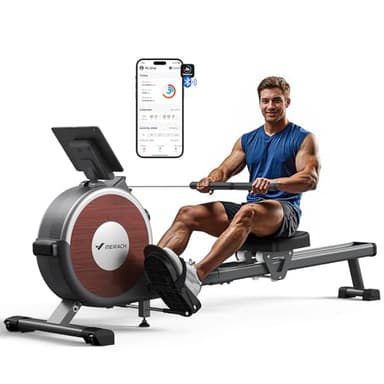
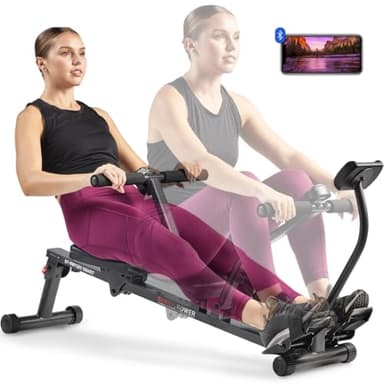
MERACH Q1S

MERACH Q1S

The budget rower that publishes the numbers the others hide: 350 lb capacity, users to 6 ft 7 in, 65 inches long, 58.9 lb — all stated on the listing.

Best overall
2
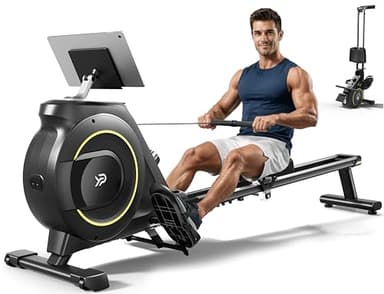
YOSUDA Magnetic Rower

YOSUDA Magnetic Rower

At 57.9 inches long and 43 lb it is the smallest full-stroke rower here — the one that fits a studio flat without a conversation about it.

Best compact
3
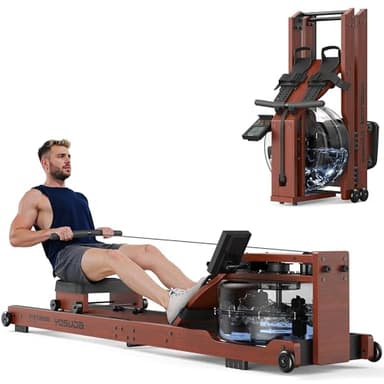
YOSUDA Foldable Wooden Water Rower

YOSUDA Foldable Wooden Water Rower

Beech wood, a 22-liter tank, a 400 lb capacity and a 180-degree fold — the most capable machine here for anyone who wants a wooden rower in a flat.

Best water under $300
4
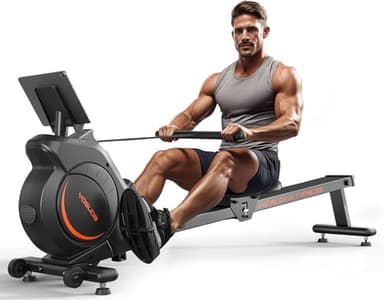
YPOO Magnetic Rower

YPOO Magnetic Rower

99 lb of achievable resistance and a 350 lb frame rating at one of the lowest prices here — the numbers are better than the price suggests.

Most resistance per dollar
5
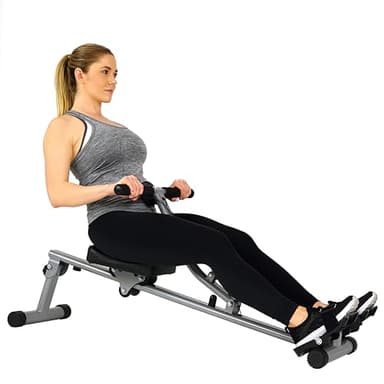
Sunny Health & Fitness Smart Compact Hydraulic Rower

Sunny Health & Fitness Smart Compact Hydraulic Rower

22.4 lb and 58 inches long — the cheapest and lightest way to start rowing, with all the compromises that implies.

Lightest
6
Sunny Health & Fitness SF-RW1205

Sunny Health & Fitness SF-RW1205

20.5 lb, twelve hydraulic levels, and the lowest price on this site — the machine you buy to find out whether you will actually row.

Cheapest
7
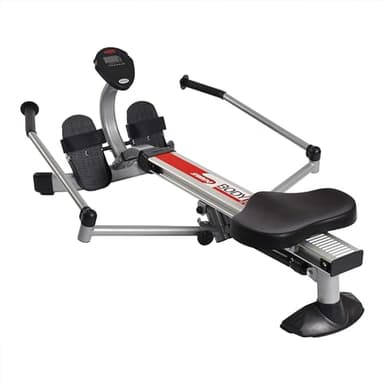
Stamina Body Trac Glider 1050

Stamina Body Trac Glider 1050

Full-motion rowing arms that swing outward like oars, 38 lb, 250 lb capacity — an honest budget machine that has been sold for two decades.

Best full-motion arms

In detail

Every pick, and what is wrong with it

Each machine below gets the same four things: what it does well, what it does not, the five-year cost of owning it, and the case for buying something else instead.

MERACH Q1S rowing machine

1. Best overall

MERACH Q1S

The budget rower that publishes the numbers the others hide: 350 lb capacity, users to 6 ft 7 in, 65 inches long, 58.9 lb — all stated on the listing.

Floor space: about 6.4 ft by 3.6 ft once you allow for handle travel and elbow room — roughly 23 sq ft.

What is good

  • 350 lb capacity and 6 ft 7 in maximum user height, both published — unusual candour at this price
  • Dual slide rail is more stable than the single rail most budget machines use
  • 16 magnetic levels and no subscription of any kind

What is not

  • 65 inches of rail is short if you are near the 6 ft 7 in ceiling — the limit and the comfortable limit are different numbers
  • Magnetic resistance does not build with stroke rate the way air does; hard efforts feel capped
  • 1-year manufacturer warranty

Skip this one if: Skip it if you plan to train intervals seriously — magnetic resistance at this price runs out of top end.

YOSUDA Magnetic Rower rowing machine

2. Best compact

YOSUDA Magnetic Rower

At 57.9 inches long and 43 lb it is the smallest full-stroke rower here — the one that fits a studio flat without a conversation about it.

Floor space: about 5.8 ft by 3.5 ft once you allow for handle travel and elbow room — roughly 20 sq ft.

What is good

  • 57.9 inches long is close to two feet shorter than a Concept2
  • 43 lb, so one person can stand it up and move it without planning
  • 16 magnetic levels, PU rollers, and a genuinely quiet action

What is not

  • YOSUDA does not publish a user weight limit for this model
  • A short machine means a short stroke — taller rowers will feel it
  • The app is a companion, not a class library

Skip this one if: Skip it if you are over about 6 feet — measure your own leg extension against 57.9 inches before you order.

YOSUDA Foldable Wooden Water Rower rowing machine

3. Best water under $300

YOSUDA Foldable Wooden Water Rower

Beech wood, a 22-liter tank, a 400 lb capacity and a 180-degree fold — the most capable machine here for anyone who wants a wooden rower in a flat.

Floor space: about 7.2 ft by 3.3 ft once you allow for handle travel and elbow room — roughly 24 sq ft.

What is good

  • 400 lb published capacity and users up to 6 ft 6 in, both stated on the listing
  • Folds 180 degrees and rolls, so the stored footprint is genuinely small
  • 30 mm FSC-certified beech, not veneer over particle board

What is not

  • 55 lb is light for a wooden rower, which is a comment on the frame as much as a convenience
  • The dedicated monitor is basic next to an S4 or a PM5
  • 1-year parts warranty

Skip this one if: Skip it if you want the WaterRower's heft and finish — this is a different price and it shows in the hardware.

YPOO Magnetic Rower rowing machine

4. Most resistance per dollar

YPOO Magnetic Rower

99 lb of achievable resistance and a 350 lb frame rating at one of the lowest prices here — the numbers are better than the price suggests.

Floor space: about 6.4 ft by 3.5 ft once you allow for handle travel and elbow room — roughly 22 sq ft.

What is good

  • 99 lb of achievable resistance across 16 levels, well beyond typical budget magnetic machines
  • 350 lb published capacity on a heavy-duty steel frame
  • 46-inch dual rail at 65 inches overall — compact for the stroke length it gives

What is not

  • YPOO does not publish a machine weight
  • A less established brand than Sunny or MERACH if you need parts in three years
  • The LCD is basic

Skip this one if: Skip it if long-term parts support matters more to you than the spec sheet — that is the trade here.

Sunny Health & Fitness Smart Compact Hydraulic Rower rowing machine

5. Lightest

Sunny Health & Fitness Smart Compact Hydraulic Rower

22.4 lb and 58 inches long — the cheapest and lightest way to start rowing, with all the compromises that implies.

Floor space: about 5.8 ft by 3.7 ft once you allow for handle travel and elbow room — roughly 21 sq ft.

What is good

  • 22.4 lb. You can pick it up with one hand and put it behind a sofa
  • 12 hydraulic resistance levels and a device holder
  • Free SunnyFit app, no membership

What is not

  • Hydraulic cylinders heat up during longer sessions and the resistance drifts as they do
  • No published user weight limit
  • The stroke is nothing like a real rowing stroke; this is a cardio machine that resembles one

Skip this one if: Skip it if you want to learn to row properly — buy the cheapest magnetic machine instead, not this.

Sunny Health & Fitness SF-RW1205 rowing machine

6. Cheapest

Sunny Health & Fitness SF-RW1205

20.5 lb, twelve hydraulic levels, and the lowest price on this site — the machine you buy to find out whether you will actually row.

Floor space: about 5.5 ft by 3.7 ft once you allow for handle travel and elbow room — roughly 20 sq ft.

What is good

  • 20.5 lb, the lightest machine here by a clear margin
  • 12 resistance levels is generous for a hydraulic at this price
  • Leveling stabilizers, which cheap rowers usually omit

What is not

  • No published user weight limit
  • Hydraulic resistance drifts as the cylinders warm
  • There is no upgrade path — when you outgrow it you replace it entirely

Skip this one if: Skip it if you already know you will still be rowing in a year. Buy once at the next tier up instead.

Stamina Body Trac Glider 1050 rowing machine

7. Best full-motion arms

Stamina Body Trac Glider 1050

Full-motion rowing arms that swing outward like oars, 38 lb, 250 lb capacity — an honest budget machine that has been sold for two decades.

What is good

  • The arms swing through an arc rather than pulling a single strap, which better resembles sculling
  • 38 lb and folds — genuinely storable in a cupboard
  • 250 lb published capacity, stated on the listing

What is not

  • 250 lb is the lowest capacity on this site
  • Hydraulic cylinders, with the same warm-up drift as any hydraulic machine
  • Stamina does not publish assembled dimensions in a usable form on this listing, so we do not print any

Skip this one if: Skip it if you are over about 200 lb — you will be close enough to the published ceiling to worry about it.

How to choose

What actually decides this

What $300 actually buys

Below $300 you are buying a machine to learn on and to find out whether rowing sticks, and the good ones do that job honestly. The MERACH Q1S at around $190 is the standout: a dual slide rail, 16 magnetic levels, a published 350 lb capacity and a stated 6 ft 7 in fit, which is more disclosure than many machines at twice the price. It rows quietly, the resistance stays where you set it, and it costs nothing per month.

What you are not buying at this price is top-end resistance that scales, a monitor whose numbers transfer to other machines, or parts availability in year six. Those are real gaps, and they are the reason to spend more only if you already know you will still be rowing years from now. The fuller case for and against cheap rowers is here.

Magnetic, hydraulic or water under $300

Magnetic is the right default. A magnet moves near a metal flywheel; the resistance is set by a dial and stays there, the mechanism is silent, and the stroke resembles real rowing. The MERACH Q1S, YOSUDA magnetic and YPOO are all magnetic, and all three are sensible purchases.

Water at this price is the surprise. The YOSUDA folding wooden rower gives you a 22-liter tank, a 30 mm FSC-certified beech frame, a published 400 lb capacity and a 6 ft 6 in fit, and a 180-degree fold — for around $256. It is not a hand-built Rhode Island machine, and the frame tells you so, but the self-regulating water resistance and the whoosh are real.

Hydraulic is the bottom of the range. The Sunny compact hydraulic (around $129) and the SF-RW1205 (around $130) are the smallest and lightest machines here, and the Stamina Body Trac uses full-motion arms that swing like oars. All three resist with pistons that warm during use, so the resistance you set at the start is not the resistance you have at minute twenty, and none of them row like a flywheel machine.

Who publishes a capacity, and who stays quiet

This is the single most useful filter under $300. A published weight capacity is not mainly about whether you are near it — it is evidence that someone rated the frame. The MERACH Q1S (350 lb), YPOO (350 lb), YOSUDA water (400 lb) and Stamina (250 lb, the lowest on the site) all state a number. The YOSUDA magnetic and both Sunny hydraulics state none.

That does not make the quiet machines unusable — the Sunny hydraulics are honest little machines for the money — but if you are a larger rower, buy from the half of this list that publishes a figure and can stand behind it. Silence is information.

The full-motion outlier

The Stamina Body Trac Glider 1050 is not really the same kind of machine as the others, and that is the point of including it. Instead of a single handle on a chain, it has two full-motion arms that swing out and back like oars, driven by a hydraulic cylinder. It folds, it weighs 38 lb, it carries a published 250 lb capacity, and at around $175 it is the cheapest way to get an oar-style, both-arms movement rather than a single-handle pull.

It will not teach you a Concept2 stroke and the resistance drifts as the cylinder warms, but for a certain buyer — someone who wants the sweeping oar motion and a machine that folds flat — it is a genuinely different and honest option at the price.

Buy cheap and replace, or spend a little more?

The honest question under $300 is how long you will keep the machine. A $130 machine you replace twice can cost more than one good purchase you keep, and a monitor whose numbers do not transfer makes it hard to tell whether you are improving or the machine is just getting easier.

If you are genuinely unsure rowing will stick, the MERACH Q1S at around $190 is the right amount to risk — enough machine to learn a real stroke, cheap enough that finding out is not expensive. If you already know you keep things, the tier just above and the no-subscription page are worth reading before you decide, because none of these machines charge you a cent per month either.

The five-year cost of buying cheap

The strongest argument for a sub-$300 machine is also the one that needs the most honesty. A cheap rower is a superb way to find out whether rowing is for you without risking much — and it is a poor way to save money if you already know it is. Most machines at this price carry a short warranty and no real parts catalog, so a failure in year three is usually a second purchase rather than a repair.

That is where the arithmetic turns. A $190 machine you replace twice has cost more than a single higher-tier machine you keep, and along the way you have rowed on a monitor whose numbers do not transfer and a frame that may not have been rated. None of that makes a budget rower a bad buy; it makes it a specific buy, appropriate for a specific situation. The saving that is real at every price is the absence of a subscription — every machine here charges nothing per month, which over five years is worth more than the gap between any two of them.

There is also a floor to how low you should go. The very cheapest machines here save money by being smaller and simpler rather than better, and below a certain point you are buying a rowing-shaped cardio device rather than a rowing machine. That is a perfectly reasonable thing to want — just buy it knowing that is what it is, so the machine meets the expectation rather than disappointing it.

Straight answers

Questions people actually ask

What is the best rowing machine under $300?

The MERACH Q1S, at around $190. It publishes the numbers most machines at this price hide - a 350 lb capacity and a 6 ft 7 in maximum user height - and pairs them with a dual slide rail, 16 magnetic resistance levels and no subscription. It teaches a genuine leg-drive stroke and it costs little enough that discovering rowing is not for you is not an expensive discovery.

Can you get a good rowing machine for under $300?

Yes, if you buy the right mechanism and check what the maker publishes. A magnetic machine like the MERACH Q1S or YPOO gives a quiet, consistent, real rowing stroke, and the YOSUDA wooden water rower is a genuine surprise at around $256. What you give up at this price is scaling resistance, a monitor whose numbers transfer, and long-term parts - real gaps, but not dealbreakers for learning the movement.

Are hydraulic rowing machines under $300 any good?

For what they are, yes; for real rowing, less so. The Sunny compact hydraulic and SF-RW1205 are the cheapest and smallest machines here, and they are honest about it. But hydraulic pistons warm during use, so the resistance you set at the start drifts as you go, and the stroke is a pull against a cylinder rather than a leg drive against a flywheel. Choose hydraulic for size and price, magnetic for a real stroke. For most buyers under $300, a magnetic machine like the MERACH Q1S is the better first rower for exactly that reason.

Do rowing machines under $300 have weight limits?

The good ones publish one. The MERACH Q1S states 350 lb, the YPOO states 350 lb, the YOSUDA water rower states 400 lb and the Stamina states 250 lb. The YOSUDA magnetic and both Sunny hydraulics publish no capacity at all, which is itself information - a brand that has had its frame rated usually says so. If you are a larger rower, buy from the half of the list that states a number.

Is a water rowing machine under $300 worth it?

The YOSUDA folding wooden water rower makes a strong case at around $256: a 22-liter tank, a 30 mm FSC-certified beech frame, a published 400 lb capacity and 6 ft 6 in fit, and a 180-degree fold that rolls away. It is not a hand-built premium machine and the frame shows it, but the self-regulating water resistance and the pleasant whoosh are real, and it costs a fraction of a name-brand water rower.

Do any rowing machines under $300 need a subscription?

None of these do. Sunny states plainly that its SunnyFit app carries no membership fee, MERACH and YOSUDA include their apps, and the YPOO and Stamina charge nothing recurring. Subscriptions only start appearing on the connected-screen machines much further up the range, where they typically run $29 to $50 a month and can add more to the five-year cost than a sub-$300 machine costs outright. That absence of a monthly fee is the quiet advantage of shopping at this price. A $190 machine with no subscription can cost less over five years than a mid-priced connected rower does in its first year alone, and you own it outright the day it arrives rather than renting the part that makes it work. If a recurring bill is what has held you back from buying a home rower at all, this is the tier where that objection disappears completely.

The honest part

What we did not do

We have not rowed on these machines. We do not own them, there is no test lab here, and nobody writing this holds a coaching certification. Every ranking on this page is an argument from published specification and buyer fit, not from a stopwatch.

What we did do is read each manufacturer’s own published figures, record the ones they decline to publish, compute the floor space and the five-year cost, and date all of it. The full method is here so you can check our working or disagree with it.

Show your working

Sources

Keep going

Read next