Row & Recover

Fit, from the other end

Best Rowing Machines for Short Users

Nobody publishes a minimum user height, so this page ranks on the two figures that do get published: seat height and machine length. Five picks, and the famous machine that is the wrong one here.

By Stephen V.An enthusiast who reads the manuals and does the math. Not a coach, not a lab.Last verified July 24, 2026.

We earn a commission if you buy through the links on this page, at no cost to you. It has no effect on what we recommend or the order we recommend it in — we say “skip this one” on machines that pay us the same as the ones we like. How we’re funded.

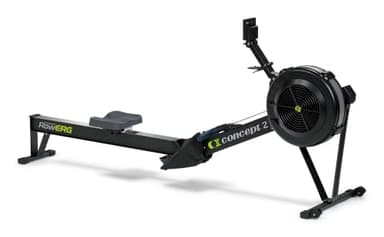
For most shorter rowers the answer is the standard Concept2 RowErg — and specifically not the tall-legs version of it. Concept2 publishes a 14-inch seat height on the standard machine against 20 inches on the tall-legs model, and 14 inches is the lowest published seat height of any machine on this site. A lower seat is the one thing that reliably helps a shorter rower: your feet reach the floor when you stop, your knees track where they should at the catch, and you sit down onto the seat rather than climb onto it. If your budget will not reach a RowErg, the budget end of this list does the same job for a fraction of it.

Here is the honest problem with this entire question, and it is worth stating before any recommendation: not one manufacturer in this category publishes a minimum user height. They publish maximums — MERACH states 6 ft 7 in for the Q1S, YOSUDA states 6 ft 6 in for its wooden water rower, Sunny states 6 ft 8 in for its extra-long-rail machine — and then say nothing at all about the other end of the range. There is no figure to rank on, so we are not going to invent one. What we can rank on is published seat height, published overall length and published rail length, which is what the table below does.

The useful consequence of being shorter is that a short rail stops being a compromise. The machines we warn tall rowers away from — the 57.9-inch YOSUDA, the 65-inch MERACH Q1S — run out of rail long after a shorter rower runs out of leg, which opens up the cheapest and smallest half of the market with nothing given up. That is the opposite of the trade on the tall-user page, where the long rail is the whole point and you pay for it in floor space.

The short answer

Quick picks

Ranked on published specification, buyer fit and what each machine costs to keep over five years. Select a row to jump to the full write-up. We have not rowed on these machines — here is exactly what we do instead.

#MachineBest forPrice
1
Concept2 RowErg

Concept2 RowErg

The machine every other rowing machine is measured against, and the only one here with no subscription, a 500 lb user limit and a five-year frame warranty at under a thousand dollars.

Best overall for a shorter rower
2
YOSUDA Magnetic Rower

YOSUDA Magnetic Rower

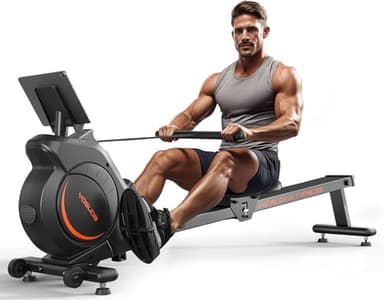
At 57.9 inches long and 43 lb it is the smallest full-stroke rower here — the one that fits a studio flat without a conversation about it.

Smallest machine here
$189.99 · Check price on Amazon

$269.9930% off

Price as of October 5, 2026. #ad How we’re funded

3
MERACH Q1S

MERACH Q1S

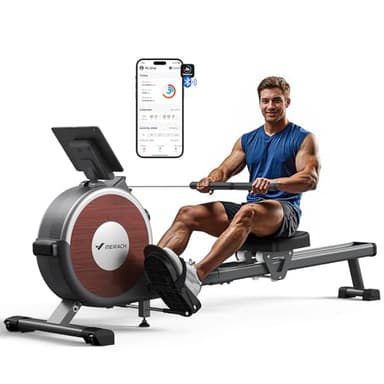
The budget rower that publishes the numbers the others hide: 350 lb capacity, users to 6 ft 7 in, 65 inches long, 58.9 lb — all stated on the listing.

Best budget pick
$179.99 · Check price on Amazon

$199.9910% off

Price as of October 5, 2026. #ad How we’re funded

4
Sunny Health & Fitness Obsidian Surge

Sunny Health & Fitness Obsidian Surge

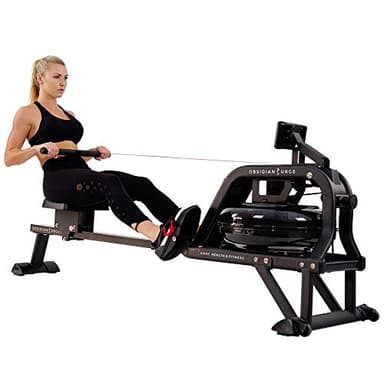
Water resistance and a 17-inch seat at roughly a quarter of a WaterRower's price, in steel rather than ash.

Best water rower
5
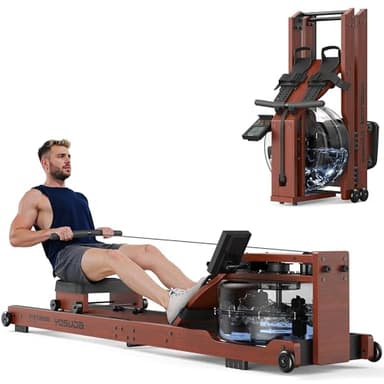
YOSUDA Foldable Wooden Water Rower

YOSUDA Foldable Wooden Water Rower

Beech wood, a 22-liter tank, a 400 lb capacity and a 180-degree fold — the most capable machine here for anyone who wants a wooden rower in a flat.

Best folding pick
$299.99 · Check price on Amazon

$339.9912% off

Price as of October 5, 2026. #ad How we’re funded

In detail

Every pick, and what is wrong with it

Each machine below gets the same four things: what it does well, what it does not, the five-year cost of owning it, and the case for buying something else instead.

Concept2 RowErg rowing machine

1. Best overall for a shorter rower

Concept2 RowErg

The machine every other rowing machine is measured against, and the only one here with no subscription, a 500 lb user limit and a five-year frame warranty at under a thousand dollars.

Five years of ownership: $990 — all of it the machine, none of it a subscription. See the full table

Floor space: about 9.0 ft by 4.0 ft once you allow for handle travel and elbow room — roughly 36 sq ft.

What is good

  • 500 lb published user capacity — the highest figure any manufacturer on this page prints
  • No subscription, ever. The PM5 records everything on its own and ErgData is free
  • Separates into two pieces in seconds for storage; front and rear sections stand upright
  • Five-year frame warranty, and a parts supply chain that still serves machines from the 1990s

What is not

  • 96 inches long in use, and Concept2 recommends a 9 ft x 4 ft footprint — it is not an apartment-corner machine
  • Air resistance is the loudest kind. Concept2 publishes no decibel figure and neither do we
  • The 14-inch seat is low; getting up off it is a real consideration if your knees are the reason you are rowing

Skip this one if: Skip it if your floor space is under 9 feet in one direction, or if you share a wall with someone who sleeps early — this is the loud one.

YOSUDA Magnetic Rower rowing machine

2. Smallest machine here

YOSUDA Magnetic Rower

At 57.9 inches long and 43 lb it is the smallest full-stroke rower here — the one that fits a studio flat without a conversation about it.

Five years of ownership: $190 — all of it the machine, none of it a subscription. See the full table

Floor space: about 5.8 ft by 3.5 ft once you allow for handle travel and elbow room — roughly 20 sq ft.

What is good

  • 57.9 inches long is close to two feet shorter than a Concept2
  • 43 lb, so one person can stand it up and move it without planning
  • 16 magnetic levels, PU rollers, and a genuinely quiet action

What is not

  • YOSUDA does not publish a user weight limit for this model
  • A short machine means a short stroke — taller rowers will feel it
  • The app is a companion, not a class library

Skip this one if: Skip it if you are over about 6 feet — measure your own leg extension against 57.9 inches before you order.

$189.99 · Check price on Amazon

$269.9930% off

Price as of October 5, 2026. #ad How we’re funded

MERACH Q1S rowing machine

3. Best budget pick

MERACH Q1S

The budget rower that publishes the numbers the others hide: 350 lb capacity, users to 6 ft 7 in, 65 inches long, 58.9 lb — all stated on the listing.

Five years of ownership: $180 — all of it the machine, none of it a subscription. See the full table

Floor space: about 6.4 ft by 3.6 ft once you allow for handle travel and elbow room — roughly 23 sq ft.

What is good

  • 350 lb capacity and 6 ft 7 in maximum user height, both published — unusual candour at this price
  • Dual slide rail is more stable than the single rail most budget machines use
  • 16 magnetic levels and no subscription of any kind

What is not

  • 65 inches of rail is short if you are near the 6 ft 7 in ceiling — the limit and the comfortable limit are different numbers
  • Magnetic resistance does not build with stroke rate the way air does; hard efforts feel capped
  • 1-year manufacturer warranty

Skip this one if: Skip it if you plan to train intervals seriously — magnetic resistance at this price runs out of top end.

$179.99 · Check price on Amazon

$199.9910% off

Price as of October 5, 2026. #ad How we’re funded

Sunny Health & Fitness Obsidian Surge rowing machine

4. Best water rower

Sunny Health & Fitness Obsidian Surge

Water resistance and a 17-inch seat at roughly a quarter of a WaterRower's price, in steel rather than ash.

Five years of ownership: $450 — all of it the machine, none of it a subscription. See the full table

Floor space: about 7.7 ft by 3.8 ft once you allow for handle travel and elbow room — roughly 29 sq ft.

What is good

  • 17-inch seat height is unusually high for a budget machine — an easy step on and off
  • 16 hydro blades give the water sound and progressive resistance people buy water rowers for
  • Stores upright, and the SunnyFit app carries no membership fee

What is not

  • Steel frame rather than wood; the aesthetic that sells WaterRowers is not the point here
  • Sunny does not publish a user weight limit for this model
  • 34 inches tall in use, so it does not slide under anything

Skip this one if: Skip it if the wooden-rower look is half the reason you want one — no steel machine delivers that.

YOSUDA Foldable Wooden Water Rower rowing machine

5. Best folding pick

YOSUDA Foldable Wooden Water Rower

Beech wood, a 22-liter tank, a 400 lb capacity and a 180-degree fold — the most capable machine here for anyone who wants a wooden rower in a flat.

Five years of ownership: $300 — all of it the machine, none of it a subscription. See the full table

Floor space: about 7.2 ft by 3.3 ft once you allow for handle travel and elbow room — roughly 24 sq ft.

What is good

  • 400 lb published capacity and users up to 6 ft 6 in, both stated on the listing
  • Folds 180 degrees and rolls, so the stored footprint is genuinely small
  • 30 mm FSC-certified beech, not veneer over particle board

What is not

  • 55 lb is light for a wooden rower, which is a comment on the frame as much as a convenience
  • The dedicated monitor is basic next to an S4 or a PM5
  • 1-year parts warranty

Skip this one if: Skip it if you want the WaterRower's heft and finish — this is a different price and it shows in the hardware.

$299.99 · Check price on Amazon

$339.9912% off

Price as of October 5, 2026. #ad How we’re funded

How to choose

What actually decides this

Three published figures decide this, and one unpublished one you have to measure yourself.

Published seat height, overall length, rail length and stated maximum user height for the picks on this page, plus the tall-legs Concept2 for contrast
MachineSeat heightOverall lengthRail lengthMax user height
Concept2 RowErg14 in96 inNot publishedNot published
Concept2 RowErg with Tall Legs20 in96 inNot publishedNot published
YOSUDA Magnetic RowerNot published57.9 inNot publishedNot published
MERACH Q1SNot published65 inNot published79 in
Sunny Health & Fitness Obsidian Surge17 in80 inNot publishedNot published
YOSUDA Foldable Wooden Water RowerNot published74 inNot published78 in

Seat height, where it is published. Only three machines on this site publish one: the Concept2 RowErg at 14 inches, the Obsidian Surge at 17, and the tall-legs RowErg at 20. That is a narrow field but a decisive one. A 14-inch seat is roughly the height of a low stool; a 20-inch seat is roughly a dining chair. The tall-legs machine exists precisely so people with stiff knees and hips do not have to get up off the floor, and it is the right machine for a lot of older rowers. For a shorter rower it is the wrong one: a seat that high leaves shorter legs reaching down for the footplate and takes away the only published advantage you had.

Overall length, which is the proxy for rail. Most makers do not publish a rail length, but they all publish an overall length, and the two move together. The YOSUDA magnetic rower is 57.9 inches end to end — almost a metre shorter than a RowErg — and we tell taller rowers to measure their leg extension against that number before ordering. If you are short, that warning simply does not apply to you, and a machine that fits a studio flat with room to spare becomes the sensible buy rather than the compromise. The same logic covers the 65-inch MERACH Q1S and the 74-inch YOSUDA water rower.

Foot-strap and footplate adjustment. This is where a short rower actually gets stuck, and it is the figure nobody prints. Every machine here has adjustable foot straps, but the question is whether they cinch down far enough to hold a smaller foot against the plate, because a foot that slides in the strap costs you the back half of every drive. Our foot-strap setup guide covers how to set them and what a loose one feels like. If you buy and the strap will not tighten enough, that is a returns conversation, not a technique problem.

Handle height at the catch. The shorter you are, the more the handle’s resting height matters, because on an air rower the chain runs at a fixed angle out of the flywheel housing. On the RowErg this is a non-issue — the geometry has been unchanged for decades and is what every gym in the country is set up around. On very compact machines with high-set housings it can mean the handle sits closer to your chin than your chest at the catch, which pulls the stroke upward. There is no published figure for this either; the practical test is to sit on the machine before the return window closes.

What none of this is: a reason to buy a “women’s” or a “petite” rowing machine, because no such product exists in this category. The machines marketed that way are the same compact magnetic rowers listed above with different photography, which is the argument we make at length on the rowing machines for women page. Buy the seat height and the length that fit you and ignore the marketing.

One last practical note on stature and stroke. A shorter rower covers less distance per stroke, so at the same stroke rate you will see a slower split than a taller rower on the same machine at the same effort. That is geometry, not fitness, and it is why comparing your 500 m split against someone a foot taller tells you nothing useful. Compare against your own numbers from last month instead.

Straight answers

Questions people actually ask

What is the best rowing machine for short people?

The standard Concept2 RowErg, because its 14-inch published seat height is the lowest of any machine we cover and its rail is long enough that stature never becomes the limit. Deliberately not the tall-legs version of the same machine, which raises the seat to 20 inches - that model exists for stiff knees and hips, not for shorter rowers.

Do rowing machines publish a minimum user height?

No. Not one manufacturer in this category publishes a minimum user height, although several publish a maximum. There is no figure to compare, so this page ranks on published seat height, overall length and rail length instead. We are not going to estimate a number a maker has not printed.

Is a short rowing machine fine if I am short?

Yes, and this is the real advantage of being shorter in this category. A 57.9-inch machine like the YOSUDA magnetic rower runs out of rail before a tall rower runs out of leg, which is why we warn tall buyers off it. A shorter rower reaches full leg extension well inside that rail, so the smallest and cheapest machines become genuine options rather than compromises.

Will I row a slower split because I am short?

At the same stroke rate and the same effort, yes - a shorter rower moves the handle a shorter distance each stroke, so less work is done per stroke. That is geometry rather than fitness. Compare your splits against your own previous numbers, not against a taller rower on the same machine.

What should I check before the return window closes?

Two things no manufacturer publishes: whether the foot straps cinch down far enough to hold your foot firmly against the plate, and where the handle sits at the catch - at your chest rather than near your chin. Both are fit problems you cannot fix with technique, and both are obvious within one session.

The honest part

What we did not do

We have not rowed on these machines. We do not own them, there is no test lab here, and nobody writing this holds a coaching certification. Every ranking on this page is an argument from published specification and buyer fit, not from a stopwatch.

What we did do is read each manufacturer’s own published figures, record the ones they decline to publish, compute the floor space and the five-year cost, and date all of it. The full method is here so you can check our working or disagree with it.

Show your working

Sources

Keep going

Read next