Four criteria, in the order they decide whether a machine gets used. Here is what the makers publish about the six picks.
Published monitor, resistance type, machine length, subscription requirement and mains-power requirement for the six picks on this page| Machine | Monitor as published | Resistance | Length | Monthly fee |
|---|
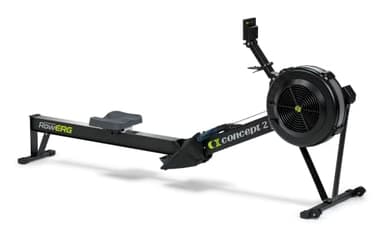
| Concept2 RowErg | PM5, Bluetooth + ANT+ | air | 96 in | None |
|---|
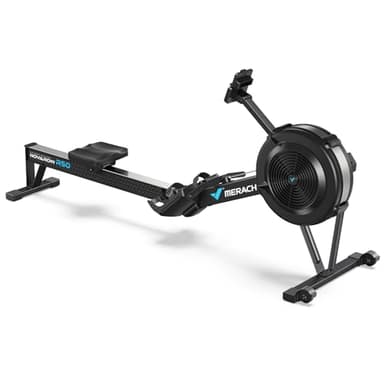
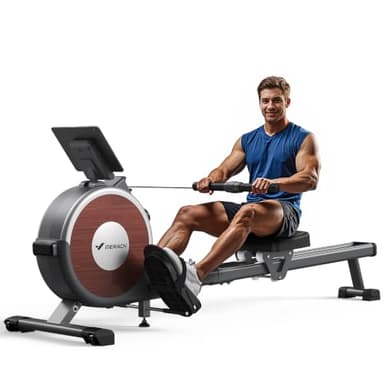
| MERACH NovaRow R50 Pro | MERACH competition monitor, Bluetooth | air | 95 in | None |
|---|
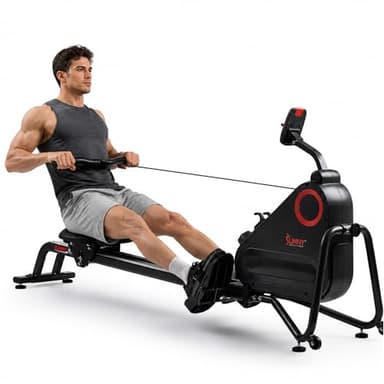
| Sunny Health & Fitness Smart Dual-Rail Rower | Adjustable LCD | magnetic | 79.3 in | None |
|---|
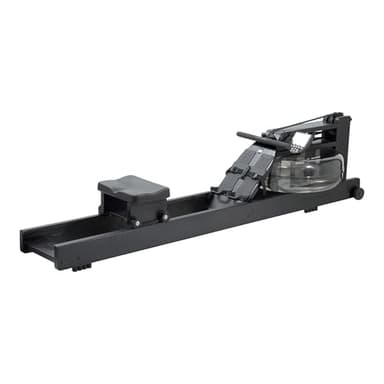
| WaterRower Natural (Ash) | S4 | water | 82 in | None |
|---|
| Hydrow Wave | 16" HD touchscreen | magnetic | 80 in | $50/mo |
|---|
| MERACH Q1S | LCD + MERACH app via Bluetooth | magnetic | 65 in | None |
|---|
1. A monitor that gives you something to hold. Steady cardio is the act of finding an effort you can sustain and then not drifting off it, and you cannot do that against a screen that shows only time and a count. What you want is a pace figure — a 500 m split or watts— and a stroke rate, because stroke rate is the governor that keeps an easy row easy. Read the monitor column above as a sentence rather than a feature list: “PM5, Bluetooth + ANT+” is a performance monitor, while a bare LCD may or may not give you a pace number at all. How to read a rowing machine monitor separates the readouts that are measured from the ones that are inferred.
2. Heart rate, if you intend to train by it. Most structured cardio eventually becomes heart-rate work, and the question is whether the console will take a chest strap signal and show it to you. The PM5 is the strongest published case here because it carries both protocols chest straps use. On the budget machines the strap usually talks to the phone app rather than the console, which works but means your phone has to be running for the session to count. Heart rate training covers what to do with the number, and zone 2 training covers the easy band most weekly volume should sit in.
3. Whether you can sit on it for forty minutes. This is the criterion that gets left out of every other roundup and ends more cardio habits than any other. On a twenty-minute session the seat is a detail; on a forty-minute steady row it is the limiting factor, ahead of your fitness. The same goes for your hands. Both are solvable for the price of a takeaway meal — seat comfort and hand carecover the fixes — but a machine with a long rail and an unhurried stroke makes the problem smaller to begin with. The Sunny Smart Dual-Rail publishes a 50-inch rail, and the WaterRower Natural is on this list specifically because it is the machine people keep sitting on.
4. Quiet enough for the hour you are actually free. Air resistance is the loudest kind, and no maker in this category publishes a decibel figure — not one, so we print none. What we can say from published mechanism is the ordering: magnetic is the quietest, water replaces noise with a sound most people like, and air is a fan. If your only free hour is before the household wakes up or after a neighbour goes to bed, that ordering outranks every other criterion on this page. Best quiet rowing machines is the full version, and how to make a rowing machine quieter is what to do if you already own the loud one.
Guided cardio, and what it costs
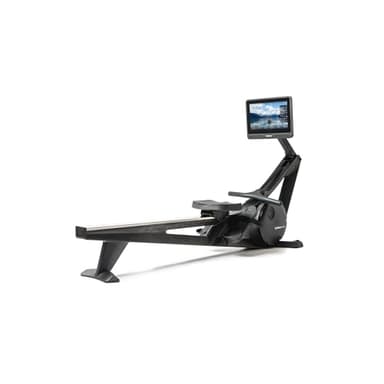
For some people the thing that produces four sessions a week is an instructor, and pretending otherwise is how a buying guide gets someone the wrong machine. The Hydrow Wave is on this list for that reader: a 16-inch screen, filmed rows on real water, and a published $50 monthly membership that is not optional in any meaningful sense — without it you keep the hardware and lose the reason you bought it. At 80 inches and 102 lb it is also shorter than every air rower here, which surprises people. If guided sessions are what will get you rowing, pay for them deliberately rather than buying a cheaper machine you will not use; the connected roundup has the full field and subscription comparison has the bills side by side.
Cardio is volume, so the real question is frequency
Everything above is in service of one thing: sessions completed. Two practical points that change more than the machine does. First, most training methods put the large majority of weekly volume at an easy, conversational effort with a small amount of genuinely hard work on top — the failure mode is a week spent entirely in a moderately-hard middle that feels productive and builds less than either end. Steady-state training and the HIIT session are the two ends. Second, decide how often before you buy, because it changes the answer: how often should you row goes through it, and if the answer is most days, weight the seat and the noise above everything else.
How to choose in one paragraph
If you want the best cardio monitor and no monthly bill, buy the Concept2 RowErg — provided you have nine feet of floor and nobody sleeping on the other side of the wall. If you want that stroke for less, the MERACH R50 Pro is the closest thing to it at a materially lower price. If the machine lives in a flat and gets used early in the morning, the Sunny Smart Dual-Rail is quiet, publishes a 50-inch rail and a 300 lb capacity, and costs a fraction of the top pick. If your sessions are long and the machine lives in a room you also live in, the WaterRower Natural is the one you will keep sitting on. If an instructor is what produces the sessions, the Hydrow Wave is the honest answer and the $50 a month is the honest price. And if the budget is under two hundred dollars, the MERACH Q1S publishes its limits, which at that price is rare.
Two related pages: best rowing machines for weight loss is the same machines ranked for a different goal, and is a rowing machine cardio or strength training answers the question underneath this page.