Training
Should You Row Before or After Weights?
The rule is simple: whatever you care about most goes first. A five-minute easy row before weights is a warm-up. A hard 5 km before weights is a different decision entirely.
We earn a commission if you buy through the links on this page, at no cost to you. It has no effect on what we recommend or the order we recommend it in — we say “skip this one” on machines that pay us the same as the ones we like. How we’re funded.
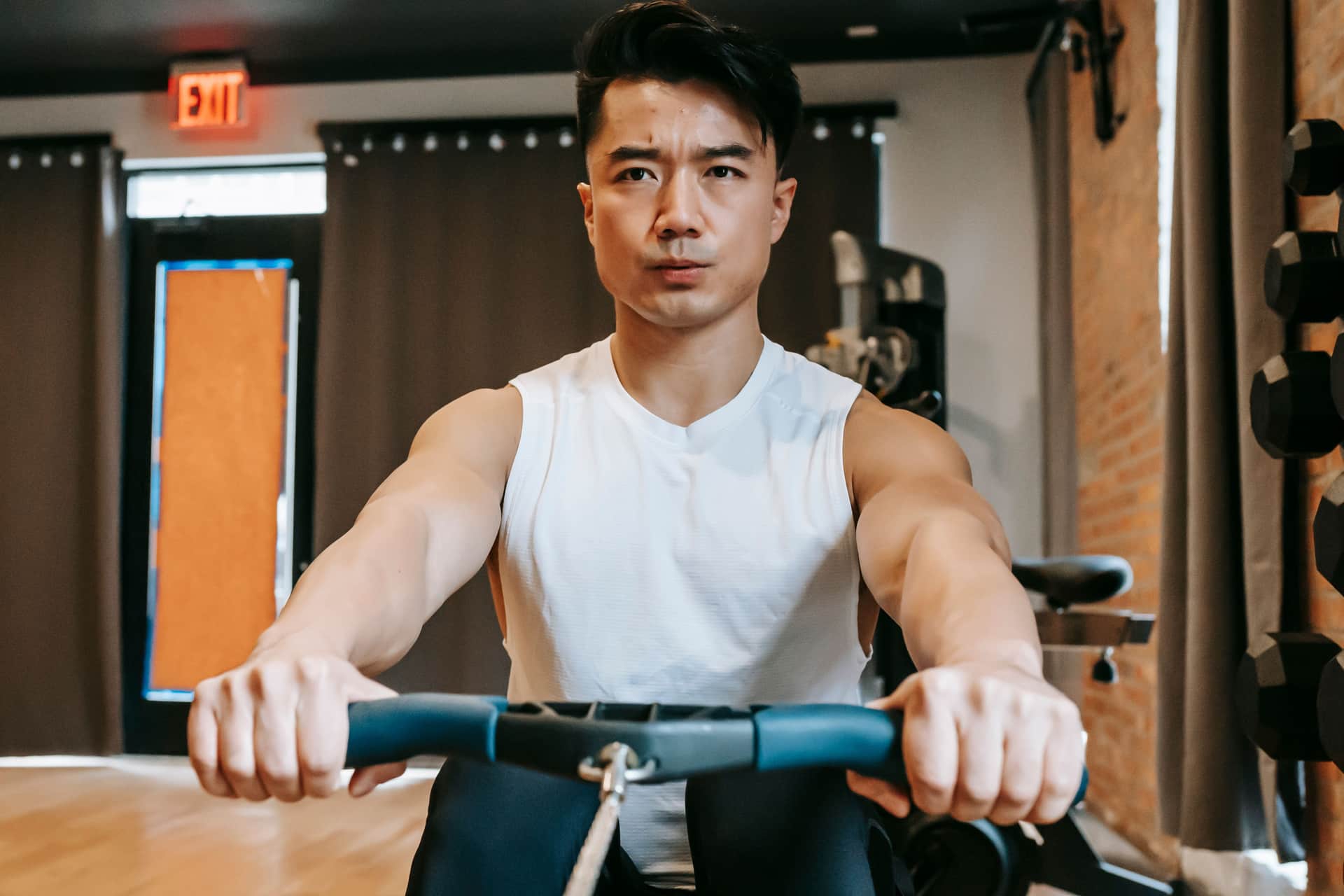
The short answer: do the thing you care about most first, while you are fresh. If your goal is getting stronger, lift first and row afterwards. If your goal is a faster 2 km or better conditioning, row first and lift afterwards. And if you simply want to be fit and the order feels like a technicality, it mostly is — a consistent week in the wrong order beats a perfect order you skip. This is general fitness information, not medical advice; if you have a condition that affects how you train, get personal guidance.
There is one distinction that clears up most of the confusion, and it is worth making before anything else: a warm-up row and a training row are not the same thing. Five to ten easy minutes on the rower before you lift is one of the better general warm-ups available, because it raises your temperature and moves your hips, knees, shoulders and back through range without loading anything. That is not “cardio before weights” and nobody needs to agonise over it. The argument below is about a genuine rowing session — intervals, a 5 km, anything that leaves you breathing hard.
Lift first if strength is the priority
Hard rowing is a leg-driven, full-body effort — roughly sixty percent legs by the usual coaching rule of thumb, which we unpack in does rowing work your legs. That means a hard row fatigues exactly the muscles a squat, deadlift or leg press needs. Lift into pre-tired legs and three things happen: the weight you can handle drops, your form degrades before your motivation does, and the quality of the session — which is the part that actually drives adaptation — falls. If you are working to a strength program, protect it and put the barbell first.
Row first if rowing is the priority
The mirror of the same logic. A rowing split is unforgiving about fatigue: the stroke is technical, and technique is the first thing to go when you are tired, which means a hard piece rowed on legs that have already squatted is slower and sloppier than the same piece rowed fresh. If you are chasing a 2 km time or training for an event where the row is scored — a HYROX station five, an erg test — row first, every time. The one deliberate exception is rehearsing a race, where rowing on emptied legs is the point rather than the problem.
The cases where it genuinely does not matter
- Different days. The cleanest solution of all. Separate your rowing and lifting into different sessions and the question disappears.
- Upper-body lifting day. A row before a bench or pressing session barely interferes, because rowing is a pulling and leg-driven movement that leaves your pressing muscles largely alone — the detail is in does rowing work your upper body.
- Easy rowing as a cool-down. Ten easy minutes after lifting is pleasant, low-risk and helps you finish calm rather than wrecked. Our cool-down guide covers it, and active recovery rowing goes further.
- General fitness, no competing goal. Then pick the order you will actually do and stop optimising. Adherence beats sequencing by a wide margin.
A practical weekly shape
If you want something concrete rather than principles, this is the pattern that works for most people training three or four times a week: hard rowing on its own days, easy rowing as a warm-up on lifting days, and one longer steady piece at the weekend. Keep the hard rowing and the heavy lower-body lifting at least a day apart, because they compete for the same legs. The steady-state guide covers the easy end, the HIIT session covers the hard end, and how often should you row covers the frequency question underneath all of it. Whichever order you choose, warm up before the hard work — the warm-up guide is five minutes well spent.
What the machine needs to do for this to work
Only two things, and both are published. It needs a resistance range wide enough to serve a genuinely easy warm-up row and a genuinely hard interval session — which is where a cheap magnetic brake with a low ceiling lets you down — and it needs a monitor that shows pace or watts, because “easy” and “hard” are useless instructions without a number attached. Air resistance handles the first requirement by design, since the fan simply meets whatever you give it; resistance explained covers why.
| Machine | Resistance | Monitor | Rail length | Subscription |
|---|---|---|---|---|
| Concept2 RowErg | air | PM5, Bluetooth + ANT+ | Not published | None required |
| MERACH NovaRow R50 Pro | air | MERACH competition monitor, Bluetooth | Not published | None required |
| Sunny Health & Fitness Smart Dual-Rail Rower | magnetic | Adjustable LCD | 50 in | None required |
| MERACH Q1S | magnetic | LCD + MERACH app via Bluetooth | Not published | None required |
Where this lands
If you are buying a rower to sit beside a lifting program
Concept2 RowErg
The one to buy if you will do both easy warm-up rows and hard interval sessions on it. Air resistance covers the whole range without a setting change, and the PM5 gives you watts and pace so easy and hard mean something specific. No subscription, published 500 lb capacity.
$990.00 · Check price on AmazonPrice as of October 5, 2026. #ad How we’re funded
MERACH NovaRow R50 Pro
The same full-size air stroke and competition-style geometry for roughly half the money, and it splits for vertical storage next to a rack. MERACH publishes no user weight limit for this model, which matters more on an air rower than most.
$559.99 · Check price on AmazonPrice as of October 5, 2026. #ad How we’re funded
MERACH Q1S
The sensible budget option if the rower is strictly the warm-up and cool-down tool. It publishes a 350 lb capacity and a 6 ft 7 in height ceiling at a budget price. Magnetic resistance runs out of top end, so do not plan your hard intervals on it.
For the wider case on running a rower alongside other training, see cross-training with a rower, and if you are weighing the machine against a gym membership rather than against a barbell, that comparison is here.
Straight answers
Questions people actually ask
Should I row before or after weights?
Put whichever matters more to you first, while you are fresh. Lift first if getting stronger is the goal, because a hard row fatigues the same legs a squat needs. Row first if a faster split or better conditioning is the goal, because rowing technique is the first thing to go when you are tired.
Is rowing a good warm-up before lifting?
Yes - five to ten easy minutes is one of the better general warm-ups available, because it raises your temperature and moves your hips, knees, shoulders and back through range without loading anything. That is a warm-up, not a cardio session, and it does not meaningfully cost you anything in the weight room.
Does rowing after lifting ruin my gains?
No. An easy row after lifting is a reasonable cool-down and a hard row after lifting is simply a hard session done second, which means it will be slower than it would have been fresh. The thing that actually costs you is doing hard rowing and heavy lower-body lifting in the same session repeatedly - keep them at least a day apart where you can.
Can I row on the same day as leg day?
You can, but they compete for the same muscles, so expect one of the two to be worse than usual. If you have the week to spare, separate hard rowing and heavy lower-body work by a day. If you cannot, lift first, keep the row easy, and treat it as recovery work rather than training.
Does the order matter if I just want to be fit?
Barely. If you have no competing strength or rowing goal, pick the order you will actually stick to and stop optimising - consistency makes far more difference than sequence. The one thing worth keeping is a short easy warm-up before whatever the hard part of the session is.
Show your working
Sources
- Concept2 — Compare indoor rowers (official specifications)Accessed 2026-07-24. https://www.concept2.com/indoor-rowers/compare
- Concept2 - Training and technique resourcesAccessed 2026-07-24. https://www.concept2.com/training
- Concept2 RowErg - published specificationsAccessed 2026-07-24. https://www.amazon.com/dp/B00NH9WEUA?tag=t5fitness-20
- MERACH NovaRow R50 Pro - published specificationsAccessed 2026-07-24. https://www.amazon.com/dp/B0GXBFLCN7?tag=t5fitness-20
- Sunny Health & Fitness Smart Dual-Rail Rower - published specificationsAccessed 2026-07-24. https://www.amazon.com/dp/B0CMRCCGXB?tag=t5fitness-20
- MERACH Q1S - published specificationsAccessed 2026-07-24. https://www.amazon.com/dp/B0B2P23DBS?tag=t5fitness-20
Keep going