Training
A Rowing Machine HIIT Workout
Rowing is one of the best machines there is for high-intensity intervals, because it loads your whole body with zero impact. Here is a session that scales from beginner to advanced.
We earn a commission if you buy through the links on this page, at no cost to you. It has no effect on what we recommend or the order we recommend it in — we say “skip this one” on machines that pay us the same as the ones we like. How we’re funded.
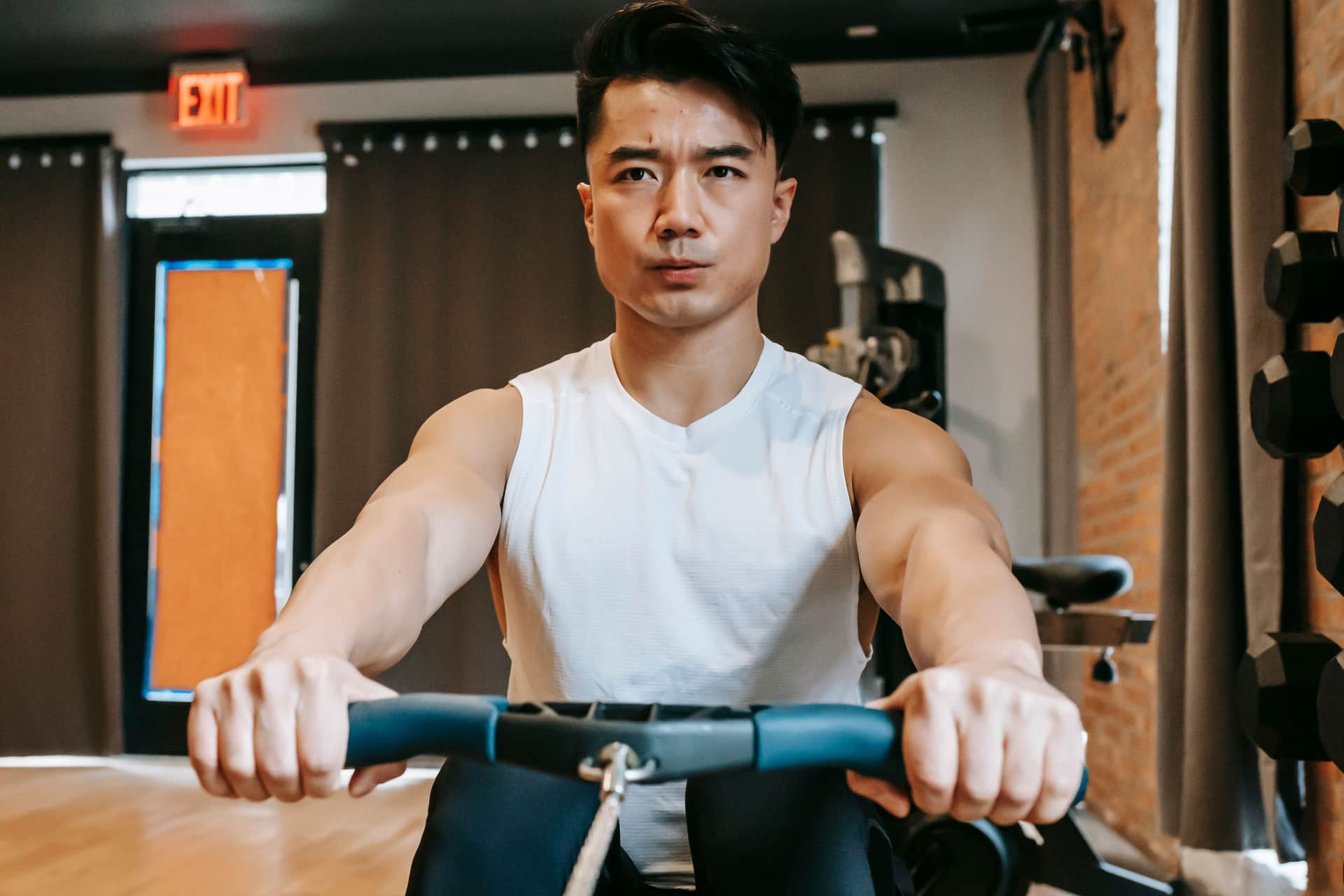
High-intensity interval training alternates short, hard efforts with easy recovery, and a rowing machine is close to the ideal tool for it: it loads your legs, back and arms at once, it has no impact phase, and the monitor gives you an honest, comparable number to chase. This session is deliberately simple, so you can run it on any machine and scale it as you get fitter.
The session
After a five-minute easy warm-up, row hard for 30 seconds, easy for 90, and repeat for eight rounds — about 16 minutes of work plus warm-up and cool-down. The hard efforts should be genuinely hard: by the last two rounds you should be counting down the seconds. Finish with five easy minutes.
The mistake to avoid is starting too fast. Row the first interval at an effort you could just about repeat eight times, not at an all-out sprint you fade from. A good HIIT session is eight honest efforts, not two heroic ones and six survival rows.
How to progress it
Do not add rounds — shorten the rest. Move from 30 seconds on / 90 off to 30 / 60, then to 40 / 60 as your fitness climbs. Keeping the hard efforts maximal while the recovery shrinks is what drives the adaptation. Watch your split on the hard efforts: holding the same split as the rest shrinks is real progress.
Damper and stroke rate for intervals
On an air rower, a damper around 4–6 suits interval work — heavy enough to load the legs, not so heavy it wrecks your back. The damper is not a difficulty dial, so do not crank it to 10. Let the stroke rate rise naturally on the hard efforts; a high rate is fine here because the effort is genuinely maximal.
Which machine suits HIIT
Hard intervals reward resistance that scales with effort. Air rowers do this by design — pull harder, the fan pushes back harder — which is why the Concept2 RowErg and other air machines are the serious-training default. Machines with dual air-and-magnetic resistance, like the Aviron, also reach the higher resistance HIIT wants. A budget magnetic machine works fine to learn the format; our budget picks are here. This is general fitness information, not medical advice — if you have a heart condition, talk to a doctor before starting hard intervals.
Straight answers
Questions people actually ask
Is a rowing machine good for HIIT?
It is one of the best machines for it. Rowing loads your legs, back and arms at once with no impact phase, and the monitor gives you an honest number to chase on each effort. A simple 30-seconds-hard, 90-seconds-easy format for 8 rounds is an effective, scalable session on any machine.
How do I progress a rowing HIIT workout?
Shorten the rest rather than adding rounds. Move from 30 seconds on / 90 off to 30 / 60, then 40 / 60 as you get fitter, keeping the hard efforts maximal. Holding the same 500m split on the hard efforts as the recovery shrinks is real, measurable progress.
What damper setting is best for HIIT rowing?
On an air rower, around 4-6 - heavy enough to load the legs, not so heavy it strains your back. The damper controls how much air enters the flywheel, not the difficulty of the workout, so do not crank it to 10. Let stroke rate rise naturally on the hard efforts.
Show your working
Sources
- Concept2 RowErg - published specificationsAccessed 2026-07-24. https://www.amazon.com/dp/B00NH9WEUA
- Aviron Strong Series - dual air and magnetic resistanceAccessed 2026-07-24. https://www.amazon.com/dp/B0CVMWYS2F
Keep going
Read next
- Rowing machine sprint workoutsFull-recovery sprints for power and speed.
- A rowing weight-loss workoutThe steadier counterpart to intervals.
- Damper setting explainedWhere to set it, and why not 10.
- Stroke rate explainedWhen a high rate is actually fine.
- Best Concept2 rowing machinesThe air-resistance default for hard training.
- The Tabata rowing protocolA shorter, sharper interval structure than a full HIIT session.
- A 30-minute rowing workoutA complete session for the days you want structure without maximal effort.