Head to head
Rowing Machine vs Seated Row Machine
They share a name and almost nothing else. An indoor rower is cardio with your legs driving; a seated row machine is a back exercise with your legs doing nothing at all.
We earn a commission if you buy through the links on this page, at no cost to you. It has no effect on what we recommend or the order we recommend it in — we say “skip this one” on machines that pay us the same as the ones we like. How we’re funded.
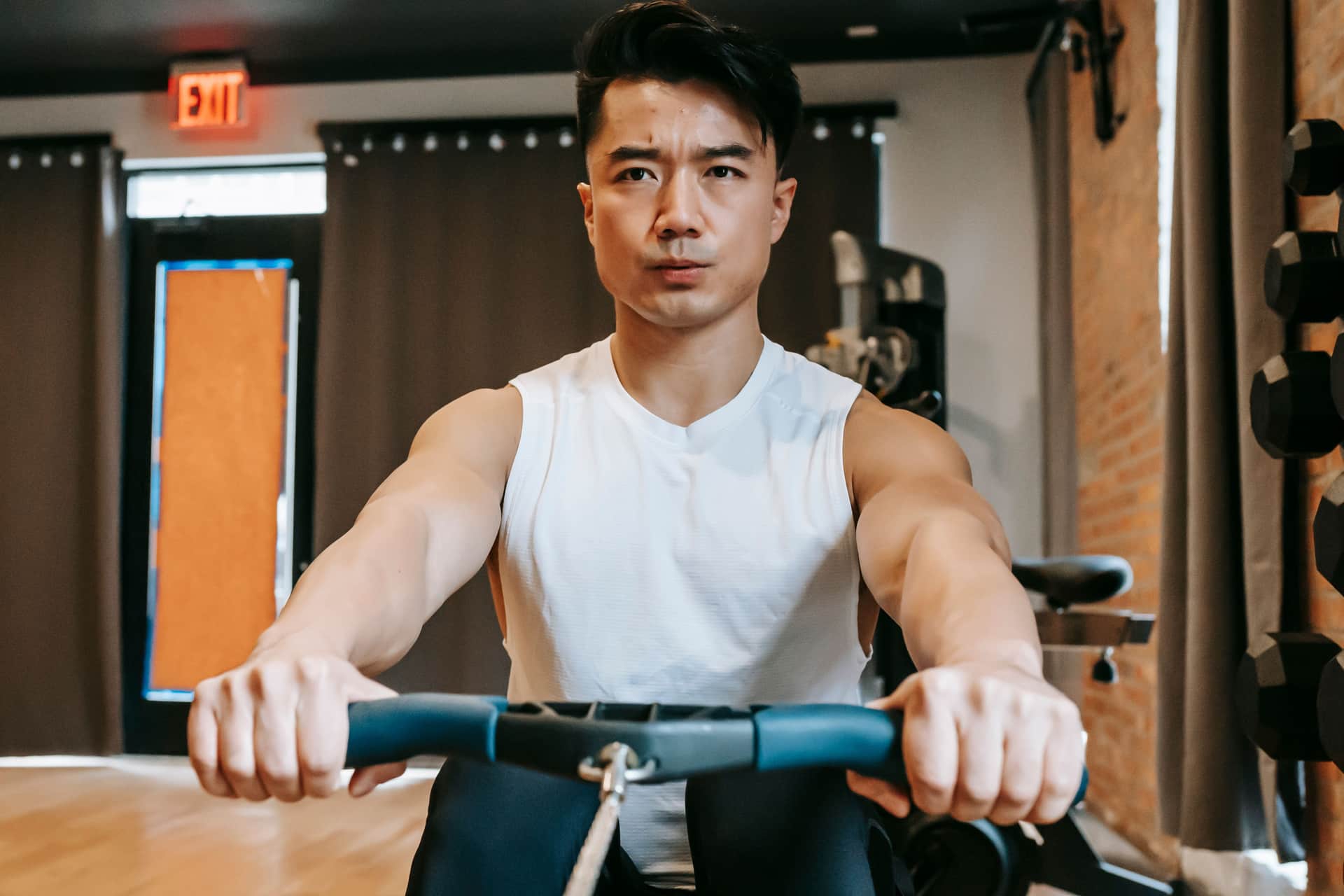
This is one of the most common mix-ups in a gym, and it is entirely the fault of the word “row.” The two machines are not variants of each other. An indoor rowing machine — the erg — has a seat that slides along a rail, and the stroke is a leg press that finishes with a pull. A seated row machine has a seat that does not move, a chest pad or footplate to brace against, and a weight stack or cable; the legs do nothing and the back and arms do everything. One is cardiovascular conditioning that happens to work your muscles. The other is a resistance exercise for your back. If you came here to decide which to buy, the honest first answer is that they do different jobs, so the question is which job you need.
The difference in one table
| Indoor rowing machine (erg) | Seated row machine | |
|---|---|---|
| Seat | Slides along a rail, typically 46 to 50 inches of travel | Fixed. You brace against a chest pad or footplate |
| What drives the movement | Legs first, then the back swing, then the arms | Back and arms only. The legs are not involved |
| Primary training effect | Cardiovascular conditioning, full-body muscular endurance | Back strength and size - a horizontal pulling exercise |
| Resistance | Air, water or magnetic, scaled by how hard you pull | A weight stack or plates, set in fixed increments |
| Typical session | 10 to 60 minutes continuous, or intervals | Three or four sets of 8 to 15 repetitions |
| Progression | More work in the same time, measured in watts or split | More weight on the stack |
| Home ownership | Common. Folds or stands upright; no weight stack needed | Rare. A stack or a cable tower is a gym-sized object |
Why the leg drive is the whole distinction
On an indoor rower, the sliding seat exists so your legs can do the work. The widely used coaching rule of thumb puts the stroke at roughly sixty percent legs, thirty percent core and back, and ten percent arms — which is why beginners who pull with their arms first feel like they have had an arm workout and have actually done less total work. We unpack that in does rowing work your legs and common rowing machine mistakes.
A seated row machine removes that possibility by design. The seat does not move, so there is no leg drive available and the only muscles that can complete the movement are your lats, rhomboids, mid-traps, rear delts and biceps. That constraint is the point: it is a tool for loading the back hard without needing the technique of a barbell row. What it cannot do is raise your heart rate for forty minutes, because sets of ten do not work that way.
Which one should you actually use?
- Cardio, weight management, general fitness. The indoor rower, without question. A seated row machine will not get you conditioned. The cardio case is in rowing machine cardio benefits.
- A bigger, stronger back specifically. The seated row, or any heavy horizontal pull. A rower builds pulling endurance well and size only modestly, because the resistance is self-limiting — the full argument is in does rowing build muscle and does rowing work your upper body.
- Posture and desk-related upper-back weakness. Either helps, and both work the same direction. The rower adds the aerobic benefit on top, which is why it is usually the better single purchase — see does a rowing machine improve posture.
- One machine at home. The rower, easily. It gives you conditioning plus a genuine pulling stimulus in a footprint that folds or stands against a wall, and it needs no weight stack. A seated row station at home means a cable tower or a multi-gym.
- Both, if you have a gym. They stack well: row for conditioning, seated row for back strength, and you are not duplicating anything. On ordering those two inside one week, see rowing before or after weights.
A note on grip, because it is where the questions go next
A seated row machine usually offers several handles — wide, close, neutral, vertical — and swapping them shifts the emphasis around your back. An indoor rower has one handle and one grip, overhand, hands roughly shoulder width. That is not a limitation to work around; the grip is fixed because the stroke is fixed, and changing it breaks the sequence rather than targeting something new. If your hands are the thing bothering you on the erg, hand care is the place to look rather than a different grip.
If the rower is the answer, here is what to buy
The published figures that decide a home rower are the resistance type, the rail length and whether anything is required monthly.
| Machine | Resistance | Rail length | Overall length | Subscription |
|---|---|---|---|---|
| Concept2 RowErg | air | Not published | 96 in | None required |
| MERACH R26 Sculls | magnetic | Not published | 60.6 in | None required |
| Sunny Health & Fitness Smart Dual-Rail Rower | magnetic | 50 in | 79.3 in | None required |
| MERACH Q1S | magnetic | Not published | 65 in | None required |
Our pick
Concept2 RowErg
The machine to buy if you want one thing that does both jobs reasonably rather than one job perfectly. Air resistance scales with how hard you pull, the PM5 reports watts so progression is measurable, it publishes a 500 lb user capacity and a five-year frame warranty, and it needs no subscription. If a bigger back is genuinely the only goal, use a seated row at a gym instead - we would rather tell you that than sell you the wrong machine.
Price as of October 5, 2026. #ad How we’re funded
For the budget end of the same decision, the budget roundup and under $500 rank the same registry against a hard ceiling. If the back stimulus is what you are chiefly after from a rower, the sculls-style machine in the table above is the one worth reading about, with the honest caveat that its stroke does not transfer to a gym erg.
Straight answers
Questions people actually ask
Is a rowing machine the same as a seated row machine?
No. An indoor rowing machine has a seat that slides along a rail and the stroke is a leg press finished with a pull, making it full-body cardio. A seated row machine has a fixed seat and a weight stack, the legs do nothing, and it is a back strength exercise. They share a name and very little else.
Which is better for building your back?
The seated row machine, if that is the only goal. It lets you load the back heavily in sets of eight to fifteen and progress by adding weight. A rower builds pulling endurance strongly and size only modestly, because the resistance is self-limiting - you can only pull as hard as you can sustain.
Which is better for cardio?
The rowing machine, by a wide margin. Sets of ten repetitions on a weight stack do not raise and hold your heart rate; a continuous rowing stroke does, and it loads a lot of muscle evenly while doing it. A seated row machine is not a conditioning tool.
If I can only have one at home, which should it be?
The rowing machine. It gives you conditioning plus a genuine horizontal pulling stimulus in a footprint that folds or stands upright, with no weight stack required. A seated row station at home means a cable tower or a multi-gym, which is a much larger object for a narrower benefit.
Can I change the grip on an indoor rower like I can on a seated row?
No, and you should not want to. A seated row machine offers wide, close, neutral and vertical handles that shift the emphasis around your back. An indoor rower has one handle and one overhand grip at roughly shoulder width because the stroke sequence is fixed - changing the grip breaks the sequence rather than targeting a new muscle.
Show your working
Sources
- Concept2 — Compare indoor rowers (official specifications)Accessed 2026-07-24. https://www.concept2.com/indoor-rowers/compare
- Concept2 - Training and technique resourcesAccessed 2026-07-24. https://www.concept2.com/training
- Concept2 RowErg - published specificationsAccessed 2026-07-24. https://www.amazon.com/dp/B00NH9WEUA?tag=t5fitness-20
- MERACH R26 Sculls - published specificationsAccessed 2026-07-24. https://www.amazon.com/dp/B0DT6ZMCJ1?tag=t5fitness-20
- Sunny Health & Fitness Smart Dual-Rail Rower - published specificationsAccessed 2026-07-24. https://www.amazon.com/dp/B0CMRCCGXB?tag=t5fitness-20
- MERACH Q1S - published specificationsAccessed 2026-07-24. https://www.amazon.com/dp/B0B2P23DBS?tag=t5fitness-20
Keep going