Head to head
Rowing Machine vs Weights
This is really a cardio-versus-strength question. Rowing trains your heart and muscular endurance; weights build size and force. They are not substitutes.
We earn a commission if you buy through the links on this page, at no cost to you. It has no effect on what we recommend or the order we recommend it in — we say “skip this one” on machines that pay us the same as the ones we like. How we’re funded.
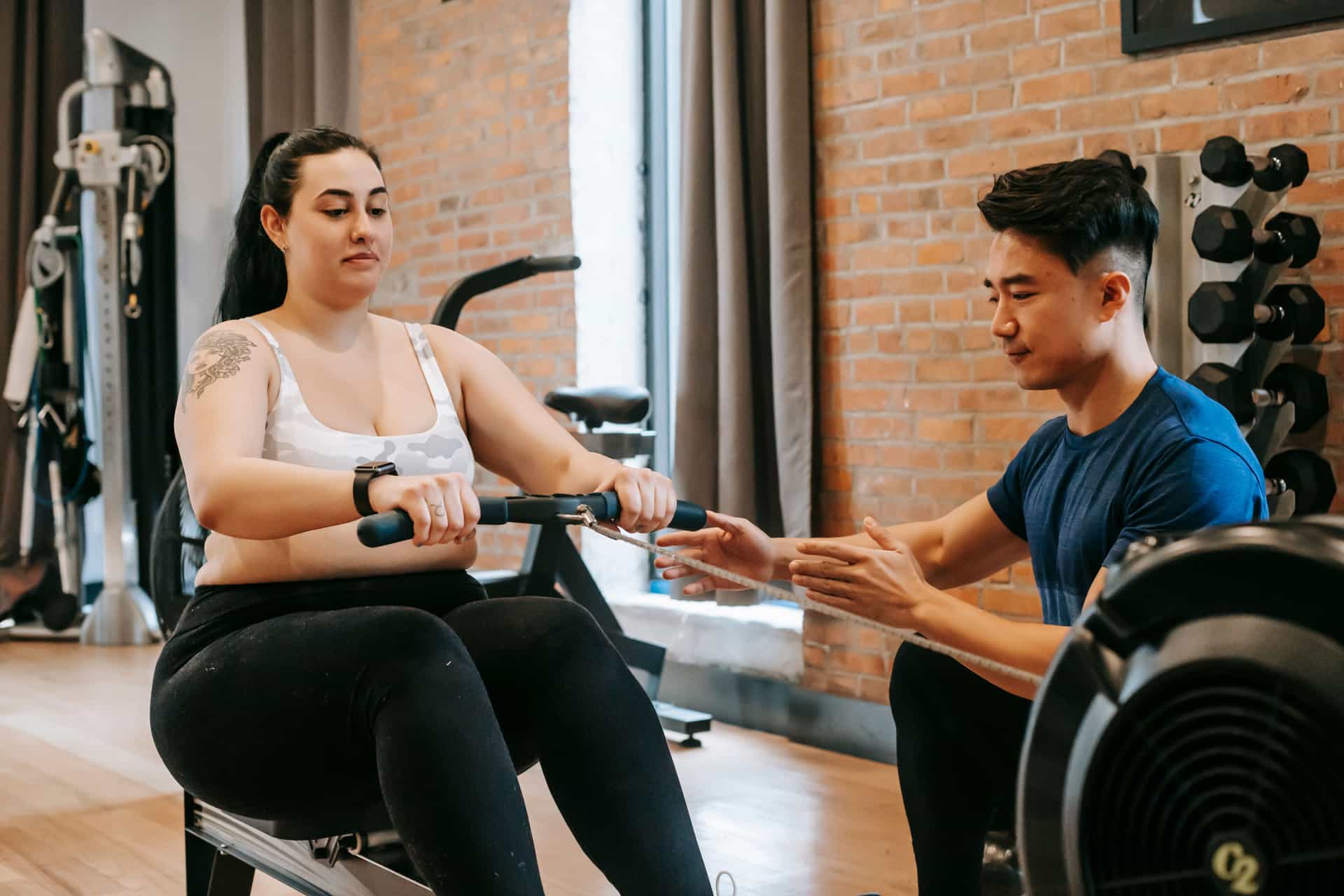
People frame this as one machine replacing the other. It cannot, because the two do not train the same thing. A rowing machine is a cardio tool with a strength-endurance edge. Lifting weights builds size and maximal force. Choosing between them is really choosing what you want your body to do — and for most people the honest answer is a bit of both.
So the useful version of this comparison is not which one wins outright. It is what each actually delivers, what neither delivers on its own, and how to fit them together if your goal, like most people’s, sits somewhere in the middle.
What each one actually trains
A rowing stroke is a genuinely full-body movement — roughly 60% legs, 20% core and back, 20% arms. But the load on any single stroke is sub-maximal and you repeat it hundreds of times, so what it develops is aerobic capacity and muscular endurance: the ability to keep producing force for a long time. It trains a lot of muscle at once, but it does not overload any one of them the way building size requires. Here is the full-body breakdown.
Weights work the opposite way. The whole method is progressive overload — you lift a heavy load for relatively few reps and add weight over time. That specific, near-maximal stimulus is what drives hypertrophy (size) and maximal strength. A barbell can load a muscle far harder than a self-limited rowing stroke ever will, which is exactly why it is the tool for getting bigger and stronger.
Put plainly: rowing asks a lot of muscle to work for a long time; weights ask specific muscle to work very hard for a short time. Different questions, different answers.
Does rowing build muscle?
For someone new to training, yes — some. Any novel resistance builds a little muscle and noticeable definition at first, and rowing does load the legs, back and arms enough to show it, particularly across the posterior chain. But it is cardio-first. The resistance per stroke is light and self-limiting, so the muscle-building effect plateaus quickly, and a trained lifter will get very little size out of rowing alone. We go deeper on what rowing can and cannot do for size here.
The honest bottom line: if adding maximal muscle and size is your onlygoal, a rowing machine is not the primary tool — a lifting program is. What rowing does brilliantly is condition the body you build.
Fat loss and conditioning
For raw conditioning and calorie output, rowing has the edge. It is continuous, full-body work, so it drives your heart rate up while spreading the effort across legs, core, back and arms — a lot of output per minute, sustained for as long as you can hold the pace. More on the conditioning side of the ledger here.
Weights help fat loss too, mostly indirectly: more muscle raises your resting metabolism, and heavy training burns calories during and after a session. But a straight strength workout is not the acute cardio stimulus that a hard row is. If a calorie deficit and aerobic fitness are what you are chasing, rowing gets you there faster; if you want the muscle that keeps the deficit working over the long run, weights do that job.
Joints, learning curve and time
Rowing is low-impact and non-weight-bearing — you sit, the seat carries your weight, and nothing lands, so the drive comes from your legs without asking your joints to bear your bodyweight while they do it. The catch is a real learning curve: a clean stroke takes practice, and a sloppy one done under fatigue can strain your lower back. It is also time-efficient, training most of the body in a single movement.
Weights can be joint-friendly when programmed and executed well, but heavy, near-maximal loading does add stress to joints and tendons, and the risk climbs when form breaks down. Each lift is its own skill to learn, and a full program needs more equipment, more space or a gym membership. This is general information, not medical advice — if you have an existing joint, back or heart condition, talk to a doctor before starting either.
The best answer for most people: combine them
For almost everyone, this is not a versus at all. Use weights for strength and size and use a rower for conditioning, and you cover both sides of fitness that neither tool covers alone. The two complement each other cleanly — which is exactly why so many people who already lift add a rower for conditioning. The rowers that suit lifters and mixed-modal training are here.
Scheduling is simpler than it looks. Lift two to four times a week, and row on your off-days or after a lift for conditioning. Keep hard rowing intervals away from your heavy leg days so your legs are fresh for the barbell, and lean on easier steady-state rows for recovery. A common, sustainable week is three lifting days plus two rowing sessions — one hard interval piece, one easy longer paddle.
The short answer
If you must pick one, pick by goal. Pure size and maximal strength — weights, no contest. All-round conditioning, heart-and-lung fitness, fat loss and a low-impact full-body workout — a rowing machine. And if you want to be genuinely fit rather than just big or just lean, run both.
When a rower is the conditioning half of that plan, the benchmark is the Concept2 RowErg. Its air resistance scales with how hard you pull, so the same machine handles an easy recovery paddle and an all-out interval, and it asks nothing of you monthly. If your budget is nearer the bottom of the range, a budget magnetic rower like the MERACH Q1S folds away, runs quiet and does the conditioning job for a fraction of the price.
| Machine | Machine price | Subscription | Year 1 | Year 3 | Year 5 |
|---|---|---|---|---|---|
| Concept2 RowErg | $990 | None | $990 | $990 | $990 |
Machine prices are live from Amazon as of September 13, 2026 and change without notice. Subscription figures are the published month-to-month rates, each cited on the subscriptions page. Totals are machine price plus the monthly rate multiplied by 12, 36 and 60. We do not model electricity, shipping, floor mats or resale value — each would need an assumption we cannot source, and adding them would make the number look more precise while making it less true.
Our pick
Concept2 RowErg
The conditioning tool to pair with a lifting program: air resistance that scales with your effort, so one machine covers an easy paddle and a brutal interval, with no subscription. If pure size is your only goal, a rower is not the main tool - but almost nobody wants only that. On a tight budget, a magnetic rower like the MERACH Q1S does the conditioning job for far less.
Price as of September 13, 2026. #ad How we’re funded
Straight answers
Questions people actually ask
Is a rowing machine or weights better for building muscle?
Weights, clearly. Building size and maximal strength depends on progressive overload - lifting heavy loads for relatively few reps and adding weight over time - and a barbell loads a muscle far harder than a self-limited rowing stroke can. Rowing builds some muscle in beginners and trains muscular endurance across the whole body, but it is cardio-first and plateaus fast for size. If size is your only goal, lift.
Can I replace lifting with a rowing machine?
Not if strength and size matter to you. A rower is excellent full-body cardio and it trains muscular endurance, but it does not provide the heavy, near-maximal loading that builds significant muscle or maximal strength. It replaces cardio machines, not a barbell. The better move for most people is to keep both.
How do I combine rowing and weights in one week?
Lift two to four times a week and row on your off-days or after a lift for conditioning. Keep hard rowing intervals away from heavy leg days so your legs are fresh for lifting, and use easy steady-state rows for recovery. A sustainable template is three lifting days plus two rowing sessions - one hard interval piece and one easy longer row.
Which is better for fat loss, rowing or lifting?
Rowing has the edge for the acute calorie burn and cardio stimulus, because it is continuous full-body work that elevates your heart rate for as long as you hold the pace. Lifting helps fat loss indirectly by adding muscle, which raises your resting metabolism. Doing both - rowing for the burn, weights for the muscle that sustains it - beats either alone.
Show your working
Sources
- Concept2 — Compare indoor rowers (official specifications)Accessed 2026-07-24. https://www.concept2.com/indoor-rowers/compare
- Concept2 RowErg - published specificationsAccessed 2026-07-24. https://www.amazon.com/dp/B00NH9WEUA?tag=t5fitness-20
Keep going
Read next
- Rowing machine vs PilatesCardio against core control and mobility.
- Does rowing build muscle?What rowing can and cannot do for size.
- What muscles rowing worksThe full-body breakdown.
- Best rowing machines for CrossFitIf you already lift and want conditioning.
- Rowing machine cardio benefitsThe conditioning side of the ledger.