Technique
Proper Rowing Machine Form
Good form on a rowing machine is a checklist, not a feeling — four positions in a fixed order, and one sequence almost everyone gets backwards.
We earn a commission if you buy through the links on this page, at no cost to you. It has no effect on what we recommend or the order we recommend it in — we say “skip this one” on machines that pay us the same as the ones we like. How we’re funded.
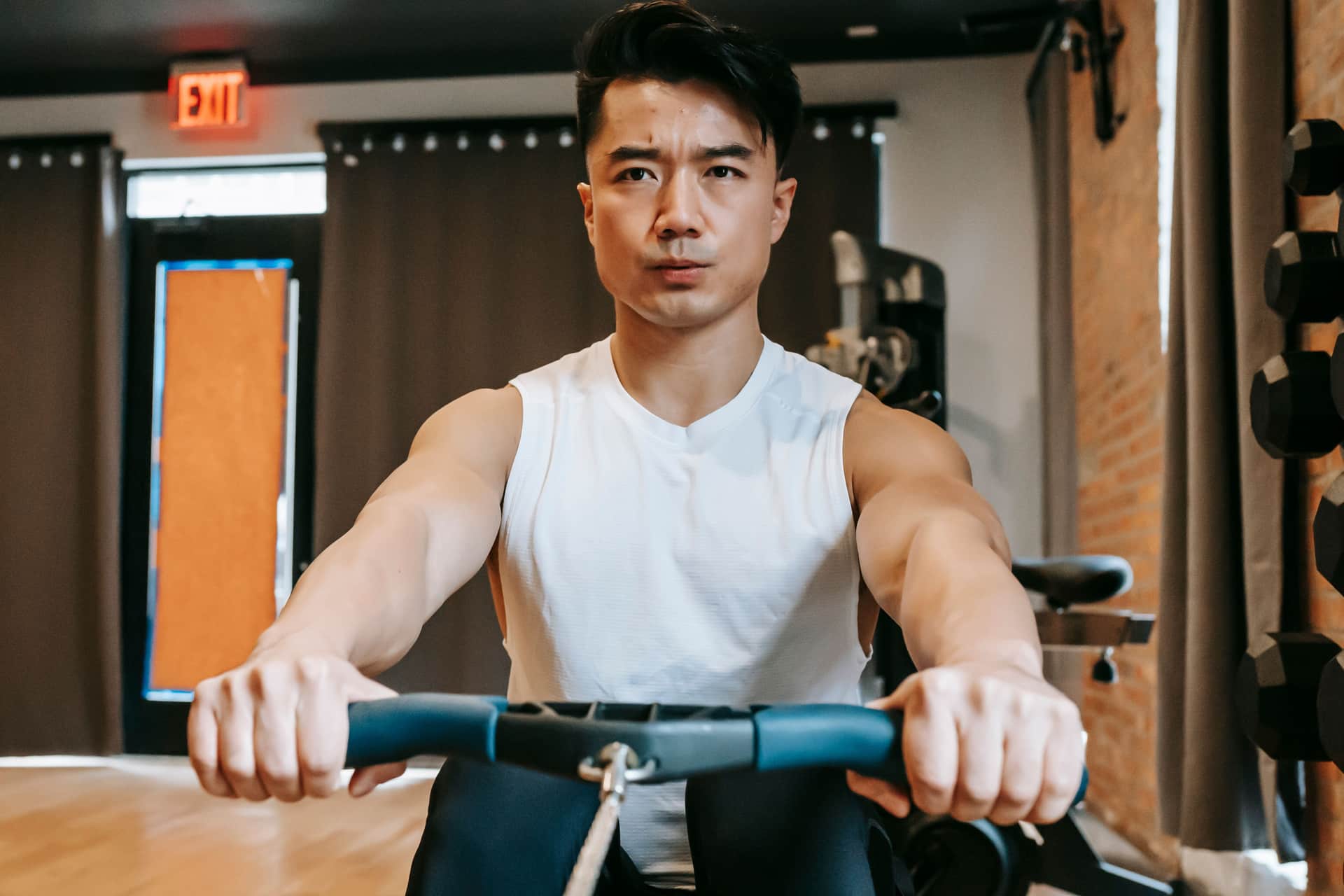
Rowing rewards good form more obviously than almost any other cardio machine, because the machine will happily let you produce a lot of force in a way that hurts you. Get the sequence right and the biggest muscles in your body do the work. Get it wrong and your lower back quietly makes up the difference, one stroke at a time.
The good news is that form here is not a matter of feel or talent. It is a checklist of four positions in a fixed order, and once you can name them you can fix your own stroke without a coach standing over you.
Form is a checklist, not a feeling
Every rowing stroke moves through the same four positions: the catch, the drive, the finish and the recovery. They always happen in that order, and the single most important thing about good form is that the muscles fire in the same order too: legs, then back, then arms, and on the way back the exact reverse.
About 60% of the power in a stroke comes from your legs, roughly 20% from your back and core, and roughly 20% from your arms. That split only happens when the sequence is right. Invert the order and you invert the split — the small muscles do work the big ones should be doing, and everything downstream suffers.
The catch: where good form starts
At the catch you are at the front of the rail, coiled and ready. Shins vertical — not past vertical, which overcompresses your ankles and shortens the drive you have available. Arms straight and relaxed. Shoulders slightly in front of your hips. Back straight but not braced rigid.
A good catch is a loaded position rather than a comfortable one. If you are slumped, rounded or reaching with your arms, the stroke is already compromised before it begins, and no amount of pulling later will recover it.
The drive: legs, then back, then arms
The drive is where the power comes from, and it has a strict order. Push the footplates away with your legs while your arms stay straight and your back angle stays fixed. The handle moves because you are pressing the footplates away, not because you are pulling with your arms.
Only when your legs are almost flat do you open the body, hinging back from the hips to about 11 o’clock with a long spine. And only then — last of all — do the arms draw the handle into the bottom of your ribs, elbows past your body. Say it to yourself for the first hundred strokes: legs, body, arms. It becomes automatic faster than you expect.
Throughout the drive the handle should travel in a roughly straight, level line from the catch to your ribs. If it dips down toward your lap or rides up toward your chest, the sequence has usually slipped — a handle path that bows is one of the clearest signs the order has gone wrong, and it is easy to see on camera. Keep the pressure through the balls of your feet, not your toes, and let the seat and the handle move together off the catch rather than the seat shooting backwards on its own.
The finish and the recovery
At the finish your legs are flat, your body is leaned back to roughly 11 o’clock — not lying flat — and the handle is against your lower ribs. Then the recovery reverses everything, in order: arms away until they are straight, body over to hinge forward from the hips, and only then knees bend to let the seat slide back to the catch.
The drive is quick; the recovery is roughly twice as long and controlled. That is where you breathe and set up the next catch. Rushing back up the slide is the fastest way to turn a smooth stroke into a frantic one. The full sequence, position by position, is here.
Keep your grip light the whole way through. Hook your fingers over the top of the handle rather than throttling it, thumbs underneath, wrists flat. A white-knuckle grip tightens your forearms, creeps up into your shoulders and fatigues the smallest muscles in the chain long before it does anything useful — and the pull comes from your back and legs, not your hands.
The faults that show up on camera
Film yourself from the side for thirty seconds and almost every form problem becomes obvious. These are the four to look for.
Pulling with the arms too early. The classic sequencing error. If the handle starts moving before the seat does, your arms are working before your legs have driven. It robs the stroke of power and loads the smallest muscles in the chain.
Opening the back too soon.The other half of the same problem — the body swings back while the legs are still bent. The spine ends up doing the leg drive’s job at the worst possible angle.
Rounding the back. Good form hinges at the hips with a long spine. Rounding under load is where rowing earns its reputation for back trouble, and it is a technique fault, not something inherent to the movement.
Bending the knees before the hands clear them.On the recovery, if your knees rise before your hands have passed over them, the handle has to detour around your shins. On an air rower you will physically bump the handle on your knees — an annoying but effective teacher.
This is general information rather than coaching or medical advice. If you have an existing back, knee or heart condition, talk to a doctor before starting.
You cannot row with good form on a rail too short for your legs, because it forces you to end the leg drive early and finish the stroke with your lower back. Rail length is the specification that most affects whether you can actually row properly, and it is the one most often left off a listing. Our beginner picks are ranked on exactly that. Whichever machine you learn on, build the stroke first — intensity is easy to add later and hard to undo.
Straight answers
Questions people actually ask
What is proper form on a rowing machine?
Four positions in a fixed order, with the muscles firing legs, then back, then arms. At the catch: shins vertical, arms straight, shoulders ahead of hips. On the drive: legs only, arms straight, back angle fixed. At the finish: legs flat, body leaned back to about 11 o'clock, then draw the handle to your lower ribs. On the recovery, reverse it exactly - arms, body, then knees.
What is the correct sequence for a rowing stroke?
Legs, then body, then arms on the drive; arms, then body, then legs on the recovery. The single most common form error is doing it out of order - pulling with the arms or opening the back before the legs have driven. Keeping the order right is what produces the roughly 60/20/20 legs/core/arms power split.
Why does my lower back hurt when I row?
Usually a form problem rather than an injury waiting to happen. Rounding the back instead of hinging at the hips, opening the body before the legs have finished driving, or using a rail too short for your inseam all shift load onto the lower back. Film yourself from the side and check the sequence. This is general information, not medical advice - see a doctor about persistent pain.
How do I know if my rowing form is wrong?
Film thirty seconds from the side. If the handle moves before the seat does, your arms are firing too early. If your body swings back while your knees are still bent, you are opening the back too soon. If your spine rounds under load, or your knees bend before your hands clear them on the recovery, those are the four faults to fix first.
How far back should I lean at the finish of a rowing stroke?
To about 11 o'clock - a slight backward lean from vertical, not lying flat. Leaning further than that loads the lower back and adds no useful power. The lean should come from hinging at the hips with a long spine, with the handle drawn into the bottom of your ribs.
Do I need a coach to learn rowing form?
No. Rowing form is a checklist of four positions in a fixed order rather than a skill that needs supervision. Learning to name the catch, drive, finish and recovery, saying 'legs, body, arms' to yourself, and filming yourself from the side will fix most beginner faults on their own. This is general information rather than coaching advice.
Show your working
Sources
- Concept2 — Compare indoor rowers (official specifications)Accessed 2026-07-24. https://www.concept2.com/indoor-rowers/compare
- Concept2 RowErg — published specificationsAccessed 2026-07-24. https://www.amazon.com/dp/B00NH9WEUA?tag=t5fitness-20
- Sunny Health & Fitness Smart Dual-Rail — rail length specificationAccessed 2026-07-24. https://www.amazon.com/dp/B0CMRCCGXB?tag=t5fitness-20
- Row & Recover — how we pickAccessed 2026-07-24. https://rowandrecover.com/methodology
Keep going
Read next
- How to use a rowing machineThe full stroke, position by position.
- What muscles rowing worksThe 60/20/20 split good form produces.
- Best rowing machines for beginnersRanked on rail length, which is what lets you row properly.
- How to set up foot strapsWhere the strap sits, and the mistakes that cost you the drive.