Programming
Is Rowing a Push or a Pull?
The honest answer is both, in that order: your legs push and your arms pull. Which is why a rowing machine belongs on leg day more than it belongs on pull day.
We earn a commission if you buy through the links on this page, at no cost to you. It has no effect on what we recommend or the order we recommend it in — we say “skip this one” on machines that pay us the same as the ones we like. How we’re funded.
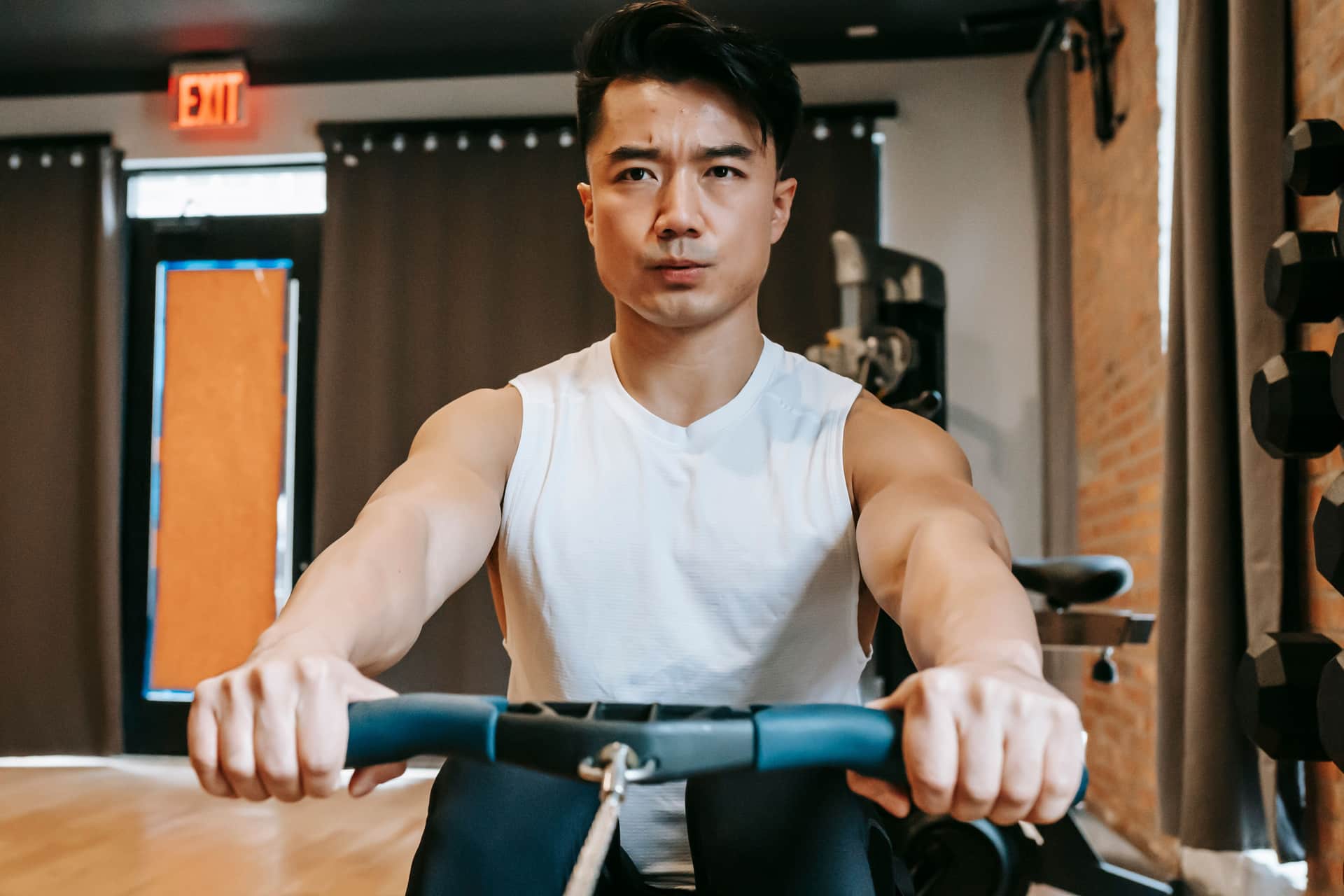
Both, and the order matters: a rowing stroke is a leg push that becomes an arm pull. If you are asking because you run a push-pull split and need to know which day the rower goes on, the practical answer is the one most people guess wrong: put it with legs, not with pull. The handle comes towards you, which is why everyone calls it a pull, but the handle is the last five percent of the movement. The quadriceps and glutes that drove it are doing the work that will affect tomorrow’s session.
The sequence, which is the whole answer
A rowing stroke has a fixed order, and getting it wrong is the single most common fault on the machine. From the catch, with your shins vertical and the handle at your feet:
- Legs. You push the footplate away. This is a leg press performed on a sliding seat, and it is where the large majority of the force in the stroke comes from. Your arms are straight and doing nothing but holding on.
- Body. As the legs finish, the hips open and the torso swings back through roughly vertical. This is a hip hinge — neither push nor pull in the gym sense.
- Arms. Only now do the elbows bend and the handle come to the body. This is the pull, and it is the smallest contribution of the three.
Then the same sequence in reverse on the recovery: arms away, body forward, legs bend. If you have ever been told “legs, body, arms — arms, body, legs,” that is this. Rowing machine form walks through it with the faults, and common mistakes covers what happens when you reverse it: opening the back before the legs finish, which is how a rower ends up with a sore lower back.
Why the push-or-pull label matters at all
For most people it does not, and the honest advice is to row when you feel like rowing. It matters in exactly one situation: you lift seriously, you organise your week into push days and pull days, and you want the rowing not to interfere.
In that case, the thing to protect is leg strength. A hard rowing session is a large volume of leg work, so stacking it onto a day with heavy squats or deadlifts means the second of the two will be worse. The arm and back contribution is small enough to be irrelevant to a pull day, so a rower is a poor substitute for a row with weight — and a poor thing to put on the same day as heavy squats. The ordering question is answered in full at row before or after weights; the short version is to lift first if strength is the goal.
The other place the label trips people up is the machine named after the movement. A seated row machine in a gym — fixed seat, chest pad, cable or lever — is a genuine pull exercise for the back, with no leg drive at all. An indoor rower is a cardio machine with a leg press in it. They share a word and almost nothing else, which is the argument on rowing machine vs seated row.
So what does the pull actually train?
The finish works the lats, rhomboids, rear deltoids and the grip, which is why consistent rowing tends to thicken the upper back a little and why your hands complain before your lungs do on a long session. It is real work and it is not much of it — does rowing work your upper body puts a number on the ceiling, and muscles worked breaks the whole stroke down. If you want back thickness, do rows with weight. If you want a conditioning session that happens to include some back work, row.
Two practical consequences of the pull being small. First, if your arms are tired and your legs are not, you are pulling too early — a classic sign of the sequence breaking down. Second, your grip is a genuine limiter on long pieces, and the fix is a relaxed hook rather than a fist: hand care covers it.
What this means for the machine you buy
If the legs do most of the work, two published figures matter more than anything about the handle. Rail length, because a short rail cramps the leg drive at the catch and that is where the power comes from — rail length covers how few makers publish it. And the resistance mechanism, because a leg drive that keeps accelerating wants a machine that pushes back harder as you push harder, which is what an air or water rower does and a magnetic one does not.
| Machine | Resistance | Rail length | Length | Capacity |
|---|---|---|---|---|
| Concept2 RowErg | air | Not published | 96 in | 500 lb |
| Sunny Health & Fitness Smart Dual-Rail Rower | magnetic | 50 in | 79.3 in | 300 lb |
| MERACH NovaRow R50 Pro | air | Not published | 95 in | Not published |
Where this lands
Two machines that give the leg drive somewhere to go
Concept2 RowErg
Air resistance means the harder your legs push, the harder the machine pushes back - there is no level to run out of, which is exactly what a strong leg drive wants. Published 500 lb capacity, no subscription, five-year frame warranty. It is 96 inches long in use and it is the loud one.
$990.00 · Check price on AmazonPrice as of October 21, 2026. #ad How we’re funded
Sunny Health & Fitness Smart Dual-Rail Rower
The one machine here that publishes its rail length - 50 inches - which for a leg-driven stroke is the figure that actually matters. Magnetic, so quiet enough for a flat and a shared home, with a published 300 lb capacity, and it stands upright when you want the floor back.
Straight answers
Questions people actually ask
Is a rowing machine a push or a pull exercise?
Both, in that order: your legs push the footplate away and your arms pull the handle in at the end. The leg push supplies the large majority of the force, which is why - if you are sorting a training week into push days and pull days - a rowing machine belongs with legs rather than with pulling.
Should I row on push day or pull day?
Neither, strictly - but if you have to choose, treat it as leg work. A hard row is a large volume of leg work, so stacking it with heavy squats or deadlifts means one of the two will be worse. The arm and back contribution is too small to matter to a pull day, so a rower is not a substitute for rows with weight.
What is the correct rowing stroke sequence?
Legs, then body, then arms on the drive; arms, then body, then legs on the recovery. The most common fault is opening the back before the legs have finished, which takes load off the quadriceps and puts it on the lower back. One session spent on the sequence is worth more than any amount of extra resistance.
Is a rowing machine the same as a seated row machine?
No, and they share little besides the word. A seated row machine has a fixed seat, a chest pad and a cable or lever, and it is a genuine back-pull exercise with no leg drive. An indoor rower is a cardio machine with a leg press built into it on a sliding seat.
Does rowing count as a back exercise?
Partly. The finish of the stroke works the lats, rhomboids and rear deltoids, which is why consistent rowing tends to thicken the upper back slightly. It is real work but not a lot of it, so if back thickness is the goal, row with weight and use the machine for conditioning.
If my arms tire before my legs, what am I doing wrong?
Almost certainly pulling too early. If the elbows start bending before the legs have finished their push, the arms take over work the legs should be doing - which also costs you power and loads your lower back. Hold the arms straight until the legs are done, then swing, then pull.
Show your working
Sources
- Concept2 — Compare indoor rowers (official specifications)Accessed 2026-07-24. https://www.concept2.com/indoor-rowers/compare
- Concept2 - Training and technique resourcesAccessed 2026-07-24. https://www.concept2.com/training
- Concept2 RowErg - published specificationsAccessed 2026-07-24. https://www.amazon.com/dp/B00NH9WEUA?tag=t5fitness-20
- Sunny Health & Fitness Smart Dual-Rail Rower - published rail lengthAccessed 2026-07-24. https://www.amazon.com/dp/B0CMRCCGXB?tag=t5fitness-20
- MERACH NovaRow R50 Pro - published specificationsAccessed 2026-07-24. https://www.amazon.com/dp/B0GXBFLCN7?tag=t5fitness-20
Keep going