Row & Recover

What is actually behind you

Best Rowing Machines with Back Support

Three makers publish a back pad, one publishes a real seatback, and one sells a lumbar kit for its own rower. Here is what each of them actually supports, and what no rowing machine supports at all.

By Stephen V.An enthusiast who reads the manuals and does the math. Not a coach, not a lab.Last verified July 24, 2026.

We earn a commission if you buy through the links on this page, at no cost to you. It has no effect on what we recommend or the order we recommend it in — we say “skip this one” on machines that pay us the same as the ones we like. How we’re funded.

The honest headline first, because it changes what you should buy. No rowing machine has a backrest you row against. Not one, at any price, from any maker we track. The rowing stroke is a hip hinge that swings your torso through about thirty degrees — a seatback behind that movement would stop the stroke dead, so nobody builds one. Every machine sold as a “rowing machine with back support” is doing one of four different things instead, and the four are not interchangeable.

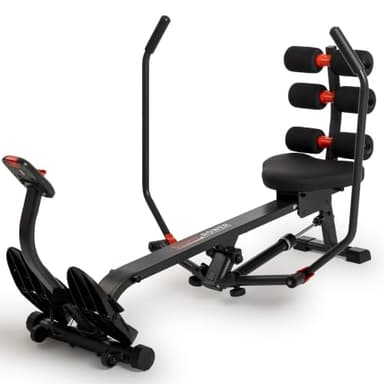
If you want something physically behind your back on the machine, buy the Sunny SF-RW525023: it is the only rower we have found whose maker publishes a built-in back pad, a cushioned back-assist seat on six foam rollers, with a seat that locks at five points along the rail so you can use it fixed-seat and supported rather than sliding. It publishes 400 lb of capacity and a three-year structural frame warranty, which is three times the term most machines in its bracket print. The pad is for the fixed-seat and core exercises, not for the rowing stroke — Sunny does not claim otherwise and neither will we.

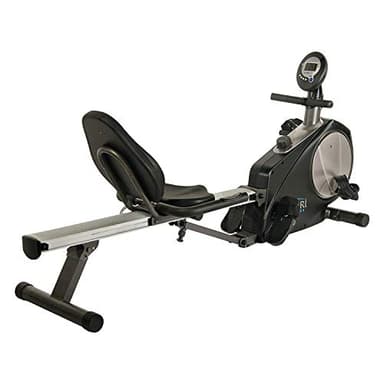
If what you actually want is a chair with a seatback that also rows, the Avari Conversion II is the only machine here with one: an oversized, molded, adjustable foam-padded seat and seatback on a frame that converts between rowing and recumbent cycling. It costs several times what the budget picks do, and it is the only published seatback in the category, so there is no cheaper version of that idea to point you at.

And if you came here because your back is the reason you are shopping at all, the answer is probably none of those three. The machines that are kindest to a back are the ones with a high seat and a smooth stroke, because the two moments that hurt are standing up at the end and snatching at the catch — which is why the Concept2 RowErg with tall legs sits on this list with no back pad whatsoever. Its seat is 20 inches off the floor instead of 14, which is roughly dining-chair height. You stand up off it rather than push up out of it. That one dimension does more for most backs than any pad on this page.

This is equipment selection, not treatment. Nothing below will fix a back, nobody here has examined yours, and this is general information rather than medical advice. If a specific back problem is what sent you shopping, get a professional opinion on whether rowing suits it at all before you spend anything — our longer piece on rowing and your back is the background reading, and best rowing machines for back pain is the page for choosing on stroke quality rather than on hardware.

The short answer

Quick picks

Ranked on published specification, buyer fit and what each machine costs to keep over five years. Select a row to jump to the full write-up. We have not rowed on these machines — here is exactly what we do instead.

#MachineBest forPrice
1
Sunny Health & Fitness SF-RW525023 2-in-1 Full Motion Rower with Core Trainer

Sunny Health & Fitness SF-RW525023 2-in-1 Full Motion Rower with Core Trainer

The only machine we have found whose maker publishes a built-in back pad: a cushioned back-assist seat on six foam rollers, plus a seat that locks at five points along the rail.

Best built-in back pad
$269.99 · Check price on Amazon

$299.9910% off

Price as of November 12, 2026. #ad How we’re funded

2
Avari Conversion II Rower/Recumbent Bike

Avari Conversion II Rower/Recumbent Bike

The only machine here with a real seatback: a molded, adjustable, foam-padded seat and seatback, on a frame that converts between rowing and recumbent cycling.

Only full seatback
$899.00 · Check price on Amazon

Price as of November 12, 2026. #ad How we’re funded

3
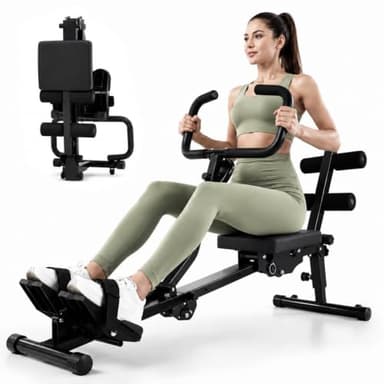
Sportneer Foldable Hydraulic Rower (CRM)

Sportneer Foldable Hydraulic Rower (CRM)

The cheapest machine we have found whose listing states a backrest, and the only one whose rear support frame adjusts for height across three settings.

Cheapest published backrest
$139.99 · Check price on Amazon

Price as of November 12, 2026. #ad How we’re funded

4
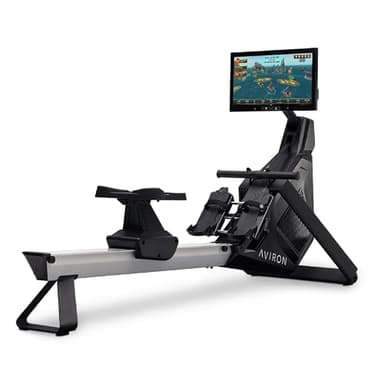
Aviron Strong Series

Aviron Strong Series

Dual air and magnetic resistance up to 100 lb, a 22-inch screen, and the cheapest membership of any connected rower here at $34/month.

Only factory lumbar kit
$1,998.00 · Check price on Amazon

Price as of November 12, 2026. #ad How we’re funded

5
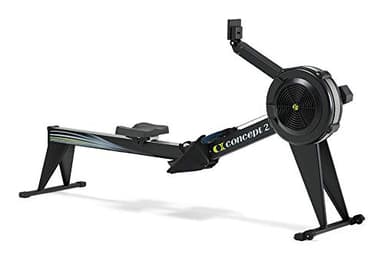
Concept2 RowErg with Tall Legs

Concept2 RowErg with Tall Legs

The same machine with the seat 6 inches higher. That one change is the difference between a rower you can get off unaided and one you cannot.

Easiest to get up from
$1,499.99 · Check price on Amazon

Price as of November 12, 2026. #ad How we’re funded

6
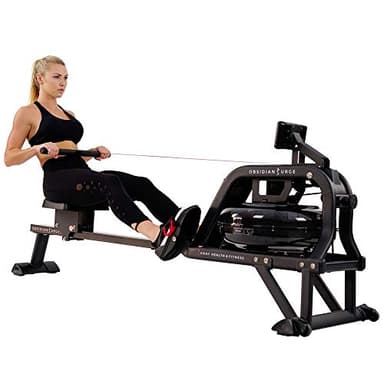
Sunny Health & Fitness Obsidian Surge

Sunny Health & Fitness Obsidian Surge

Water resistance and a 17-inch seat at roughly a quarter of a WaterRower's price, in steel rather than ash.

Highest seat on water
$499.99 · Check price on Amazon

Price as of November 12, 2026. #ad How we’re funded

In detail

Every pick, and what is wrong with it

Each machine below gets the same four things: what it does well, what it does not, the five-year cost of owning it, and the case for buying something else instead.

Sunny Health & Fitness SF-RW525023 2-in-1 Full Motion Rower with Core Trainer rowing machine

1. Best built-in back pad

Sunny Health & Fitness SF-RW525023 2-in-1 Full Motion Rower with Core Trainer

The only machine we have found whose maker publishes a built-in back pad: a cushioned back-assist seat on six foam rollers, plus a seat that locks at five points along the rail.

Five years of ownership: $270 — all of it the machine, none of it a subscription. See the full table

Floor space: about 5.7 ft by 4.5 ft once you allow for handle travel and elbow room — roughly 25 sq ft.

What is good

  • Sunny publishes a built-in Back-Assist Core Trainer - a cushioned seat plus six foam rollers that give the back something to rest against
  • The seat glides for normal rowing or locks at five positions on the rail, so the machine can be used seated-and-supported rather than sliding
  • 400 lb published capacity and a 3-year structural frame warranty, which is three times the term most budget rowers publish

What is not

  • The back pad is for the fixed-seat and core exercises, not for the rowing stroke - no maker, including Sunny, publishes a backrest you row against
  • Hydraulic resistance does not reward hard training: 12 cylinder levels, no flywheel, and the feel changes as the cylinder warms
  • 29.7 inches wide and 31.1 inches tall - a wider and taller footprint than any other budget rower we track, because the dual arms need the room

Skip this one if: Skip it if what you actually want is a long, smooth stroke on a flywheel - a full-motion hydraulic machine with a back pad is a different exercise, and the Concept2 is the better rowing machine.

$269.99 · Check price on Amazon

$299.9910% off

Price as of November 12, 2026. #ad How we’re funded

Avari Conversion II Rower/Recumbent Bike rowing machine

2. Only full seatback

Avari Conversion II Rower/Recumbent Bike

The only machine here with a real seatback: a molded, adjustable, foam-padded seat and seatback, on a frame that converts between rowing and recumbent cycling.

Five years of ownership: $899 — all of it the machine, none of it a subscription. See the full table

Floor space: about 7.2 ft by 4.0 ft once you allow for handle travel and elbow room — roughly 29 sq ft.

What is good

  • Avari publishes an oversized, molded, adjustable foam-padded seat and seatback - a genuine backrest, not a pad for ab work
  • Converts between rowing and recumbent cycling on the same frame, so a day when rowing is not happening is still a session
  • Magnetic resistance and a stated 3-year frame warranty, with the muuv app included and no subscription required

What is not

  • Avari publishes no maximum user weight for this machine - the one figure a seatback buyer most often needs
  • 74.5 inches long, 34 inches tall, and no folding or upright storage is published: this machine stays where you build it
  • Parts coverage is 90 days against a 3-year frame, and the monitor is a basic multi-function display rather than a performance monitor

Skip this one if: Skip it if you want to train rowing seriously - a nylon strap and a convertible frame will not teach you a stroke the way a flywheel and a chain do.

$899.00 · Check price on Amazon

Price as of November 12, 2026. #ad How we’re funded

Sportneer Foldable Hydraulic Rower (CRM) rowing machine

3. Cheapest published backrest

Sportneer Foldable Hydraulic Rower (CRM)

The cheapest machine we have found whose listing states a backrest, and the only one whose rear support frame adjusts for height across three settings.

Five years of ownership: $140 — all of it the machine, none of it a subscription. See the full table

Floor space: about 5.5 ft by 3.3 ft once you allow for handle travel and elbow room — roughly 18 sq ft.

What is good

  • Sportneer states an extra backrest design you can lean on between intervals and brace against for sit-ups - published, not inferred
  • The rear support frame adjusts across 3 height settings and the seat has 2 fixed positions as well as sliding, so the geometry can be changed rather than endured
  • 53.9 inches long and foldable with transport casters, which is a closet machine rather than a room machine

What is not

  • 297 lb published capacity - the lowest of any machine we carry, and well below the 400 to 500 lb figures on the tier above
  • Sportneer publishes no machine weight, no seat height and no rail length, so fit has to be judged from the overall length alone
  • Hydraulic resistance with a 365-day warranty: this is a cheap machine with a cheap machine's parts behind it

Skip this one if: Skip it if you weigh anywhere near 297 lb, or if you want the resistance to still feel the same in the twentieth minute as it did in the first.

$139.99 · Check price on Amazon

Price as of November 12, 2026. #ad How we’re funded

Aviron Strong Series rowing machine

4. Only factory lumbar kit

Aviron Strong Series

Dual air and magnetic resistance up to 100 lb, a 22-inch screen, and the cheapest membership of any connected rower here at $34/month.

Five years of ownership: $4,038 — $1,998 for the machine and $2,040 in subscription, so 51% of what you spend is the membership. See the full table

Floor space: about 8.0 ft by 4.3 ft once you allow for handle travel and elbow room — roughly 34 sq ft.

What is good

  • Up to 100 lb of resistance from a combined air and magnetic system — far beyond what a pure magnetic budget rower reaches
  • $34/month, or about $29 on an annual plan, is the lowest recurring cost among the screen rowers
  • One membership covers unlimited household profiles

What is not

  • 27 inches wide is the widest machine on this page
  • 114 lb and 84 inches long, so upright storage is essential rather than optional
  • 1-year standard warranty

Skip this one if: Skip it if you row in a corridor or a narrow spare room — 27 inches plus elbow room is a real constraint.

$1,998.00 · Check price on Amazon

Price as of November 12, 2026. #ad How we’re funded

Concept2 RowErg with Tall Legs rowing machine

5. Easiest to get up from

Concept2 RowErg with Tall Legs

The same machine with the seat 6 inches higher. That one change is the difference between a rower you can get off unaided and one you cannot.

Five years of ownership: $1,500 — all of it the machine, none of it a subscription. See the full table

Floor space: about 9.0 ft by 4.0 ft once you allow for handle travel and elbow room — roughly 36 sq ft.

What is good

  • 20-inch seat height instead of 14 — close to a dining chair, so you stand up rather than push up off the floor
  • Identical 500 lb capacity, PM5 monitor and no-subscription position as the standard RowErg
  • Easier transfer on and off makes it the sensible pick for older rowers and anyone rehabbing

What is not

  • Concept2 publishes 68 lb with tall legs against 57 lb standard — 11 lb more to move
  • Stored footprint grows to 27 x 47 x 54 in
  • Costs meaningfully more than the standard-leg model for one dimensional change

Skip this one if: Skip it if you have no trouble getting off a low seat — you are paying extra for height you do not need.

$1,499.99 · Check price on Amazon

Price as of November 12, 2026. #ad How we’re funded

Sunny Health & Fitness Obsidian Surge rowing machine

6. Highest seat on water

Sunny Health & Fitness Obsidian Surge

Water resistance and a 17-inch seat at roughly a quarter of a WaterRower's price, in steel rather than ash.

Five years of ownership: $500 — all of it the machine, none of it a subscription. See the full table

Floor space: about 7.7 ft by 3.8 ft once you allow for handle travel and elbow room — roughly 29 sq ft.

What is good

  • 17-inch seat height is unusually high for a budget machine — an easy step on and off
  • 16 hydro blades give the water sound and progressive resistance people buy water rowers for
  • Stores upright, and the SunnyFit app carries no membership fee

What is not

  • Steel frame rather than wood; the aesthetic that sells WaterRowers is not the point here
  • Sunny does not publish a user weight limit for this model
  • 34 inches tall in use, so it does not slide under anything

Skip this one if: Skip it if the wooden-rower look is half the reason you want one — no steel machine delivers that.

$499.99 · Check price on Amazon

Price as of November 12, 2026. #ad How we’re funded

How to choose

What actually decides this

Here is what the makers themselves print about the six picks. Every blank below is a figure the manufacturer does not publish, which on this page is as informative as the figures that are there: not one of these machines publishes a seat height except the two with no back pad at all.

Published resistance type, overall length, seat height, user weight capacity and warranty for the six picks on this page
MachineResistanceLengthSeat heightCapacity as publishedWarranty as published
Sunny Health & Fitness SF-RW525023 2-in-1 Full Motion Rower with Core Trainerhydraulic56.2 inNot published400 lb3-year structural frame, 180 days other parts and components
Avari Conversion II Rower/Recumbent Bikemagnetic74.5 inNot publishedNot published3 years frame, 90 days parts
Sportneer Foldable Hydraulic Rower (CRM)hydraulic53.9 inNot published297 lb365 days
Aviron Strong Seriesair+magnetic84 inNot publishedNot published1 year standard
Concept2 RowErg with Tall Legsair96 in20 in500 lb5-year frame, 2-year parts
Sunny Health & Fitness Obsidian Surgewater80 in17 inNot publishedNot published

The four things “back support” means on a rowing machine

Search results for this phrase mix all four together, which is why people end up with the wrong machine. Separate them before you shop.

1. A back pad for fixed-seat and core work. This is what the Sunny SF-RW525023 publishes and what Sunny calls a Back-Assist Core Trainer: a cushioned seat with six foam rollers behind it. You do not row against it. You lock the seat at one of its five rail positions, stop sliding, and the pad becomes the thing you brace on for crunches and supported ab work. It is a genuine second exercise rather than marketing — which is also the catch, because that exercise is not rowing. Note the sibling trap here: Sunny’s cheaper SF-RW5639SMART is listed with an “optional Back-Assist Core Trainer,” and the way you exercise that option is to buy the SF-RW525023 instead. Sunny’s own product page offers the upgrade at a stated $70 over the plain model. There is no pad you can bolt onto the cheap one.

2. A backrest you lean on between efforts. This is the Sportneer, and its listing is unusually plain about it: an extra backrest you can lean on during a break, and hook your feet under for sit-ups. At the price, that is a reasonable thing to want. Read its capacity figure before you commit, though — 297 lb published is the lowest of any machine we carry, and this page attracts a lot of buyers for whom that figure is the whole question. If you are anywhere near it, go up a tier.

3. A real seatback, which means a hybrid. The Avari Conversion II is the only machine here that publishes a molded, adjustable seatback, and it gets one by being half a recumbent bike. Convert it and you are cycling against a seatback; convert it back and you are rowing on a nylon strap with the seatback behind the stroke. That is a genuine answer to “I want to sit in a supported seat and get cardio,” and a poor answer to “I want to learn to row.” Avari publishes a three-year frame term and 90 days on parts, and does not publish a maximum user weight at all, which for a seatback machine is the most frustrating blank on this page.

4. A lumbar kit sold by the maker for its own machine. This is the outlier and the most interesting thing we found. Aviron sells a Lumbar Support Kit for its Strong Series and StrongGo rowers, listed at $129.00 on Amazon when we read it on 27 October 2026, and describes it as maintaining posture and preventing overextension at the finish of the stroke. It is the only factory-made lumbar accessory for a rowing machine we are aware of, from any brand. Two cautions. It is a lumbar support that limits how far you lay back, not a seatback you rest against while rowing. And $129 on top of a connected rower that also carries a membership is a serious total — the five-year arithmetic on the Aviron is in our subscription comparison.

What actually supports your back on a rowing machine

Three things, none of which is a pad.

Seat height, because the hardest moment is standing up. On most rowers the seat sits 14 inches off the floor or lower, which means getting off is a squat out of a deep chair with nothing to push against. Concept2 publishes 14 inches for the standard RowErg and 20 inches with tall legs, and says plainly that the taller frame “makes it easier to get on and off” for people with tired knees or mobility concerns. Sunny’s Obsidian Surge publishes 17 inches, which is the middle of that range at a fraction of the price. Those are the only two seat-height figures on this entire page: the three machines with back pads publish none, so if transfer on and off is your real problem, the back pad is not the feature to shop for. The full ranking by published seat height is on best rowing machines for seniors.

One buying note on that pick, against our own commission. Concept2 lists the tall-legged RowErg at ,155 on its own US shop and the standard-leg machine at 90.00, both read on 27 October 2026. On the same day the tall-legged version read ,749.00 on Amazon — roughly 94 more for the identical machine. Our buy button below shows the live Amazon figure, so check it against Concept2’s own shop before you order the tall-leg model. While the gap is that wide, buy it direct.

A smooth stroke, because the catch is where backs get hurt. Resistance that snatches at the start of the drive pulls on a spine that has not braced yet. Water and air build load progressively as the flywheel speeds up; a cheap hydraulic cylinder is at its grabbiest when cold and changes as it warms, which is the honest cost of the two cheapest picks here. If stroke quality is the priority, the three mechanisms compared is where to start, and the damper guide explains why a high setting is not the same as a hard workout.

Rail length, because a cut-short stroke is a rounded one. If the rail will not let your legs finish, you compensate at the top of the stroke by reaching with your spine. The Dripex magnetic rower publishes a 48.8-inch rail and a 4 ft 5 in to 6 ft 5 in fit range; Concept2’s monorail is 54 inches and fits an inseam up to 38 inches. Most machines on this page publish nothing at all. The method for checking it against your own legs is in rail length explained, and the form guide covers the hip hinge that keeps the load off your lower back in the first place.

The honest case against buying for a back pad at all

Every machine on this page that publishes a back pad is a hydraulic or strap-driven machine in the cheapest tier of the category. That is not a coincidence. A back pad is a feature that sells a multi-purpose home machine, and multi-purpose home machines are built to a price. So the trade you are actually being offered is: a pad you cannot row against, in exchange for a shorter rail, a grabbier stroke, a lower capacity and a one-year warranty.

For a lot of buyers that is still the right trade, and we are not going to pretend otherwise. If you want a machine for gentle daily movement plus some supported core work in a spare room, the Sunny SF-RW525023 does both things, publishes 400 lb and costs less than a month of most connected memberships. If you want to row — properly, for years, with the stroke getting better rather than the machine getting worse — buy the tall-legged Concept2 and put the money you would have spent on a pad into a seat cushion instead. A cushion fixes the complaint most people actually have about rowing seats.

One thing we will not tell you is that any machine here is safe for a particular back. We have not rowed on any of them, nobody writing this holds a clinical qualification, and the published specifications cannot answer a question about your spine. What they can tell you is which machine has a pad, which has a seatback, which publishes a seat height and which publishes nothing — and that is what this page is for.

How to choose in one paragraph

Buy the Sunny SF-RW525023 if you want a published back pad and supported core work on the same frame, and accept that the rowing is hydraulic. Buy the Avari Conversion II if you want a true seatback and are happy for the rowing to be the lesser half of a convertible machine. Buy the Sportneer if the budget is the constraint and you weigh well under its published 297 lb. Buy the Aviron Strong Series only if you wanted a connected rower anyway, and add the $129 lumbar kit as the posture accessory it is rather than the seatback it is not. And buy the Concept2 RowErg with tall legs if the phrase “back support” was really shorthand for “I need to be able to get off the thing” — 20 inches of seat height, a 500 lb capacity and a five-year frame warranty answer that better than any pad in the category.

Two of the machines on this page do a second job as well as rowing, and that is often the real reason to buy one: best 2-in-1 rowing machines ranks the frames that convert or lock for supported seated work, including the only machine we track with a genuine adjustable seatback.

Straight answers

Questions people actually ask

Is there a rowing machine with back support?

There are rowing machines with a back pad, and one with a real seatback, but none with a backrest you row against. The rowing stroke swings your torso through a hip hinge, so a seatback behind it would block the movement. The Sunny SF-RW525023 publishes a built-in back-assist pad for fixed-seat and core work, the Sportneer publishes a backrest you lean on between efforts, and the Avari Conversion II publishes a molded adjustable seatback because it converts into a recumbent bike.

Do rowing machines have backrests?

Almost none do. Across every machine we track, from $110 hydraulic rowers to connected machines over $2,000, three publish a back pad and one publishes a seatback - and all four are multi-purpose home machines rather than rowing ergometers. No dedicated erg has ever had one, because you cannot row through a backrest.

What is the best rowing machine for someone who needs back support?

It depends which problem you mean. For something physically behind your back, the Sunny SF-RW525023 is the only machine publishing a built-in back-assist pad, with 400 lb capacity and a three-year frame warranty. For a genuine seatback, the Avari Conversion II is the only option. But if the real difficulty is getting on and off the machine, buy for seat height instead: the Concept2 RowErg with tall legs publishes 20 inches against the usual 14.

Can you add back support to a rowing machine?

Only one maker sells a kit for its own machine: Aviron lists a Lumbar Support Kit for its Strong Series and StrongGo rowers at $129.00, read 27 October 2026, described as maintaining posture and preventing overextension. There is no universal bolt-on backrest for rowing machines, and we would be wary of a third-party bracket on a moving seat. What does help on any machine is a seat cushion, which fixes the complaint most people actually have.

Is a rowing machine with a backrest good for lower back pain?

A pad behind you does nothing for the rowing stroke itself, because you do not touch it while rowing. What helps a back-sensitive rower is a high seat, a smooth progressive catch and a rail long enough to finish the leg drive - plus good form, which is free. This is general information, not medical advice: with an existing back problem, ask a professional whether rowing suits it before buying anything.

Is a recumbent bike better than a rowing machine for back support?

For pure support, yes - a recumbent bike puts a molded seatback behind you and asks nothing of your trunk, which is why the one machine here with a published seatback is half a recumbent bike. The trade is that you lose the upper-body half of the work and the hip hinge that builds the strength around the spine. The Avari Conversion II exists precisely because some buyers want both options on one frame.

Does the Concept2 RowErg have back support?

No, and it is on this page anyway. Concept2 publishes no back pad on any machine it makes. What the tall-legged RowErg does publish is a 20-inch seat height instead of 14, which Concept2 says makes it easier to get on and off for people with tired knees or mobility concerns - and for most buyers searching for back support, standing up is the moment that actually hurts.

The honest part

What we did not do

We have not rowed on these machines. We do not own them, there is no test lab here, and nobody writing this holds a coaching certification. Every ranking on this page is an argument from published specification and buyer fit, not from a stopwatch.

What we did do is read each manufacturer’s own published figures, record the ones they decline to publish, compute the floor space and the five-year cost, and date all of it. The full method is here so you can check our working or disagree with it.

Show your working

Sources

Keep going

Read next