Technique
How to Use a Rowing Machine
The stroke is four positions in a fixed order, and almost every beginner gets the order wrong in exactly the same way.
We earn a commission if you buy through the links on this page, at no cost to you. It has no effect on what we recommend or the order we recommend it in — we say “skip this one” on machines that pay us the same as the ones we like. How we’re funded.
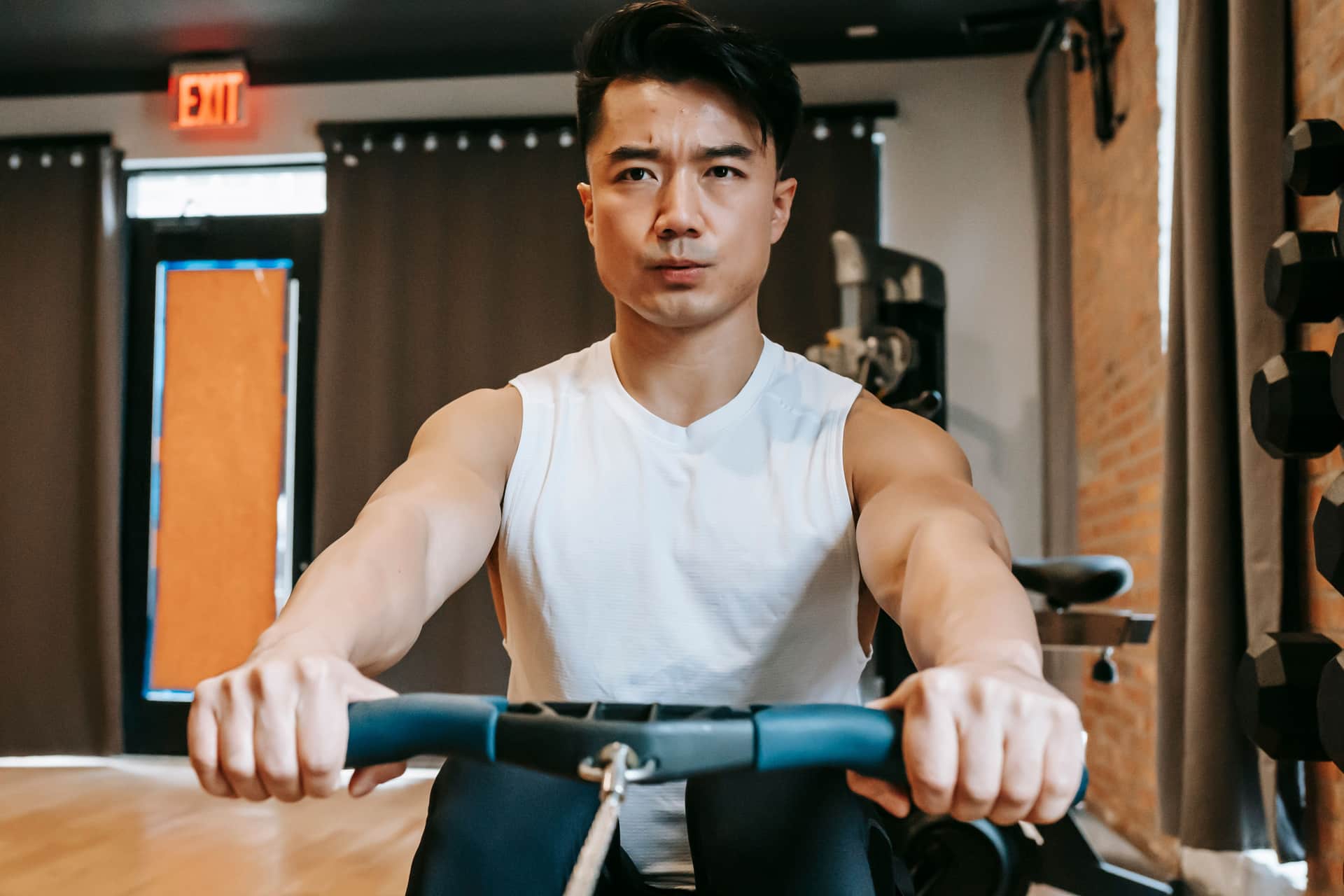
Rowing looks like an arm exercise and is not. About 60% of the power in a stroke comes from your legs, roughly 20% from your back and core, and roughly 20% from your arms. Almost everything that goes wrong for beginners comes from getting that order backwards.
The four positions
1. The catch
You are at the front of the rail. Shins vertical — not past vertical, which overcompresses your ankles and shortens your drive. Arms straight. Shoulders in front of your hips. Back straight but not rigid.
This is a loaded position, not a relaxed one. It should feel like the moment before you stand up out of a low chair.
2. The drive
Push with your legs. Only your legs. Arms stay straight, back angle stays fixed, and the handle moves because you are pushing the footplates away, not because you are pulling.
This is the phase people rush past, and it is the one that produces most of the power.
3. The finish
Legs flat. Now swing your body back to about 11 o’clock. Then — and only then — pull the handle into the bottom of your ribs, elbows going past your body rather than out to the sides.
Legs, then body, then arms. If you say it to yourself for the first hundred strokes, it will stick.
4. The recovery
Reverse it exactly. Arms straight first. Then body forward. Then bend the knees and let the seat slide to the catch.
Bending your knees before your hands have cleared them is the single most common beginner error, and on an air rower you will physically hit the handle on your knees, which is a useful teacher.
The ratio
The drive should be quick and the recovery should be roughly twice as long. Not slow — controlled. The recovery is where you breathe and set up the next catch.
If your stroke rate is climbing above about 30 strokes per minute and you are not doing intervals, you are almost certainly rushing the recovery. Fewer, harder strokes beat more, weaker ones at nearly every level of this sport.
Four mistakes worth fixing early
Bending the arms too early. Covered above. It robs the stroke of power and puts the load on the smallest muscles in the chain.
Leaning too far back at the finish.About 11 o’clock, not horizontal. Lying back loads your lower back and adds nothing.
Hunching. The back should be straight throughout, hinging at the hips. Rounding under load is where rowing gets its reputation for back trouble, and it is a technique problem, not an inherent one.
Cranking the damper to 10. The lever on the flywheel is not a difficulty dial. Here is what it actually does.
A first month that works
Three sessions a week, twenty minutes each, at a pace where you could still hold a conversation. Spend the first five minutes of each one deliberately thinking about the sequence rather than the numbers on the monitor.
Rowing is unusually good at letting you work hard before your technique can support it, because the machine does not care how you produce the force. That is why new rowers get sore backs. Build the stroke first; intensity is easy to add and hard to undo.
This is general information rather than medical advice. If you have an existing back, knee or heart condition, talk to a doctor before starting.
Which machine helps you learn
One with a rail long enough for your legs to reach full extension. That is the specification that most affects whether you can row properly, and it is the one most often omitted from listings. Our beginner picks are ranked on exactly that.
Straight answers
Questions people actually ask
What is the correct rowing machine technique?
Four positions in a fixed order. At the catch: shins vertical, arms straight, shoulders ahead of hips. On the drive: legs only, arms straight, back angle fixed. At the finish: legs flat, body swung back to about 11 o'clock, then pull the handle to the bottom of your ribs. On the recovery, reverse exactly - arms, then body, then knees.
What percentage of rowing is legs?
Roughly 60% legs, 20% core and back, 20% arms. That is why rowing feels like leg day to people who expected an arm workout, and why bending the arms too early is the mistake that costs the most power - it takes the biggest muscles in the chain out of the sequence.
How long should the recovery take on a rowing machine?
About twice as long as the drive. The drive is quick and powerful; the recovery is controlled, and it is where you breathe and set up the next catch. If your stroke rate is climbing above about 30 per minute outside of intervals, you are almost certainly rushing the recovery.
Why does my back hurt after rowing?
Usually one of two technique issues: rounding your back under load instead of hinging at the hips with a straight spine, or a rail too short for your inseam, which forces you to end the leg drive early and finish the stroke with your lower back. Check the rail length against your leg extension, and film yourself from the side. This is general information, not medical advice - see a doctor about persistent pain.
How often should a beginner use a rowing machine?
Three sessions of about twenty minutes a week, at a pace where you could still hold a conversation, is a sound starting point. Rowing lets you work hard before your technique can support it, which is how beginners end up sore. Build the stroke first - intensity is easy to add later and hard to undo.
Should I bend my knees or straighten my arms first on the recovery?
Arms first, always. Straighten the arms, then hinge the body forward, then bend the knees and let the seat slide. Bending the knees before your hands clear them is the most common beginner error, and on an air rower you will physically catch the handle on your knees - which is an effective teacher.
Show your working
Sources
- Concept2 — Compare indoor rowers (official specifications)Accessed 2026-07-24. https://www.concept2.com/indoor-rowers/compare
- Concept2 RowErg — PM5 monitor and stroke specificationsAccessed 2026-07-24. https://www.amazon.com/dp/B00NH9WEUA?tag=t5fitness-20
- Sunny Health & Fitness Smart Dual-Rail — 50-inch rail specificationAccessed 2026-07-24. https://www.amazon.com/dp/B0CMRCCGXB?tag=t5fitness-20
- Sunny Health & Fitness Extra Long Rail — 44-inch inseam specificationAccessed 2026-07-24. https://www.amazon.com/dp/B09Y9H42CH?tag=t5fitness-20
Keep going
Read next
- Damper setting explainedThe lever is not a difficulty dial.
- What muscles rowing worksThe 60/20/20 split, in detail.
- Best rowing machines for beginnersRanked on rail length, which is what lets you row properly.
- What is an erg?The vocabulary, and what it tells you.
- Proper rowing machine formThe four positions, and the fault almost everyone makes.
- A beginner rowing workout planWhat to actually do for the first few weeks.
- Rowing machine hand careGrip, blisters and calluses, and how to avoid them.
- A rowing machine glossaryEvery term on the monitor and in the sport, defined.
- How to use a rowing machine at the gymFind the erg, set the damper, row.