At the gym
How to Use a Rowing Machine at the Gym
The rower is often the least-used machine on the gym floor, usually because nobody shows you how. Here is the whole thing, from finding it to your first workout.
We earn a commission if you buy through the links on this page, at no cost to you. It has no effect on what we recommend or the order we recommend it in — we say “skip this one” on machines that pay us the same as the ones we like. How we’re funded.
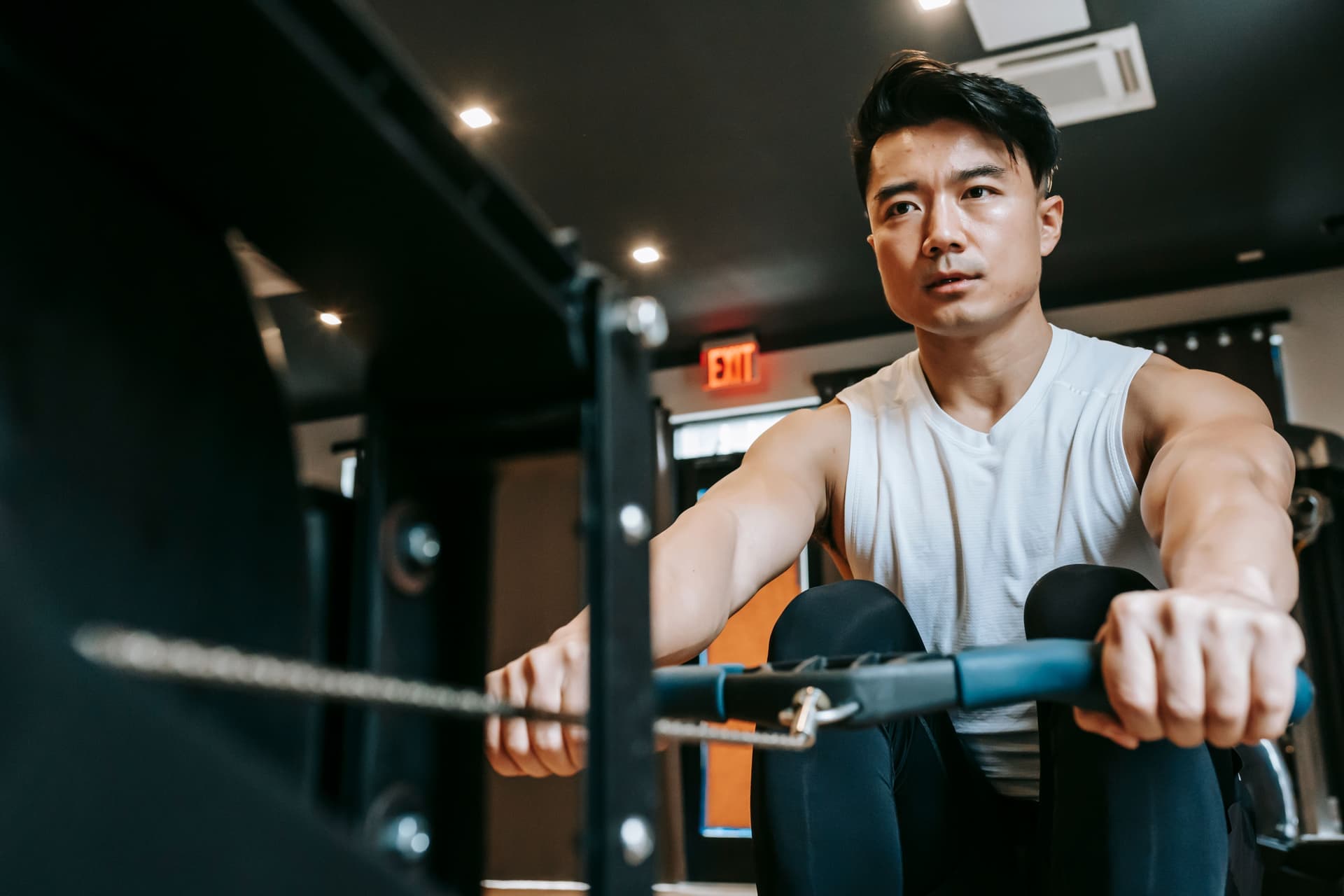
The rowing machine is the quietest corner of most gym floors, and it is not there because it is a bad piece of kit — it is there because nobody ever showed you how to use it. Once you have set it up a single time, the whole routine takes under a minute: find the erg, set the damper, strap your feet in, and pull. Here is the entire thing, step by step, so you can walk over and use it with the same confidence as the treadmill.
Finding it — it is usually a Concept2
Walk the cardio floor and look for a long, low machine with a black flywheel cage at one end, a sliding seat on a rail, and a small gray monitor on an arm. In the large majority of commercial gyms that machine is a Concept2 RowErg, the industry standard — which is genuinely good news, because everything you learn on it transfers to the one at home and to any other erg you meet. If your gym has a different brand, the layout is close enough that this guide still holds. The flywheel end faces away from you, and the monitor sits roughly at eye level when you are seated at the front of the stroke.
Setting the damper
The lever on the side of the flywheel cage, numbered 1 to 10, is the damper, and it is the single most misunderstood control in the building. It is not a difficulty dial. It changes how much air the flywheel takes in, which alters how the pull feels rather than how hard the machine is overall. High numbers feel heavy and grabby, like dragging a barge; low numbers feel light and quick. Most experienced rowers settle around 3 to 5, so set it there to start rather than cranking it to 10. The full explanation of what the damper actually does is here, but for a first session, moderate is exactly right.
Strapping in and the stroke
Sit on the seat, place the balls of your feet on the footplates, and cinch the straps across the widest part of each foot. Take the handle in an overhand grip, hands a little wider than your knees. The stroke is a sequence, and the order matters more than the effort: legs, then back, then arms on the way out, and arms, then back, then legs on the way back. Push with the legs first — a rowing stroke is roughly sixty percent legs — then swing your torso open, then draw the handle to your lower ribs; reverse it to return. If that is a lot to hold in your head, it is, and it becomes automatic fast. The stroke broken down step by step is here, and the common form mistakes to avoid are here. The one thing not to do on day one is yank with your arms and shoot the seat backward before the handle has moved.
Reading the monitor
The screen shows more numbers than you need, so ignore most of them. Three matter. Your split is your pace shown as time per 500 meters (a lower number is faster); your stroke rate is strokes per minute (a healthy 20 to 28 for steady work); and distance or time tells you how far you have gone. Skip calories at first — the split is the honest measure of effort, and watching it lets you pace so you do not blow up in the opening minute. A full tour of every field on the monitor is here. Most gym monitors wake when you press the center button and start counting the moment you take your first stroke.
A first gym workout
Keep the first outing short and repeatable. Row five minutes easy to warm up and find the rhythm. Then do a few gentle intervals: one minute at a firmer pace, one minute easy, repeated four or five times, watching your split hold roughly steady rather than fading. Finish with three minutes easy to cool down. That is fifteen to twenty minutes, which is plenty when you are new — rowing recruits nearly every major muscle group, so a little goes a long way. When you want something more structured, a simple rowing interval workout is here. Add a couple of minutes each week instead of chasing a hard number early.
Etiquette and wiping down
Two small courtesies keep you in everyone’s good graces. First, the erg is a popular warm-up tool, so during busy hours keep roughly to the gym’s posted cardio time limit and let others work in. Second, wipe it down when you finish — the seat, the handle, and the monitor arm — because a whole-body effort leaves more sweat than you expect. Loosen the foot straps and rest the handle back in its cradle rather than letting it drop, so the next person finds the machine the way you would want to. That is the entire etiquette of the rower, and it is part of why the people who use it so often have it to themselves.
Straight answers
Questions people actually ask
How do you use a rowing machine at the gym?
Find the machine (in most gyms it is a Concept2 RowErg), set the damper to a moderate 3 to 5, sit down and strap the balls of your feet to the footplates, take the handle, and row in sequence: legs, then back, then arms on the drive, and arms, back, legs on the recovery. Watch your split on the monitor to pace yourself, and wipe the machine down when you finish.
What damper setting should a beginner use?
Start at 3 to 5. The damper is not a difficulty dial - it changes how the pull feels, not how hard the machine is overall. Most experienced rowers stay in the 3 to 5 range, and setting it to 10 on your first session just makes the stroke feel heavy and grabby without making you fitter.
How long should a beginner row at the gym?
Fifteen to twenty minutes is plenty at first: a few minutes easy to warm up, a handful of gentle one-minute intervals, then a few minutes easy to cool down. Rowing works the whole body, so a short session goes a long way early on. Add a couple of minutes each week rather than pushing hard on day one.
Is the rowing machine good for a gym warm-up?
Yes - it is one of the best full-body warm-ups on the floor. A few easy minutes on the erg raises your heart rate and moves your legs, back and arms through a smooth, low-impact range before you lift or run. Keep the pace conversational and the damper moderate, and it primes the whole body without tiring you out.
Show your working
Sources
- Concept2 — Compare indoor rowers (official specifications)Accessed 2026-07-24. https://www.concept2.com/indoor-rowers/compare
- Concept2 - Training and technique resourcesAccessed 2026-07-24. https://www.concept2.com/training
Keep going