Workout
Tabata Rowing: The 4-Minute Protocol
Four minutes, eight all-out sprints, and nowhere to hide - the shortest hard workout in rowing.
We earn a commission if you buy through the links on this page, at no cost to you. It has no effect on what we recommend or the order we recommend it in — we say “skip this one” on machines that pay us the same as the ones we like. How we’re funded.
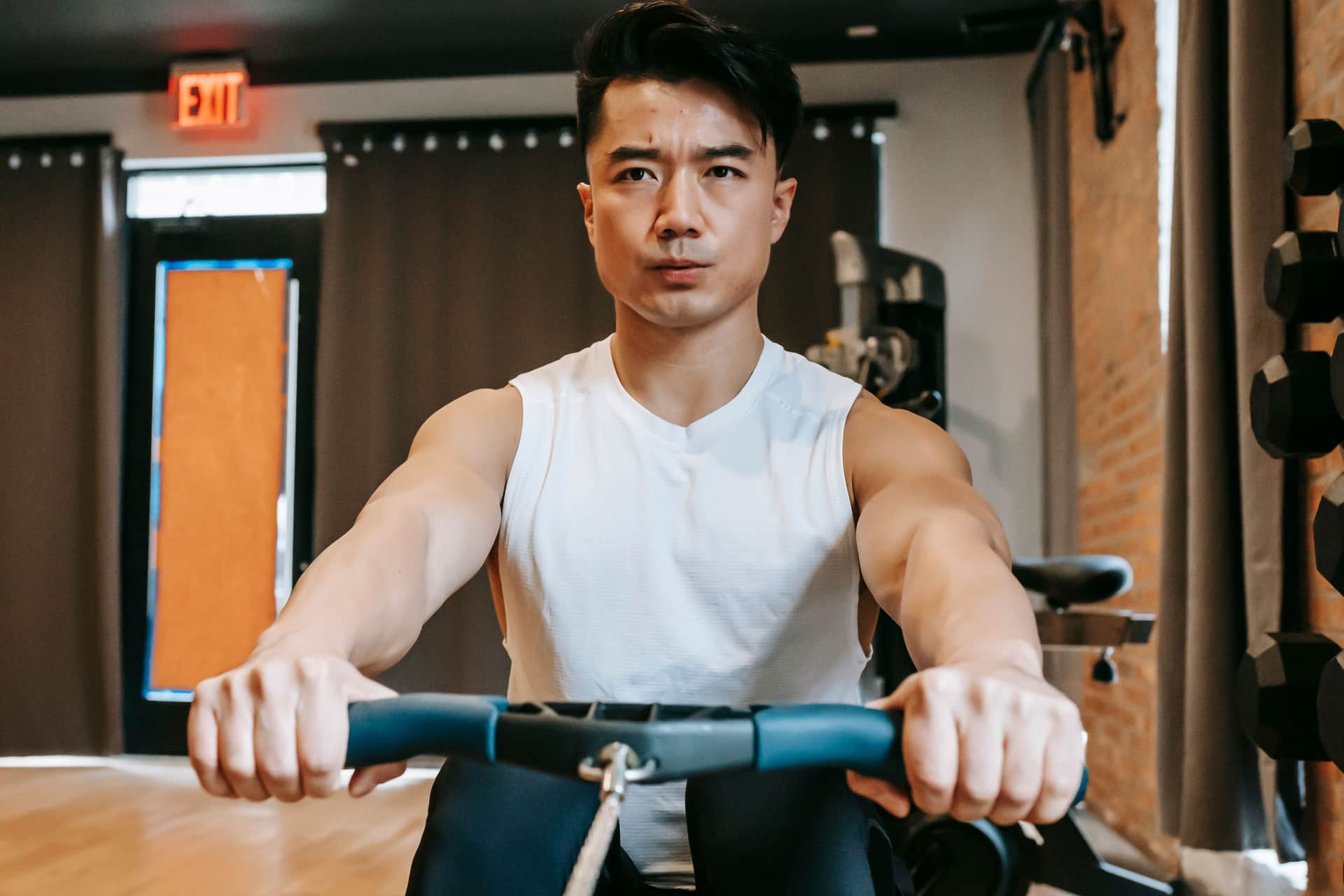
Tabata is the shortest famous workout in fitness: eight rounds of twenty seconds all-out and ten seconds rest, four minutes from first stroke to last. On paper it looks trivial. In practice, done as intended, it is one of the most demanding four minutes you can put yourself through, and that gap between how it reads and how it feels is the whole story. On a rowing machine, where the resistance answers instantly to how hard you pull, it is especially unforgiving. This guide explains the real structure, where it came from, and how to approach it honestly. It is general fitness information, not medical or coaching advice; the Tabata protocol is intense, so if you have any condition, injury, or are new to hard exercise, check with a professional before attempting it.
What Tabata actually is
The protocol is precise: twenty seconds of maximum effort, ten seconds of rest, repeated eight times, for a total of four minutes. The rest is deliberately far too short to recover fully — that is the point. Each twenty-second burst starts before you have truly recovered from the last, so the effort accumulates and the final rounds are brutal even though each individual piece is tiny. There is no long warm-down between efforts and no pacing yourself across the set; every burst is meant to be genuinely hard. The four minutes refers only to the work-and-rest block itself, not to your warm-up or cool-down, which sit on either side.
Where it came from
The protocol takes its name from Dr. Izumi Tabata, whose research examined very short, very high-intensity intervals. That origin matters because it sets the bar for what counts as Tabata: the original work was built around efforts that were close to maximal, not merely brisk. A lot of what gets labeled “Tabata” in gyms and apps is really just generic interval training on a twenty-ten clock, done at a moderate pace. That can be a perfectly good workout — but it is worth being honest that easing off the intensity turns it into something gentler than the real thing. True Tabata is defined by the effort as much as by the clock.
How to row it
On the rower, each twenty-second burst is an all-out sprint: a high stroke rate, up into the high twenties or beyond, with a powerful leg drive on every stroke. In ten seconds of rest you will barely have time to breathe before the next one starts, so there is no plan-your-pace strategy — you simply commit to each burst and hang on. A useful cue is to keep the stroke as long and clean as you can even at high speed; the temptation under that kind of effort is to shorten up and flail, which wastes energy and moves the flywheel less. Because an air machine responds instantly to how hard you pull, the effort you put in shows up immediately on the monitor, which makes it a good honest mirror for this kind of session. If you want to understand the power figure it shows, the watts guide explains it.
The honest truth: it is brutal and brief
It is worth saying plainly, because the internet often does not: real Tabata is hard. Done at the intended intensity, four minutes is enough to leave you genuinely spent, and it is not something most people can — or should — do at full effort every day. The upside of that brevity is obvious: it is a complete high-intensity stimulus in the time it takes to reply to an email. The downside is that the intensity is not optional. If you find a Tabata set easy, you are almost certainly not doing it at true Tabata effort, and there is nothing wrong with that — just do not mistake a moderate twenty-ten session for the real protocol.
Who it suits, and warming up first
Tabata suits people who already have a base of fitness and want a very time-efficient hard session, not beginners looking for a first workout. Because the efforts are maximal from the first burst, a thorough warm-up is not optional — asking a cold body to sprint is how tweaks and strains happen. Spend several minutes rowing easy with a few build-up strokes before you start, following the warm-up guide, and finish with a proper cool-down once the four minutes are done, because your heart rate will be high and needs to come down gradually.
How it differs from general HIIT
Tabata is a specific, extreme corner of high-intensity interval training, not a synonym for it. General HIITcovers a whole family of formats — longer work intervals, longer rests, a range of intensities from firm to hard — and most of it is more sustainable and more forgiving than Tabata. HIIT lets you pace across a set; Tabata does not. If you want the benefits of intervals without the all-out brutality, a standard HIIT session or a pyramid workout is the better, more repeatable choice. Reach for true Tabata occasionally, when you specifically want the shortest possible maximal stimulus.
Building up to it
If four all-out minutes is too much to start with, build toward it. Begin with the twenty-ten structure at a firm-but-not-maximal effort, or cut the set to four or six rounds instead of eight, and add intensity and rounds as you adapt. There is no rule that you must do the full protocol at full effort on day one, and pretending otherwise is how people hurt themselves. Set the resistance to a level that lets you drive hard without the stroke turning ragged — the damper and drag factorguides explain how to find it — and treat the true four-minute Tabata as an occasional test rather than a daily habit.
Straight answers
Questions people actually ask
What is a Tabata rowing workout?
It is eight rounds of twenty seconds of maximum-effort rowing and ten seconds of rest, four minutes in total. The very short rest is deliberate - you never fully recover, so the effort builds and the final rounds are brutal. It is a specific, extreme interval protocol, not a general term for any hard interval session.
Is four minutes of Tabata really enough?
Done at true Tabata intensity, the four minutes are a complete high-intensity stimulus and will leave you genuinely spent. But that only holds if every burst is close to all-out. Many so-called Tabata sessions are done at a moderate pace, which is a perfectly fine workout but a gentler one than the real protocol. The intensity is what makes the brevity work.
Can beginners do Tabata rowing?
It is not the best starting point. Because the efforts are maximal from the first burst, Tabata suits people who already have a fitness base. A beginner is better off building up with a general HIIT session or a beginner plan first, then working toward Tabata by starting with fewer rounds at a firm rather than all-out effort.
How often should I do Tabata?
Rarely at full effort - true Tabata is demanding enough that most people should not do it hard more than once or twice a week, with easier and steadier sessions filling the rest. Doing maximal intervals too often is a fast route to getting stale or sore. Treat it as an occasional test, not a daily workout.
What stroke rate should I use for Tabata rowing?
During each twenty-second burst, the stroke rate is high - typically up into the high twenties or beyond - because you are sprinting. The key is to keep the stroke long and clean even at speed rather than shortening into a flail. There is no pacing across the set; each burst is simply all-out.
Show your working
Sources
- Concept2 - Compare indoor rowers (official specifications)Accessed 2026-07-24. https://www.concept2.com/indoor-rowers/compare
- Row & Recover - how we pickAccessed 2026-07-24. https://rowandrecover.com/methodology
- Concept2 RowErg - Amazon listingAccessed 2026-07-24. https://www.amazon.com/dp/B00NH9WEUA?tag=t5fitness-20
Keep going
Read next
- Rowing machine HIIT workoutThe broader, more forgiving family of interval training.
- Rowing machine pyramid workoutA varied interval ladder for speed and endurance.
- A 30-minute rowing workoutA balanced session for the days you are not sprinting.
- Rowing machine warm-upEssential before any all-out effort.