Bodies, honestly
Does Rowing Make You Bulky?
No. The physique people picture comes from a barbell, a selection effect and genetics - not from an erg. Here is what rowing does and does not change about how you look.
We earn a commission if you buy through the links on this page, at no cost to you. It has no effect on what we recommend or the order we recommend it in — we say “skip this one” on machines that pay us the same as the ones we like. How we’re funded.
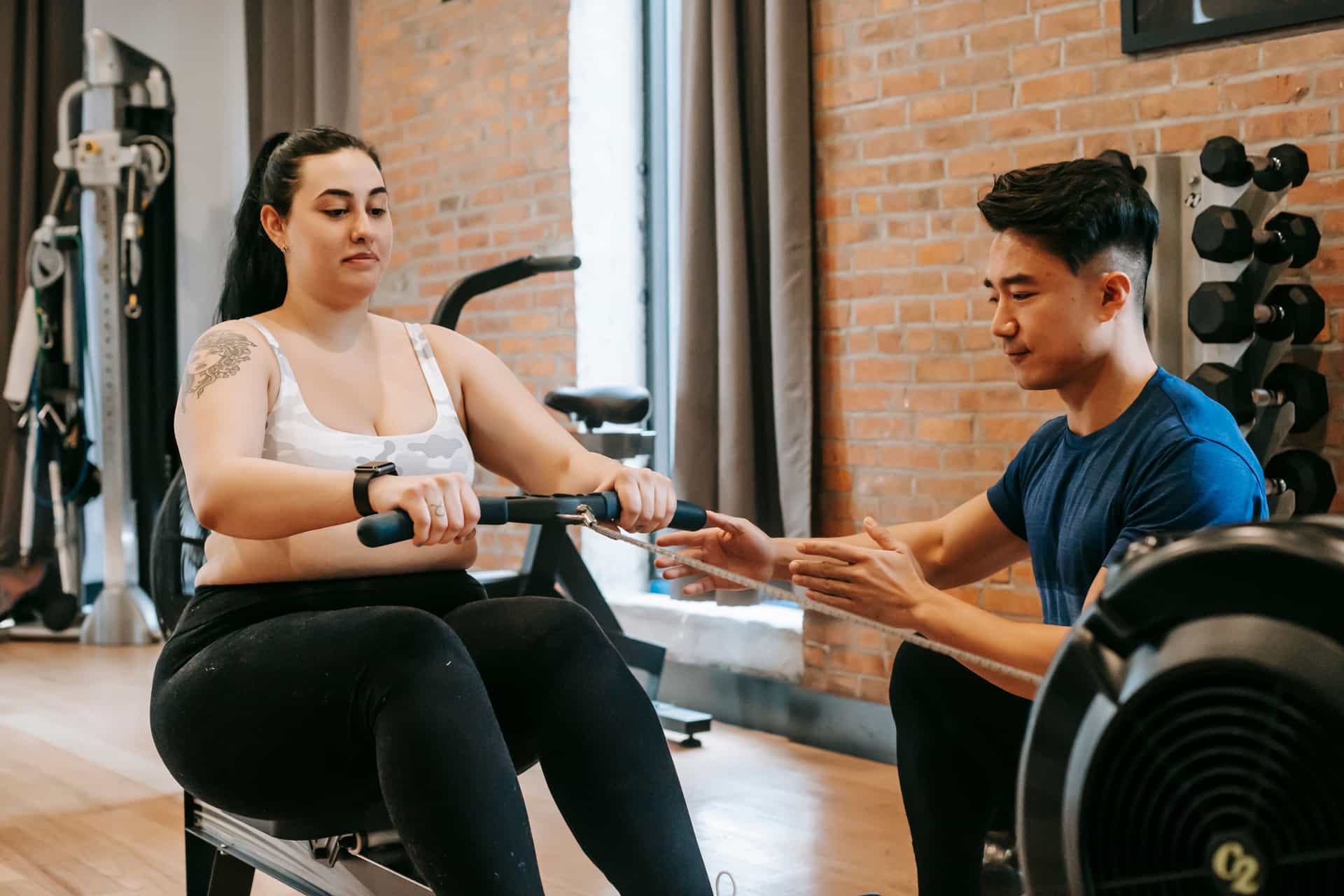
No. Rowing on an indoor rower will not make you bulky, and the reason is arithmetic rather than reassurance: a thirty-minute row is somewhere around six hundred strokes at a force you can repeat six hundred times. Muscle size is built by loads heavy enough that you cannot repeat them many times, applied progressively over months. Those are nearly opposite stimuli. The thing a rowing machine is outstandingly good at — sustaining a large amount of muscle at a moderate force for a long time — is precisely the thing that does not produce size.
This question is almost always asked by someone who has seen a photograph of an international rower and does not want to look like that. It is a fair thing to not want, and it is worth saying clearly that the photograph is not evidence about what the machine does.
Why elite rowers look like that
Three reasons, and the erg is the smallest of them.
Selection. Elite rowing selects hard for height, limb length and lean mass, because a longer lever moves more water and a bigger engine burns more oxygen. The people you are looking at were largely shaped like that before anyone handed them an oar. You are seeing who survived the selection, not what the training produced.
A barbell, not an erg. Competitive rowing programmes include serious strength work — squats, deadlifts, presses, pulls — at loads and in volumes designed to build force. That is where the shoulders and the back come from. Nobody got those from a flywheel.
Volume no recreational rower will do. Elite training weeks are measured in hours a day, which has effects on body composition that have nothing to do with the four sessions a week this site is written for.
What rowing does change
Having said all that, “nothing happens” would be its own exaggeration, and a few things genuinely do change. They are not bulk.
- Upper-back thickness, mildly. The finish of the stroke works the lats, rhomboids and rear deltoids, and the most commonly reported visible change from consistent rowing is an upper back that looks a bit more there than it did. Most people who notice it like it. Does rowing work your upper body puts an honest ceiling on it.
- How you carry yourself. Rowing loads the muscles that hold your shoulder blades back, which for a desk-shaped posture is the direction you want — does a rowing machine improve posture covers what to expect.
- Legs, as endurance rather than size. The drive is a leg push and the legs do most of the work, but they do it at a repeatable force. Does rowing work your legs is the detail.
- Body composition, if the diet moves with it. This is the change most people are actually describing when they say they look different. It is a calorie-balance outcome rather than a muscle-growth one, and does rowing help you lose weight is honest about the limits.
If you actually want size, rowing is the wrong tool
The flip side deserves stating, because a fair number of people arrive here hoping the answer is yes. It is not. Building muscle needs progressive overload: a load near your limit, increased over time, for sets you cannot extend indefinitely. A rowing machine mostly cannot provide that, and the magnetic ones definitively cannot — the resistance ceiling is whatever level you selected, so pulling harder moves the handle faster rather than making the machine push back harder. An air or water rower at least scales with effort, which is why those are the mechanisms on best rowing machines for building muscle, and does rowing build muscle is the long-form answer. Rowing plus two strength sessions a week is a far better plan than rowing harder, and rowing before or after weights covers the ordering.
What the machine needs to do for this
If your goal is conditioning without size, the machine requirements are mercifully light, and that is good news for your budget. You need a stroke you can repeat comfortably for thirty to sixty minutes, which means a rail long enough not to cramp you and a seat you can sit on; you need a monitor that shows enough to keep an easy effort honest; and you do not need the top-end resistance that the strength-focused pages care about. Anything from a quiet magnetic machine upwards covers it.
| Machine | Resistance | Rail length | Capacity | Length |
|---|---|---|---|---|
| MERACH Q1S | magnetic | Not published | 350 lb | 65 in |
| Sunny Health & Fitness Smart Dual-Rail Rower | magnetic | 50 in | 300 lb | 79.3 in |
| Concept2 RowErg | air | Not published | 500 lb | 96 in |
Where this lands
Two machines for conditioning rather than size
Sunny Health & Fitness Smart Dual-Rail Rower
The sensible default for long, easy, repeatable sessions in a shared home: magnetic and quiet, with a published 50-inch rail and a 300 lb capacity, under 80 inches long, and it stands upright when you want the room back. The resistance ceiling that rules it out of the muscle-building page is irrelevant here.
MERACH Q1S
The budget version of the same idea, and the cheap machine that actually publishes its limits - a 350 lb capacity and a stated fit to 6 ft 7 in. Under 60 lb, so one person can move it. Good enough for an hour of easy rowing, which is all this page is asking for.
$189.99 · Check price on AmazonPrice as of October 21, 2026. #ad How we’re funded
If you do want both — conditioning from the rower and size from a barbell — then the resistance ceiling starts to matter again and the answer is an air or water machine. The RowErg in the table above is there for that reader.
The honest summary
Rowing four times a week will make you fitter, probably slightly thicker through the upper back, and quite possibly leaner if your eating moves in the same direction. It will not make you look like an Olympic heavyweight, and no amount of rowing will, because that physique is the product of genetics, selection and a barbell. If the fear of bulk was the thing stopping you buying a rowing machine, it is not a reason.
Straight answers
Questions people actually ask
Does a rowing machine make you bulky?
No. A thirty-minute row is around six hundred strokes at a force you can repeat six hundred times, and muscle size is built by loads heavy enough that you cannot repeat them many times, applied progressively over months. Those are close to opposite stimuli. Rowing makes you fitter and, for most people, slightly thicker through the upper back.
Why do elite rowers look so muscular then?
Three reasons, and the erg is the smallest. Elite rowing selects hard for height, limb length and lean mass, so those athletes were largely shaped that way before they started. Their programmes include serious barbell work - squats, deadlifts, presses - which is where the shoulders and back come from. And their training volume is measured in hours a day.
Will rowing make my thighs bigger?
Not meaningfully. The drive is a leg push and the legs do most of the work, but at a force you repeat hundreds of times per session, which trains endurance rather than size. What people usually notice after a few months is legs that feel stronger and look more defined, which is a conditioning and body-composition change rather than growth.
Will rowing make my shoulders or arms bigger?
Barely. The arms contribute a small fraction of the stroke - the finish, not the drive - and the loads involved are nowhere near what builds size. The most commonly reported visible change is a slightly thicker upper back from the lats, rhomboids and rear deltoids working at the finish of each stroke.
Can I build muscle on a rowing machine if I want to?
Only to a point, and a magnetic rower definitively cannot do it - the resistance ceiling is whatever level you selected, so pulling harder just moves the handle faster. Air and water machines at least scale with effort. If size is the goal, rowing plus two strength sessions a week beats rowing harder, every time.
Does rowing make women bulky?
No, for exactly the same reasons it does not for anyone else: the stimulus is high-repetition endurance work at a repeatable force, not progressive overload near a limit. The visible changes people report are a slightly thicker upper back, better posture and, where diet moves with the training, a body-composition change.
Show your working
Sources
- Concept2 — Compare indoor rowers (official specifications)Accessed 2026-07-24. https://www.concept2.com/indoor-rowers/compare
- Concept2 - Training and technique resourcesAccessed 2026-07-24. https://www.concept2.com/training
- Sunny Health & Fitness Smart Dual-Rail Rower - published rail and capacityAccessed 2026-07-24. https://www.amazon.com/dp/B0CMRCCGXB?tag=t5fitness-20
- MERACH Q1S - published capacity and user heightAccessed 2026-07-24. https://www.amazon.com/dp/B0B2P23DBS?tag=t5fitness-20
- Concept2 RowErg - published specificationsAccessed 2026-07-24. https://www.amazon.com/dp/B00NH9WEUA?tag=t5fitness-20
Keep going