Technique
Breathing Technique on a Rowing Machine
Most rowers never think about breathing until they run out of it. A simple pattern fixes the fault almost every beginner makes.
We earn a commission if you buy through the links on this page, at no cost to you. It has no effect on what we recommend or the order we recommend it in — we say “skip this one” on machines that pay us the same as the ones we like. How we’re funded.
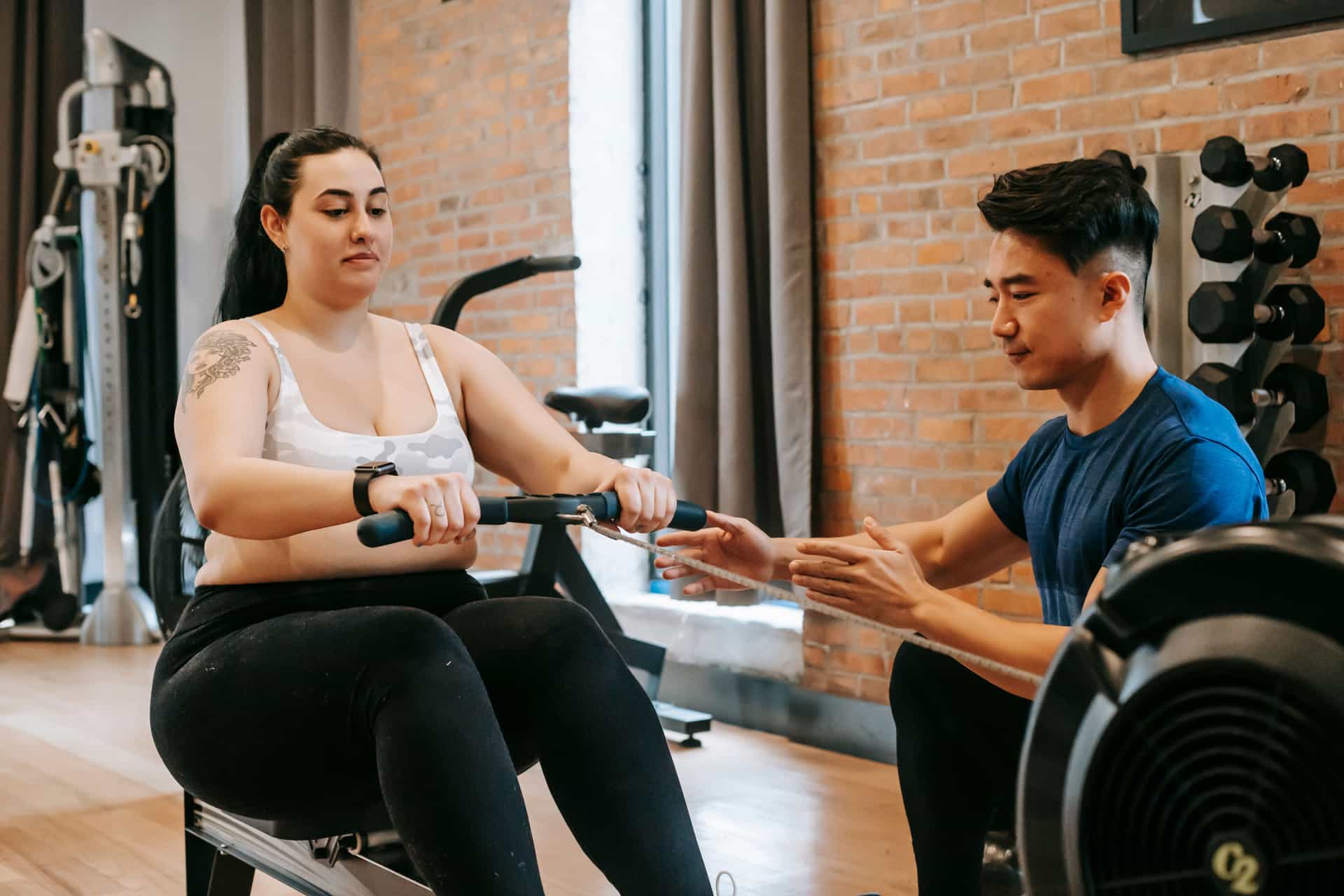
Breathing is the part of rowing nobody teaches you and everybody eventually needs. Most beginners never think about it — until the day they push the pace and suddenly cannot get enough air, wondering why the machine feels so much harder than their legs say it should. The cause is almost always the same simple fault, and the fix is a pattern you can learn in a single session.
The basic pattern: exhale on the drive
The pattern most coaches teach is straightforward: exhale on the drive — the effort — and inhale on the recovery as you slide back to the catch. It matches your breathing to the rhythm of the stroke, so the hard, compressing part of the movement happens as you are pushing air out, and the relaxed, opening part happens as you draw air in.
It also lines up with your body mechanically. The drive is when your torso compresses and braces to transfer force from your legs into the handle, and breathing out through that phase is more natural than trying to hold a lungful of air against it. The recovery, when your body opens back up toward the catch, is the natural moment to fill your lungs again. One breath cycle, one stroke.
Why beginners hold their breath (and how to stop)
The classic beginner fault is holding the breath on the drive. It happens almost unconsciously: the drive is the effortful part, and people instinctively brace and grip — and part of bracing is clamping down and not breathing, the same thing you do reflexively to lift something heavy. String a few of those together and you are rowing on borrowed air, which is exactly why the pace that should feel manageable leaves you gasping.
The fix is deliberate and slightly artificial at first: make yourself breathe out on every drive, out loud if it helps. A sharp audible exhale on each stroke guarantees you are not holding your breath, and after a few minutes it stops being something you think about and becomes automatic. If you catch yourself getting unexpectedly out of breath at an easy pace, breath-holding is the first thing to check.
Holding your breath and straining against a closed throat is also worth avoiding for its own sake, particularly if your blood pressure is something you keep an eye on. This is general information, not medical advice — if you have any heart or blood pressure condition, talk to a doctor before pushing hard efforts.
Two breaths per stroke at higher rates
The one-breath-per-stroke pattern works well at the low, steady stroke rates of easy and moderate rowing. When you pick up the pace — harder intervals, a sprint, a test piece — a single breath per stroke often will not move enough air, and many rowers shift to two breaths per stroke: a quick breath out and in on the drive, and another on the recovery.
You do not need to force this or count it consciously; it tends to happen on its own as your demand for air rises, and the job is mainly to let it rather than fight it. The principle stays the same — the big exhale still belongs on the effort — you are simply fitting in an extra breath because the intensity demands it. How stroke rate works explains why the higher rates change the demand.
Nose, mouth, and not overthinking it
Do not get precious about whether you breathe through your nose or your mouth. At an easy pace many people breathe through the nose comfortably; as the effort rises, mouth breathing simply moves more air, and your body will switch to it on its own. Trying to force nose-only breathing through a hard piece is a distraction that usually costs you more than it gains.
Likewise, do not try to haul in a huge breath on every single stroke at an easy pace — over-breathing can leave you slightly light-headed. Let the depth of each breath follow the effort: shallow and relaxed when you are cruising, fuller and faster when you are working. The pattern — out on the drive, in on the recovery — is the part worth keeping fixed; the volume of each breath looks after itself.
Breathing as a pacing tool
Once breathing is tied to the stroke, it becomes a useful gauge of effort. If you can hold an easy one-breath-per-stroke rhythm and still talk, you are in genuinely conversational territory — the right zone for most base training. When you find yourself forced into two breaths per stroke, you are working hard. And when even that is not enough, you are at or near your limit, which is honest information a monitor number does not always convey as quickly.
Steady, rhythmic breathing also steadies the stroke itself. Rushing your breath tends to go hand in hand with rushing the recovery and letting the rate climb; a calm, deliberate exhale-and-inhale helps hold the drive-to-recovery ratio that good rowing depends on. Good form and calm breathing reinforce each other, and the whole stroke — legs, body, arms, and the breath on top — is easier to hold when your breathing is on rails.
New rowers often find that once the breathing clicks, the pace they thought was their ceiling turns out to have been a breathing limit rather than a fitness one. Fixing the breath is one of the quickest wins available on the machine, and it costs nothing.
None of this needs a special machine, but a smooth stroke is easier to fall into rhythm with. Our beginner picks are here if you are still choosing one.
Straight answers
Questions people actually ask
How should you breathe on a rowing machine?
The pattern most coaches teach is to exhale on the drive - the effort - and inhale on the recovery as you slide back to the catch. It matches your breathing to the stroke: you breathe out as your torso compresses to drive, and breathe in as your body opens back toward the catch. One breath cycle per stroke at easy and moderate paces.
Why do I get out of breath so quickly when rowing?
Usually because you are holding your breath on the drive without realizing it. Bracing for the effort makes people instinctively clamp down and stop breathing, and a few strokes of that leaves you rowing on borrowed air. The fix is to deliberately breathe out on every drive - out loud if it helps - until it becomes automatic.
Should I exhale on the drive or the recovery?
Exhale on the drive, the powered part of the stroke, and inhale on the recovery. Breathing out as your body compresses to transfer force is more natural than holding air against it, and the recovery - when your body opens back up - is the natural moment to fill your lungs again.
How many breaths per stroke should I take?
One breath per stroke works for easy and moderate rowing. When you pick up the pace - hard intervals, a sprint, a test - a single breath often will not move enough air, and many rowers shift to two breaths per stroke, one on the drive and one on the recovery. It tends to happen naturally as your demand for air rises.
Is it bad to hold your breath while rowing?
It is worth avoiding. Beyond leaving you short of air, straining against a held breath and a closed throat is not ideal, particularly if you watch your blood pressure. Keep the breath moving - exhale on the drive, inhale on the recovery. This is general information, not medical advice; talk to a doctor if you have a heart or blood pressure condition.
Can breathing help me pace my rowing?
Yes. Once breathing is tied to the stroke it gauges effort: an easy one-breath-per-stroke rhythm you can talk through means conversational pace, being forced to two breaths per stroke means you are working hard, and needing more than that means you are near your limit. Calm, rhythmic breathing also helps hold the drive-to-recovery ratio.
Show your working
Sources
- Concept2 — Compare indoor rowers (official specifications)Accessed 2026-07-24. https://www.concept2.com/indoor-rowers/compare
- Concept2 RowErg - stroke rate and pacing referenceAccessed 2026-07-24. https://www.amazon.com/dp/B00NH9WEUA?tag=t5fitness-20
- Row & Recover - how we pickAccessed 2026-07-24. https://rowandrecover.com/methodology
Keep going