Knees and joint load
Is a Rowing Machine Bad for Your Knees?
For most people rowing is one of the kindest cardio options for the knees: no impact, no weight-bearing. The trouble comes from form and setup, not the machine.
We earn a commission if you buy through the links on this page, at no cost to you. It has no effect on what we recommend or the order we recommend it in — we say “skip this one” on machines that pay us the same as the ones we like. How we’re funded.
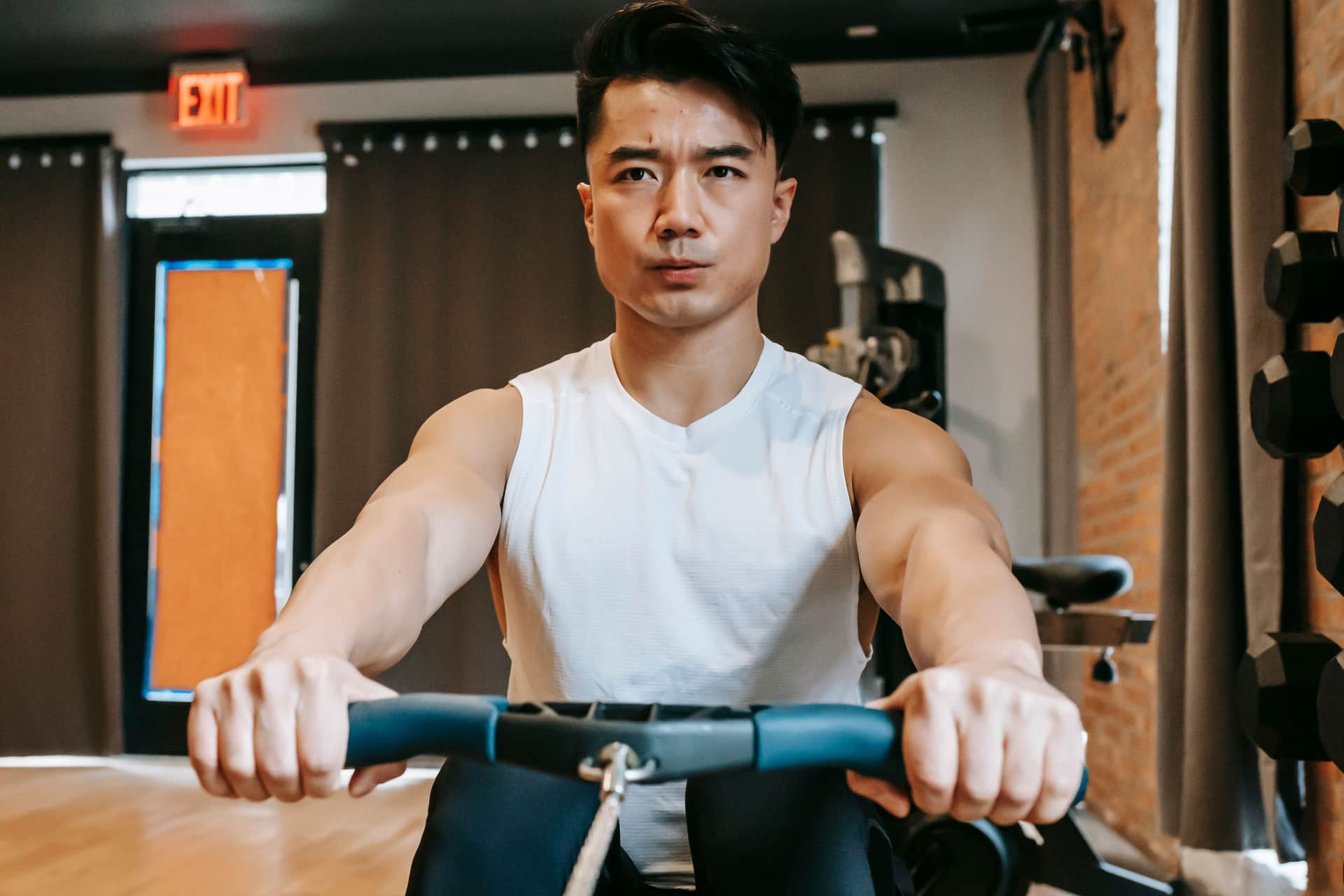
The honest answer up front: for most people a rowing machine is one of the gentlest cardio options there is for the knees. Rowing is low-impact and non-weight-bearing — you sit down, the seat carries your bodyweight, and nothing pounds the joint the way running or jumping does. When a rower does bother someone’s knees, the cause is almost always setup or form, not the machine itself.
Why rowing is easy on knees
Three things make the rowing stroke kind to the knee joint. First, there is no impact: you never land on the joint, so the repeated shock that aggravates running knees is simply not part of the movement. Second, it is non-weight-bearing — you are seated the whole time, and the seat, not your knees, holds your weight. Third, the leg drive is a smooth, controlled push through the full range rather than a sudden jarring load.
A rowing stroke is roughly 60% legs, 20% core and back, and 20% arms, so your legs do most of the work — but they do it while seated and supported. That combination is why rowing shows up so often as a low-impact way to train the whole body without hammering the joints. It is the same reason it appears on so many lists of machines for older bodies: the joint load is low by design.
When rowing can bother knees
Rowing can still nag a knee, and there are four usual culprits. The most common is over-compression at the catch — sliding so far forward that your shins pass beyond vertical and your knees fold up tight. That deep-bent, loaded position is where people feel it. Stop the seat when your shins are roughly vertical and the knees never close down that far.
The second is a damper set too high. On an air rower, a high damper makes every stroke feel like dragging a heavy load, and that resistance has to start somewhere — usually the first, hardest part of the leg drive, right off the catch. A moderate setting is easier on the joint and, for most training, more effective anyway. The third is the oldest mistake in fitness: pushing through sharp pain. Aching muscles are fine; a specific, pointed knee pain is a signal to stop, not to grind on. The fourth is seat height on machines that make you drop low to sit and grind back up to stand — the getting-on and getting-off can bother a cranky knee more than the rowing does.
Setup and form that protect the knees
Most knee complaints disappear with two adjustments. Keep the damper moderate, and stop your slide before your shins pass vertical. Drive with the big leg muscles in a smooth push rather than a snapping jerk, and let the legs finish their work before the back and arms take over — legs, then back, then arms on the drive, and the reverse on the recovery. Our guide to proper rowing machine form walks through the catch position that keeps the load off the joint. If you are brand new to the movement, our step-by-step rowing walkthrough covers the same ground from the first stroke.
Machine choice for sensitive knees
If your knees are the reason you are shopping, two published specs matter more than anything on the box. A taller seat that you step over rather than drop into makes getting on and off far kinder to the joint, and a longer rail lets your legs reach full, comfortable extension without the seat running out before your legs do. Neither of these is about how hard you can pull — they are about the joint at rest and at the ends of the stroke.
We rank machines on exactly those attributes in our roundups of the best rowing machines for bad knees and the best rowing machines for seniors, both of which sort on seat height and rail length rather than marketing. Resistance type barely matters for the knee itself, so choose it on noise and budget instead.
When to see a professional
There is a line between a general fitness question and a medical one, and this page stays on the fitness side of it. If your knee is fine and you just want cardio that will not aggravate it, a moderate damper, a controlled catch, and a machine you can get on and off easily will cover you. If there is an existing injury, recent surgery, or pain that persists, that is a conversation for a professional who can see your specific joint.
This is general information, not medical advice — if you have an existing knee condition or are recovering from surgery, talk to a doctor or physical therapist before starting.
Straight answers
Questions people actually ask
Is rowing bad for your knees?
For most people, no - it is one of the gentlest cardio options there is. Rowing is low-impact and non-weight-bearing, so nothing pounds the joint the way running does. When a rower does bother a knee, the cause is usually a too-high damper, over-compressing at the catch, or a machine that is hard to get on and off, not the exercise itself.
Why do my knees hurt when I row?
The three usual causes are form and setup, not the machine. Sliding too far forward so your shins pass beyond vertical folds the knee up tight and loads it; a damper set too high makes the first part of the leg drive harder than it needs to be; and pushing through sharp pain instead of stopping makes any of it worse. Keep the damper moderate, stop the slide at vertical shins, and stop if you feel a specific, pointed pain.
Is a rowing machine good after a knee replacement?
Ask your surgeon first - that is a medical decision, not a general one. In broad terms, low-impact, non-weight-bearing exercise is the kind of movement that often suits recovery once a surgeon has cleared you, but timing and range of motion are specific to your joint and your procedure. Do not start until the person who did the surgery says you are ready.
Which rowing machine is best for bad knees?
Look for a taller seat you can step over rather than drop into, and a rail long enough for full leg extension. Those two published specs matter more than resistance type for a sensitive knee. Our best-for-bad-knees and best-for-seniors roundups rank machines on exactly those attributes.
Show your working
Sources
- Concept2 — Compare indoor rowers (official specifications)Accessed 2026-07-24. https://www.concept2.com/indoor-rowers/compare
- Concept2 - Training and technique resourcesAccessed 2026-07-24. https://www.concept2.com/training
Keep going