Is it enough?
Is a Rowing Machine Enough Exercise on Its Own?
For most general-fitness goals, a rowing machine on its own covers a surprising amount. For maximal strength or bone density, it needs a partner. Here is the honest boundary.
We earn a commission if you buy through the links on this page, at no cost to you. It has no effect on what we recommend or the order we recommend it in — we say “skip this one” on machines that pay us the same as the ones we like. How we’re funded.
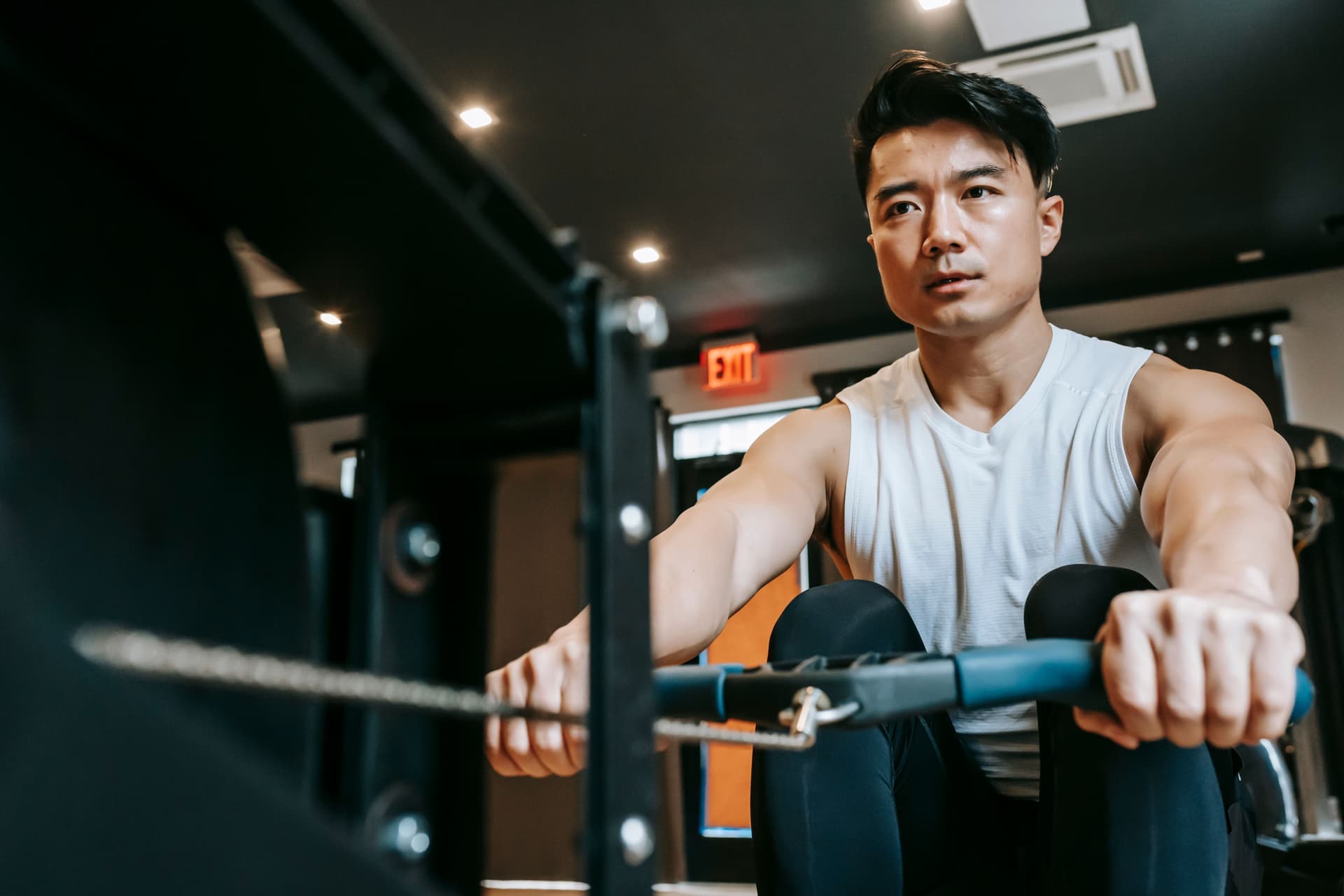
The honest answer: for general fitness, a rowing machine on its own gets you most of the way there. It is one of the few pieces of home equipment that trains cardio and most of your major muscle groups in the same movement, so as a single machine it punches well above its weight. Where it stops being enough is at the edges — maximal strength, muscle size, and bone density — and even then the fix is small.
What rowing covers on its own
A single rowing stroke is a full-body effort: roughly 60% legs, 20% core and back, and 20% arms. That means one machine works your legs, glutes, back, core, shoulders, and arms in a continuous motion, while your heart and lungs do steady aerobic work the whole time. You get cardiovascular fitness and muscular endurance from the same session — the two things most general-fitness plans are built around. Our breakdown of the muscles a stroke works shows just how much of you is involved, and the cardio benefits guide covers what it does for your heart and lungs. For someone whose goal is to be fitter, healthier, and stronger in a general sense, that is a lot of ground for one machine to cover.
Where rowing alone falls short
Rowing builds muscular endurance beautifully, but it is not the tool for maximal strength or serious muscle size — for that you need progressively heavier loads than a rower can provide, and dedicated resistance training does it better. It is also non-weight-bearing and low-impact, which is wonderful for the joints but a weaker signal for bone density than weight-bearing exercise; we cover that trade-off honestly on our rowing and bone density page. Two smaller gaps are worth naming too: rowing is a fixed, largely straight-line motion, so it does little for mobility and flexibility, and because both legs work together it does not challenge single-leg balance the way standing movements do.
For weight loss
Rowing is genuinely good for burning energy — it is full-body, it scales from easy to brutal, and you can sustain it for a long time. But the same rule applies to it as to every other exercise: it is enough for weight loss when it is paired with your diet, and it is not when it is used to out-train a poor one. As a calorie-burning engine attached to sensible eating, a rower is one of the more effective single machines you can own. On its own, without the diet, no machine is enough.
What to add, and only if you want to
If you want to close the gaps, you do not need a gym membership or a second machine. Add a little resistance training — bodyweight moves, bands, or a pair of dumbbells — for strength and bone. Add a few minutes of mobility work for the flexibility rowing does not build. And a couple of weight-bearing walks a week give your skeleton the against-gravity load the rower skips. That is a modest amount of extra work bolted onto a rowing habit, not a separate program.
The honest bottom line
Do not overcomplicate this. A rowing machine used regularly beats no exercise by an enormous margin, and for the majority of people chasing general fitness it is genuinely enough on its own. The additions above turn a good routine into a complete one, but they are optional polish, not a requirement. If a rower is going to be your one machine, buy one you will actually use — our picks for beginners are the forgiving, get-on-and-go machines that make the habit stick, and a benchmark like the Concept2 RowErg is the buy-once option if you already know you will keep at it.
Straight answers
Questions people actually ask
Is a rowing machine enough exercise on its own?
For general fitness, largely yes. Rowing trains cardio and most major muscle groups in one movement, so as a single machine it covers a lot. It falls short only at the edges - maximal strength, muscle size, and bone density - and those gaps are easy to fill with a small amount of extra work.
Can I get fit with just a rowing machine?
Yes, for general fitness. A regular rowing habit builds aerobic fitness and muscular endurance and works your legs, back, core, and arms together. If your goal is to be fitter and healthier overall, one rower used consistently will get you there.
Is rowing enough to lose weight?
It is when it is paired with your diet. Rowing is a strong full-body calorie burner that you can sustain for a long time, but no exercise out-trains poor eating. Combine regular rowing with sensible nutrition and it is one of the more effective single machines for weight loss.
Do I need to lift weights too?
Only if your goals include maximal strength, muscle size, or bone density. Rowing builds excellent muscular endurance but does not provide the heavy progressive load that strength and bone adaptation need. A little resistance training a couple of times a week covers that - otherwise rowing alone is plenty for general fitness.
Show your working
Sources
- Concept2 — Compare indoor rowers (official specifications)Accessed 2026-07-24. https://www.concept2.com/indoor-rowers/compare
- Concept2 - Training and technique resourcesAccessed 2026-07-24. https://www.concept2.com/training
Keep going