Row & Recover

Where the machine was actually built

Rowing Machines Made in the USA

Exactly one maker we track says where its rowers are built, in its own words, on its own site. The most American rowing machine in the world does not say it anywhere. Here is what each one publishes.

By Stephen V.An enthusiast who reads the manuals and does the math. Not a coach, not a lab.Last verified July 24, 2026.

We earn a commission if you buy through the links on this page, at no cost to you. It has no effect on what we recommend or the order we recommend it in — we say “skip this one” on machines that pay us the same as the ones we like. How we’re funded.

The criterion for this page is narrow and we are going to hold to it: what does the manufacturer itself publish about where the machine is built? Not where the company is headquartered. Not where the brand was founded. Not what a reseller typed into a “country of origin” field. The maker’s own words, on the maker’s own site, or nothing.

Hold to that and the category collapses to one sentence. Of every rowing machine on this site, one brand publishes a plain US-build statement: WaterRower writes, on its own United States shop, that “WaterRower rowing machines are handcrafted in Rhode Island, USA.” That is the whole list. So the top pick here is the WaterRower Natural, and the Club below it is the same claim on the same frame — WaterRower is the only maker on this page that says where its machines come from.

The second thing you need to know is stranger, and it is the reason most people land on a page like this disappointed. Concept2 does not publish a manufacturing location. The company is American, it has been in Vermont since 1976, and its machine is the erg used at the World Rowing Indoor Championships — and we read its About pages looking for a made-in statement and found one sentence about Vermont, a historical one: the founders “started Concept2 in 1976 in a Vermont barn.” There is no origin claim, no flag, no “assembled in” line. We are not going to invent one for them, so the Concept2 RowErgsits at number two rather than number one, on a technicality that is entirely of Concept2’s own making.

What we can tell you about Concept2 comes from Vermont press rather than from Concept2. Seven Days, reporting from Morrisville, writes that “many of the machine parts are fabricated by Vermont companies” and that “all of them are assembled at nearby Manufacturing Solutions” — a contract manufacturer founded in Morrisville by a former Concept2 production manager. That is good journalism and it is not a manufacturer specification. It is cited below so you can read it yourself and decide what weight it carries.

And the third thing, which is the one that will save you money: the two brands above are expensive, and nothing cheap in this category is American-built. If your budget is under about five hundred dollars there is no US-made option to find — the honest move is to stop looking for one and shop on what $500 actually buys instead. Buying an imported machine knowingly is a better outcome than buying one because a listing implied otherwise.

The short answer

Quick picks

Ranked on published specification, buyer fit and what each machine costs to keep over five years. Select a row to jump to the full write-up. We have not rowed on these machines — here is exactly what we do instead.

#MachineBest forPrice
1
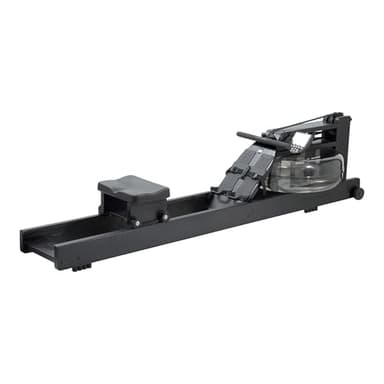
WaterRower Natural (Ash)

WaterRower Natural (Ash)

Hand-built in Rhode Island from sustainably sourced ash, stores on end in about two square feet, and has no subscription attached to it at all.

Only published US build
$1,729.99 · Check price on Amazon

Price as of November 12, 2026. #ad How we’re funded

2
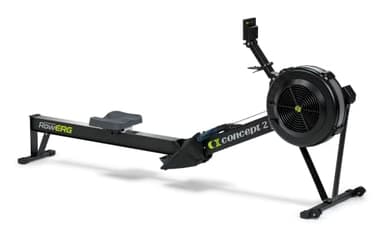
Concept2 RowErg

Concept2 RowErg

The machine every other rowing machine is measured against, and the only one here with no subscription, a 500 lb user limit and a five-year frame warranty at under a thousand dollars.

Best American-owned erg
$990.00 · Check price on Amazon

Price as of November 12, 2026. #ad How we’re funded

3
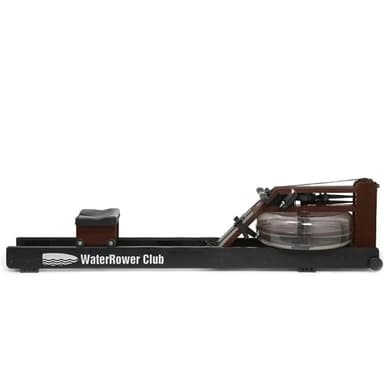
WaterRower Club

WaterRower Club

The commercial-spec WaterRower — a taller seat, a heavier frame and the Bluetooth S4, for people who found the Natural a touch low.

Rhode Island, gym finish
$1,424.00 · Check price on Amazon

Price as of November 12, 2026. #ad How we’re funded

4
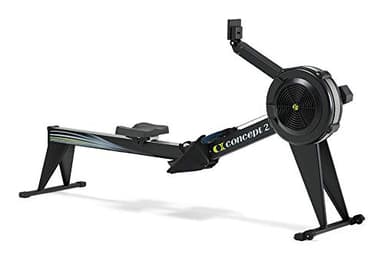
Concept2 RowErg with Tall Legs

Concept2 RowErg with Tall Legs

The same machine with the seat 6 inches higher. That one change is the difference between a rower you can get off unaided and one you cannot.

American-owned, 20-inch seat
$1,499.99 · Check price on Amazon

Price as of November 12, 2026. #ad How we’re funded

5
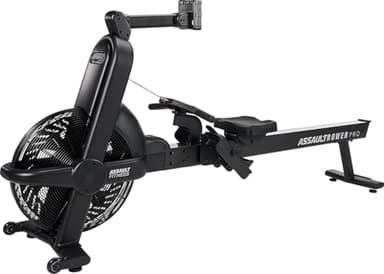
Assault Fitness AssaultRower Pro

Assault Fitness AssaultRower Pro

A commercial-gym air rower that folds, runs on no electricity at all, and asks nothing of you monthly — built for people who train hard rather than watch classes.

US brand, unstated origin
$999.00 · Check price on Amazon

Price as of November 12, 2026. #ad How we’re funded

In detail

Every pick, and what is wrong with it

Each machine below gets the same four things: what it does well, what it does not, the five-year cost of owning it, and the case for buying something else instead.

WaterRower Natural (Ash) rowing machine

1. Only published US build

WaterRower Natural (Ash)

Hand-built in Rhode Island from sustainably sourced ash, stores on end in about two square feet, and has no subscription attached to it at all.

Five years of ownership: $1,730 — all of it the machine, none of it a subscription. See the full table

Floor space: about 7.8 ft by 3.8 ft once you allow for handle travel and elbow room — roughly 30 sq ft.

What is good

  • Stands on end when you are done — the stored footprint is roughly 22 by 20 inches
  • Wood absorbs vibration in a way steel does not; the sound is water, not a fan
  • No subscription. The S4 monitor is self-contained and always has been

What is not

  • 103.5 lb filled with water, which is what you are moving when you stand it up
  • WaterRower does not publish a user weight limit on this listing
  • Water needs topping up and occasional purification tablets — a small but real running cost

Skip this one if: Skip it if you want split times and watts to compare against other rowers — the S4 is a fine monitor but the Concept2 PM5 is the sport's common language.

$1,729.99 · Check price on Amazon

Price as of November 12, 2026. #ad How we’re funded

Concept2 RowErg rowing machine

2. Best American-owned erg

Concept2 RowErg

The machine every other rowing machine is measured against, and the only one here with no subscription, a 500 lb user limit and a five-year frame warranty at under a thousand dollars.

Five years of ownership: $990 — all of it the machine, none of it a subscription. See the full table

Floor space: about 9.0 ft by 4.0 ft once you allow for handle travel and elbow room — roughly 36 sq ft.

What is good

  • 500 lb published user capacity — the highest figure any manufacturer on this page prints
  • No subscription, ever. The PM5 records everything on its own and ErgData is free
  • Separates into two pieces in seconds for storage; front and rear sections stand upright
  • Five-year frame warranty, and a parts supply chain that still serves machines from the 1990s

What is not

  • 96 inches long in use, and Concept2 recommends a 9 ft x 4 ft footprint — it is not an apartment-corner machine
  • Air resistance is the loudest kind. Concept2 publishes no decibel figure and neither do we
  • The 14-inch seat is low; getting up off it is a real consideration if your knees are the reason you are rowing

Skip this one if: Skip it if your floor space is under 9 feet in one direction, or if you share a wall with someone who sleeps early — this is the loud one.

$990.00 · Check price on Amazon

Price as of November 12, 2026. #ad How we’re funded

WaterRower Club rowing machine

3. Rhode Island, gym finish

WaterRower Club

The commercial-spec WaterRower — a taller seat, a heavier frame and the Bluetooth S4, for people who found the Natural a touch low.

Five years of ownership: $1,424 — all of it the machine, none of it a subscription. See the full table

Floor space: about 7.9 ft by 4.0 ft once you allow for handle travel and elbow room — roughly 32 sq ft.

What is good

  • Higher seat than the Natural, which makes getting on and off noticeably easier
  • S4 BLE monitor pairs with phone apps out of the box
  • Built for club use, so the frame is specified for far more hours than a home machine needs

What is not

  • 117 lb before you add water
  • No published user weight limit on this listing
  • Costs more than the Natural for a specification most home rowers will never exhaust

Skip this one if: Skip it if the Natural fits you — the Club's extra durability is aimed at a gym's usage, not a spare bedroom's.

$1,424.00 · Check price on Amazon

Price as of November 12, 2026. #ad How we’re funded

Concept2 RowErg with Tall Legs rowing machine

4. American-owned, 20-inch seat

Concept2 RowErg with Tall Legs

The same machine with the seat 6 inches higher. That one change is the difference between a rower you can get off unaided and one you cannot.

Five years of ownership: $1,500 — all of it the machine, none of it a subscription. See the full table

Floor space: about 9.0 ft by 4.0 ft once you allow for handle travel and elbow room — roughly 36 sq ft.

What is good

  • 20-inch seat height instead of 14 — close to a dining chair, so you stand up rather than push up off the floor
  • Identical 500 lb capacity, PM5 monitor and no-subscription position as the standard RowErg
  • Easier transfer on and off makes it the sensible pick for older rowers and anyone rehabbing

What is not

  • Concept2 publishes 68 lb with tall legs against 57 lb standard — 11 lb more to move
  • Stored footprint grows to 27 x 47 x 54 in
  • Costs meaningfully more than the standard-leg model for one dimensional change

Skip this one if: Skip it if you have no trouble getting off a low seat — you are paying extra for height you do not need.

$1,499.99 · Check price on Amazon

Price as of November 12, 2026. #ad How we’re funded

Assault Fitness AssaultRower Pro rowing machine

5. US brand, unstated origin

Assault Fitness AssaultRower Pro

A commercial-gym air rower that folds, runs on no electricity at all, and asks nothing of you monthly — built for people who train hard rather than watch classes.

Five years of ownership: $999 — all of it the machine, none of it a subscription. See the full table

Floor space: about 8.7 ft by 3.8 ft once you allow for handle travel and elbow room — roughly 33 sq ft.

What is good

  • Dual stage chain-and-belt drive, built for the abuse of interval work
  • Completely human-powered — no mains socket needed anywhere near it
  • Folds down for storage despite the 109 lb commercial build

What is not

  • 109 lb is a lot of machine to reposition, folding or not
  • The console is functional rather than rich; there is no class library and no app ecosystem
  • Assault publishes no user weight limit on this listing

Skip this one if: Skip it if you want guided workouts on a screen — this machine has no opinion about how you train.

$999.00 · Check price on Amazon

Price as of November 12, 2026. #ad How we’re funded

How to choose

What actually decides this

1. What “made in the USA” is doing in this category

Rowing machines are an unusually revealing product for this question, because the two halves of a rower come from opposite kinds of factory. The wooden-framed water rowers are joinery: planks, a woodshop, people with clamps. The air and magnetic machines are steel tube, pressed sheet, a flywheel and an injection-molded console — the kind of assembly that moved offshore decades ago and did not come back.

That is why the one published US build on this page is a wooden machine. WaterRower runs a woodshop and talks about it, because the woodshop is the product. You can see the same operation described from the outside in Ergatta’s own write-up of the factory its rowers come from: “In the small town of Warren, Rhode Island, craftsmen and women haul in raw planks of cherrywood,” where “two separate factory buildings now stand, buzzing with woodworkers hard at work,” and “partnered with Ergatta, WaterRower has spent the last 34 years refining their craft.” Ergatta is telling you that an Ergatta is a WaterRower from the Warren woodshop with Ergatta’s screen on it — which is the single most useful fact on this page, and the reason WaterRower versus Ergatta is a question about software and not about hardware. Ergatta is sold direct only, so there is no buy button for it here and no cheaper route to that frame than buying the WaterRower itself.

Notice also what neither company claims. Ergatta describes the Rhode Island woodshop in detail and never writes “made in America” anywhere in that piece. A location is a fact; a country-of-origin label is a regulated claim with a content threshold behind it. Companies that are careful tend to state the first and skip the second, and the gap between those two habits is most of what this page is reading.

2. The machines that fail the criterion, and why that is interesting

Rogue. Rogue Fitness is the brand people name first when American-made gym equipment comes up, and the flag on much of its catalog is real. Its own Gear Specs table for the Echo Rower, however, lists Made In USA: No. That is Rogue telling you plainly that this particular machine is not one of the US-built ones, which is exactly the behavior you want from a manufacturer and exactly the opposite of what a shopper assumes. The Echo Rower is also direct-from-Rogue only, so it carries no buy button here; our Echo Rower write-up covers it editorially.

Assault Fitness.A California company whose AssaultRower Pro is on this list as the honest edge case. Assault does not publish a country of origin for the machine on its own product page. The only origin figures we could find anywhere were retailer fields that disagree with each other: one European retailer’s listing records the country of origin as China, while a US retailer records “Brand Origin: United States,” which is a statement about the brand and not about the factory. Retailer metadata is not a manufacturer specification, so we publish the disagreement rather than a conclusion. If US build is your actual requirement, treat the AssaultRower as unconfirmed.

Stamina.Stamina Products is in Springfield, Missouri, and its owner’s manual prints that address. It publishes no manufacturing location for the Body Trac Glider, and the third-party fields again contradict one another. Same verdict: unconfirmed, and no pick on this page.

Everything budget.YOSUDA, MERACH, Sunny Health & Fitness, Dripex, JOROTO, XTERRA, Circuit Fitness, YPOO, Fitness Reality. None of them publishes a US build, none of them claims one, and there would be no point pretending to check. These are imported machines sold at imported-machine prices, and several of them are genuinely good at what they do — see best value rowing machines for the ones worth the money, and every YOSUDA model decoded for how opaque an imported lineup can get once you try to identify one. “Not American-made” is not a criticism of a $200 rower. It is the reason it costs $200.

3. The specifications, side by side

Origin is not a spec, so here are the specs. This is every pick on the page on the four figures that decide whether a machine fits your room and your body, read from the registry rather than retyped — the cells that say “Not published” are figures the manufacturer does not print.

Published overall length, machine weight, maximum user weight and seat height for the picks on this page
MachineLength in useMachine weightMax user weightSeat height
WaterRower Natural (Ash)82 in103.5 lbNot publishedNot published
WaterRower Club83 in117 lbNot publishedNot published
Concept2 RowErg96 in57 lb500 lb14 in
Concept2 RowErg with Tall Legs96 in68 lb500 lb20 in
Assault Fitness AssaultRower Pro92 in109 lbNot publishedNot published

Two things in that table matter more than the origin question. The Concept2 publishes a 500 lb user capacity, the highest figure on this entire site, and a 14-inch seat, which is among the lowest. The tall-legs version of the same machine raises that seat to 20 inches for about the same floor space, which is why it is on this list as a separate pick rather than a footnote — the 14-inch versus 20-inch seat is a bigger practical difference than anything in this page’s subject matter.

4. What a Rhode Island woodshop actually buys you

Beyond the origin claim there is a real engineering argument for the WaterRower that has nothing to do with patriotism. A wooden frame absorbs vibration rather than transmitting it, which is why these machines are quiet in a way a steel-framed air rower is not — and the sound they do make is moving water rather than a fan. If you row early in a shared house that is the whole decision, and best quiet rowing machines goes through it properly.

The second argument is that wood is repairable and the design has barely changed in three decades, so parts remain available for machines a long way out of warranty. That is the same argument people make for Concept2, from the other direction: Concept2 still supplies parts for machines built in the 1990s, which is a stronger practical signal about where a company’s factory is than any label. Both of these brands sell you a machine you can still fix in fifteen years. Nothing on the budget list does.

The cost side is where it stops being romantic. A WaterRower is several times the price of a competent magnetic rower, and the Club is the gym-floor version of the same frame — a harder finish and a higher seat rather than a different stroke. Which of the two is the cheaper listing on any given day moves around, so open both before you decide the Natural is the budget option: Natural versus Club is the page for that choice, and what a WaterRower costs puts the five-year number on it. Neither machine includes a subscription, which is the one place both of these brands quietly beat every connected rower on the market.

5. How to check this yourself before you buy

Three checks, in order of how much they are worth.

Check the manufacturer’s own site, not the retail listing.Amazon and big-box listings carry origin fields that sellers fill in, and we found two retailers contradicting each other on one machine during the research for this page. A sentence on the maker’s own site is worth more than any number of marketplace fields.

Read the exact wording.“Designed in the USA,” “assembled in the USA,” “US-based company” and “made in the USA” are four different statements and only the last is a country-of-origin claim. “Handcrafted in Rhode Island, USA,” WaterRower’s phrasing, names a place and a process, which is more specific than most.

Treat silence as silence.A company that builds domestically has every commercial reason to say so. When a brand that would benefit from the claim does not make it — and Rogue is the clearest case, because it labels the rest of its catalog and marks this machine “No” — the absence is informative. Concept2 is the honorable exception that proves how unusual this is: it simply does not discuss the subject, in either direction.

Straight answers

Questions people actually ask

Is Concept2 made in the USA?

Concept2 is an American company that has been based in Vermont since 1976, but it does not publish a manufacturing-location or country-of-origin statement for its rowers. We read its own About pages on 3 November 2026 and the only Vermont reference is historical: the founders started the company in 1976 in a Vermont barn. Vermont press reporting from Morrisville states that many of the machine's parts are fabricated by Vermont companies and that all of them are assembled at nearby Manufacturing Solutions, a contract manufacturer founded in Morrisville by a former Concept2 production manager. That is a news report, not a Concept2 specification, which is why this page ranks the WaterRower above it on the published-origin criterion.

Which rowing machine brands are actually made in America?

Of the brands we track, one publishes a plain US-build statement in its own words: WaterRower, whose US shop says its rowing machines are handcrafted in Rhode Island, USA. Ergatta's rowers come out of the same Warren, Rhode Island woodshop, which Ergatta describes on its own blog, but Ergatta is sold direct only. Everybody else either publishes nothing or, in Rogue's case for the Echo Rower, publishes Made In USA: No.

Is the Rogue Echo Rower made in the USA?

No, by Rogue's own account. The Gear Specs table on Rogue's Echo Rower product page lists Made In USA as No. Rogue builds a great deal of its catalog domestically and labels those items, which makes the label on this one unusually easy to trust in the negative direction. The Echo Rower is also sold direct from Rogue, so there is no Amazon buy option for it.

Is there a cheap rowing machine made in the USA?

Not that we can find. Every machine under roughly five hundred dollars that we cover is imported, and none of their makers claims otherwise. If domestic build is a hard requirement, the entry point is a wooden water rower at several times that price. If it is a preference rather than a requirement, buy the best imported machine for your budget knowingly rather than hoping a listing badge means something.

Does a WaterRower being American-made change how it rows?

Not directly, but the material does. A hardwood frame damps vibration instead of transmitting it, and the noise a water rower makes is moving water rather than a fan, so it is quieter in a shared house than a steel air rower of the same price. The frame is also repairable and the design has changed little in decades, so parts stay available long after the warranty ends. Those are arguments for the machine, not for the flag.

Why does a retailer listing say China when the brand is American?

Because the brand's home country and the factory's location are different facts, and marketplace listings frequently conflate them. During the research for this page one retailer recorded an American brand's rower as made in China while another recorded Brand Origin: United States for the same machine. Neither is a manufacturer statement. Check the maker's own site, and if it says nothing, treat the origin as unpublished rather than picking whichever field agrees with you.

The honest part

What we did not do

We have not rowed on these machines. We do not own them, there is no test lab here, and nobody writing this holds a coaching certification. Every ranking on this page is an argument from published specification and buyer fit, not from a stopwatch.

What we did do is read each manufacturer’s own published figures, record the ones they decline to publish, compute the floor space and the five-year cost, and date all of it. The full method is here so you can check our working or disagree with it.

Show your working

Sources

Keep going

Read next