Head to head
Rowing Machine vs StairMaster
One is full-body and non-weight-bearing. The other is lower-body and carries your weight up every step. For a home, that difference usually settles it.
We earn a commission if you buy through the links on this page, at no cost to you. It has no effect on what we recommend or the order we recommend it in — we say “skip this one” on machines that pay us the same as the ones we like. How we’re funded.
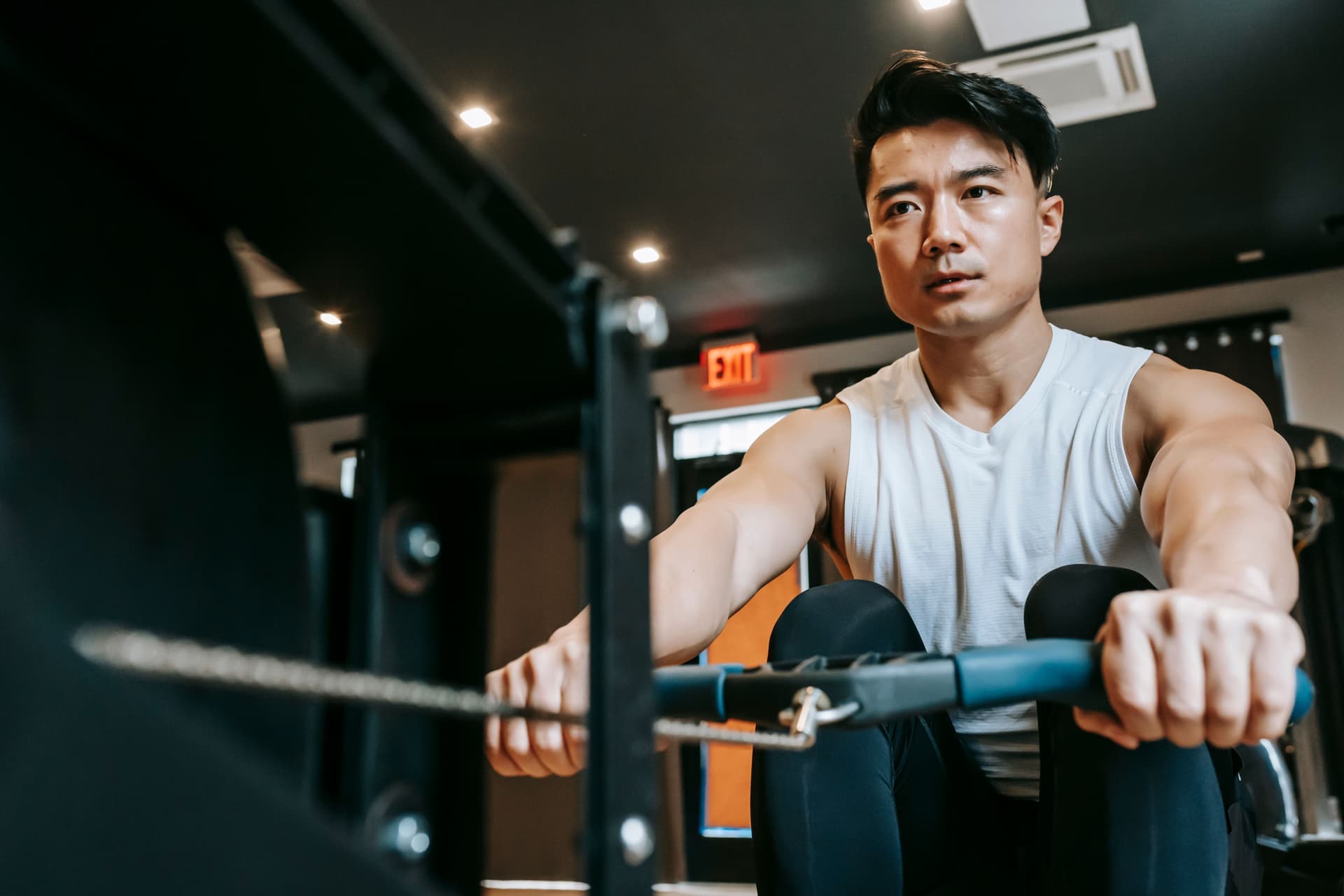
Most comparisons of these two machines are about calorie burn, which is the least useful axis, because both burn plenty and the number depends far more on how hard you work than on which machine you are standing on or sitting in.
The questions that actually decide it — for a home, at least — are about what gets trained, how the movement loads your joints, how much noise it makes, and how much of your room it eats. Here they are, honestly.
1. What gets trained
A stair climber is a lower-body machine. Climbing steps is driven by your glutes, quads, hamstrings and calves, and that is essentially the list. Your upper body stays largely along for the ride, steadying you on the rails. It trains your legs and your cardiovascular system hard, and little else.
A rowing stroke is a genuinely full-body movement — roughly 60% legs, 20% core and back, 20% arms. It is one of very few cardio machines that trains the posterior chain, your back and arms included, rather than leaving them idle. The breakdown is here.
Against that: climbing stairs is a movement you already own, and a clean rowing stroke is one you have to learn. A badly executed stroke is worth less than a competent climb, and done carelessly it can strain your back. The upside is that once you have the sequence, you are training far more muscle per minute.
2. Impact and joint load
Both machines are low-impact in the sense that matters most: neither involves the repeated hard landing of running. Nothing slams into a deck. That already puts both well ahead of a treadmill for anyone protecting their knees.
But there is a real difference underneath that, and it is the single most important one on this page. Stair climbing is weight-bearing. You support your full bodyweight and lift it vertically, step after step, so your knees and hips carry a compressive load throughout — no impact spike, but constant loaded work against gravity.
Rowing is non-weight-bearing. You sit, your feet stay strapped to the footplates, and the seat carries your weight throughout the stroke. Nothing lands and nothing is hoisted against gravity, so the drive comes from your legs without asking your joints to bear your bodyweight while they do it.
For someone choosing home equipment specifically because standing, weight-bearing cardio bothers their knees or hips, that distinction is usually the deciding one: rowing removes even the loaded weight-bearing work that a stair climber keeps. That said, this is general information rather than medical advice — if you have an existing joint or heart condition, talk to a doctor before starting either.
3. Noise
Neither category publishes a decibel figure we would trust, and we are not going to invent one, but the mechanisms differ in a knowable way.
A tall step-mill style climber has a motor and the repeated placement of your full weight on moving steps, which carries downward through a floor much the way footsteps do. Simpler pedal steppers are quieter, but they are still you stepping under load.
A magnetic rowing machine has no motor and no landing at all; the residual noise is the seat rolling on the rail, which a rubber mat largely handles. An air rower is louder — a fan produces a whoosh that carries — but even it has no impact phase transmitting through the ceiling below. More on rowing machine noise here.
4. Floor space, in both dimensions
A rowing machine is long and low. A Concept2 is 96 inches by 24, and a compact magnetic machine is under five feet. In use, a rower takes a long, narrow strip of floor.
A stair climber is the opposite shape: tall and standing, with a substantial footprint that does not shrink. A full step-mill is a large, heavy fixture, and even a home stepper stays standing when you are done with it.
Rowing machines win decisively on storage. A Concept2 separates into two pieces, a WaterRower stands on end in about two square feet, and most magnetic rowers fold. There is no stair climber that disappears between sessions the way a rower does.
Running costs and home practicality
Most rowing machines have no motor at all. A Concept2 runs on two D cells and draws its power from the flywheel while you row; there is no mains cord, no belt to lubricate, and no consumable except, on a water rower, purification tablets. It also asks nothing of you monthly.
Commercial-grade stair climbers are motorized fixtures built for gym floors, with the size, the power draw and the price that implies; simpler home steppers are cheaper but far more limited. For a home, a rowing machine spans everything from a budget magnetic rower up to a premium water machine, and the best-known option in the category needs no electricity and no subscription to work.
Calorie burn, honestly
People reach for this comparison expecting one machine to be the clear winner on calories. It is not that simple. Both are hard cardio, and how much you burn depends far more on how hard and how long you work than on which machine you chose. A relaxed session on either burns modestly; an all-out interval session on either burns a lot.
The more useful difference is what the burn is spread across. On a stair climber the work is concentrated in your legs, so your legs are the limiter and they fatigue first. On a rower the same effort is shared across legs, core, back and arms, which is part of why a hard rowing session feels total-body afterward. If your interest is training more of your body per minute rather than chasing a single calorie figure, that is the number that actually matters.
Where the stair climber wins
Two genuine advantages, and they are not small.
Lower-body and glute emphasis. If your goal is specifically to hammer your legs and glutes with weight-bearing work, a climber does that directly, and the vertical, loaded motion is its own kind of training that rowing does not replicate.
No learning curve.You already know how to climb stairs. You can get a hard session on day one, which is not quite true of rowing — the stroke takes a little practice before the machine gives its best back.
The short answer
For full-body, low-impact cardio at home — training your back and arms as well as your legs, keeping the work off your joints, storing the machine compactly, and paying nothing monthly — a rowing machine, and it is not close.
For someone who specifically wants lower-body, weight-bearing, glute-focused cardio and does not mind a tall standing fixture, a stair climber earns its place.
If a rower is the answer, the benchmark is the Concept2 RowErg — no impact phase, no motor, no consumables, and it splits in half for storage. If your budget is closer to the bottom of the range, a budget magnetic rower like the MERACH Q1S costs a fraction as much, folds away, and still asks nothing of you every month. More on what rowing does for your heart and lungs here.
| Machine | Machine price | Subscription | Year 1 | Year 3 | Year 5 |
|---|---|---|---|---|---|
| Concept2 RowErg | $990 | None | $990 | $990 | $990 |
Machine prices are live from Amazon as of September 13, 2026 and change without notice. Subscription figures are the published month-to-month rates, each cited on the subscriptions page. Totals are machine price plus the monthly rate multiplied by 12, 36 and 60. We do not model electricity, shipping, floor mats or resale value — each would need an assumption we cannot source, and adding them would make the number look more precise while making it less true.
Our pick
Concept2 RowErg
Full-body, non-weight-bearing, low-impact cardio that trains your back and arms as well as your legs, runs on two D cells, needs no subscription and splits in half for storage. If your budget is nearer the bottom of the range, a budget magnetic rower like the MERACH Q1S does the same job for far less.
Price as of September 13, 2026. #ad How we’re funded
Straight answers
Questions people actually ask
Is a rowing machine or a StairMaster better for home cardio?
For most homes, a rowing machine. Rowing is full-body - roughly 60% legs and 40% core, back and arms - against a stair climber's lower-body focus, it is non-weight-bearing so it keeps the load off your joints, it stores far more compactly, and the best-known machines need no subscription. A stair climber wins if you specifically want weight-bearing, glute-focused lower-body work and do not mind a tall standing fixture.
Which is easier on your knees, rowing or a stair climber?
Both avoid the hard landing of running, so both are gentler than a treadmill. The difference is that stair climbing is weight-bearing - you support and lift your full bodyweight up every step, which loads the knees and hips under compression - while rowing is seated and non-weight-bearing, so the seat carries your weight and your joints do not. For protecting the knees specifically, rowing removes even that loaded work. This is general information, not medical advice; talk to a doctor about an existing condition.
Does a stair climber work more muscles than a rowing machine?
No - the reverse. A stair climber is largely a lower-body machine, driven by the glutes, quads, hamstrings and calves, with the upper body mainly steadying you. A rowing stroke is roughly 60% legs, 20% core and back, 20% arms, making it one of the few cardio machines that trains the posterior chain, back and arms included.
Which takes up less space at home, a rower or a stair climber?
A rowing machine is longer in use - up to 96 inches - but far better at disappearing afterward. A Concept2 separates into two pieces, a WaterRower stands on end in about two square feet, and most magnetic rowers fold. A stair climber is a tall, heavy standing fixture that keeps its footprint whether you are using it or not.
Is a rowing machine good cardio if I currently use a StairMaster?
Yes. Rowing raises your heart rate as effectively as stair climbing and adds the upper body and posterior chain that a climber leaves out, all while keeping the work off your joints. The main adjustment is technique - a rowing stroke takes a little practice to do well, where climbing stairs does not - but once the sequence is natural you train more muscle per minute.
Show your working
Sources
- Concept2 — Compare indoor rowers (official specifications)Accessed 2026-07-24. https://www.concept2.com/indoor-rowers/compare
- Concept2 RowErg — published specificationsAccessed 2026-07-24. https://www.amazon.com/dp/B00NH9WEUA?tag=t5fitness-20
- WaterRower Natural — upright storage specificationAccessed 2026-07-24. https://www.amazon.com/dp/B0053BMWWU?tag=t5fitness-20
Keep going
Read next
- Rowing machine vs vertical climberSeated cardio against a standing climb.
- Rowing machine vs treadmillThe other big cardio decision, settled on four practical points.
- Rowing machine vs ellipticalBoth low impact, only one trains your back.
- Best rowing machines for beginnersIf you are switching over from the stairs.
- Rowing machine cardio benefitsWhat the stroke does for your heart and lungs.