Head to head
Concept2 PM3 vs PM5
The screen is the single biggest difference between a cheap used Concept2 and a current one. Here is what each monitor can do, straight from Concept2's own service pages.
We earn a commission if you buy through the links on this page, at no cost to you. It has no effect on what we recommend or the order we recommend it in — we say “skip this one” on machines that pay us the same as the ones we like. How we’re funded.
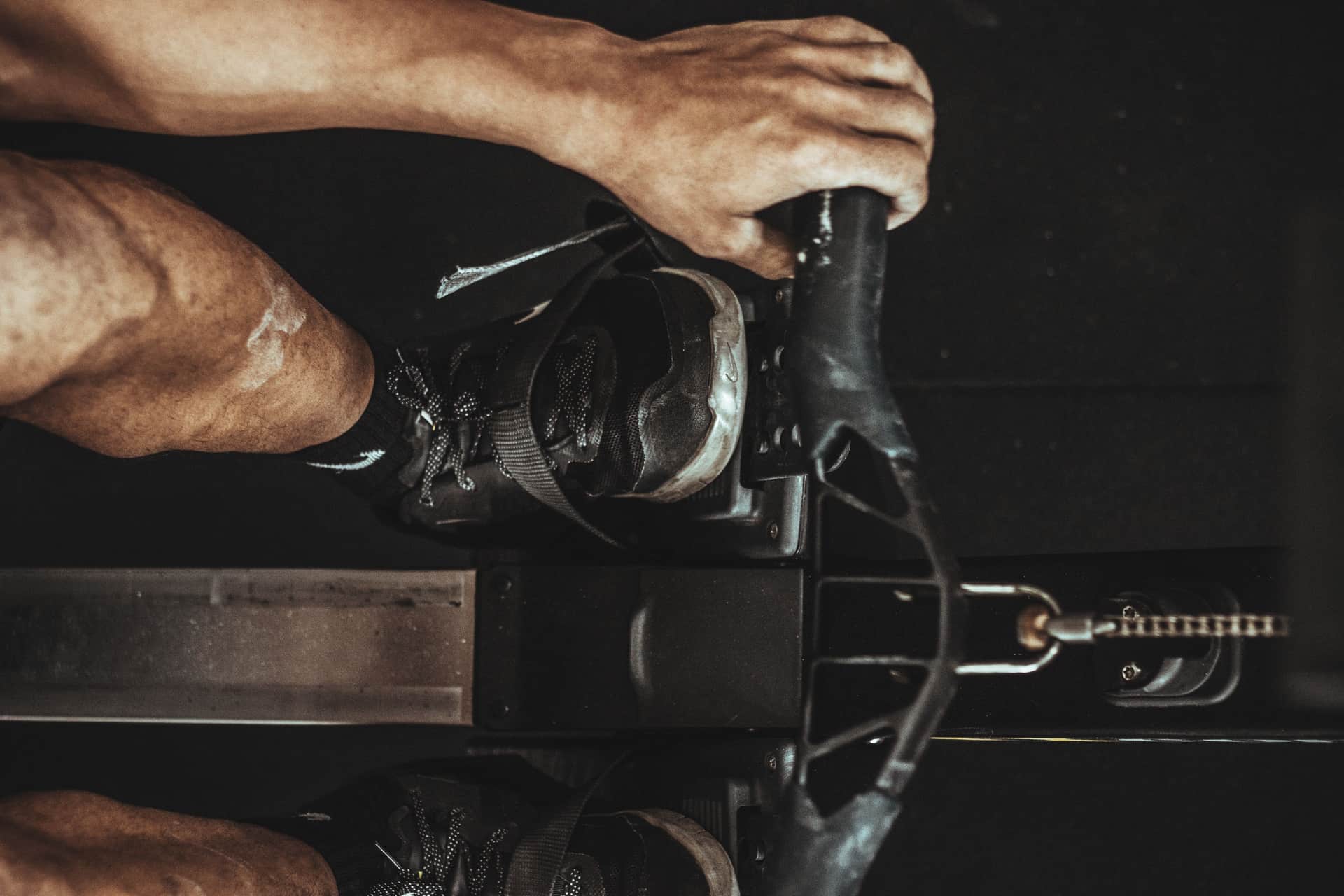
If you are looking at a used Concept2 on a marketplace listing, the monitor on the arm is the most consequential thing in the photograph. The frame barely changed across two decades — the chain, the flywheel and the damper on a 2005 machine are recognizably the same parts as on one built last month. The screen changed completely. A PM3 and a PM5 give you a different relationship with the machine, and the gap between them is most of the reason a fifteen-year-old erg sells for a fraction of a new one.
Here is the short version. Concept2 states that the PM3 was standard on Model D Indoor Rowers from 2003 to 2014, on Dynamic Indoor Rowers from 2010 to 2014 and on SkiErgs from 2009 to 2014, and that it “is no longer available.” The PM5 has been standard on RowErgs and on Model D, Model E and Dynamic Indoor Rowers “from October 2014 to present.” Both monitors take two D cell batteries and both are powered by the machine while you row. Everything that actually divides them is connectivity — and one consequence of that, the free ErgData app, is big enough to decide the question on its own.
1. What each monitor connects to
This is the whole comparison, so take it first. For heart rate, Concept2 says the PM3 is “compatible with Polar heart rate equipment when Concept2 heart rate receiver and cable in use” — a wired receiver, bought separately, for one brand of chest belt. The PM5 does “ANT+ and Bluetooth Smart wireless heart rate monitoring with compatible equipment,” with no receiver and no cable. If you own a modern dual-band strap, it talks to a PM5 out of the box and does not talk to a PM3 at all.
For workout data, the PM3 is “compatible with Concept2 LogCard for storing workout data” — a physical card you carry to a computer. The PM5 is the monitor the phone era is built around. Concept2 is unusually blunt about where that line falls: ErgData, its own free app, is “compatible with the PM5 only,” and it connects over Bluetooth. There is no PM3 workaround, no cable mode, no partial support. A PM3 machine cannot run Concept2’s own app, which also means it cannot feed the third-party apps that pair through the same Bluetooth channel.
The PM4 sits between them and is worth naming because listings mention it. Concept2 says the PM4 was “standard on Model E Indoor Rowers from 2006–2014,” optional on the Model D over the same years, and that it too is “no longer available.” It added LogCard support plus compatibility with Garmin, Suunto and ANT SPORT chest belts, and it still needs the Concept2 receiver and cable for Polar equipment. For practical purposes a PM4 is a PM3 with better strap support: it is on the wrong side of the ErgData line too.
2. What does not change
Nearly everything else. Both monitors show the numbers that matter while you are rowing — pace per 500 m, stroke rate, elapsed time, distance, watts, calories — and both store workouts on the monitor itself. Neither needs mains power; both run on two D cells and are driven by the machine during a row. Crucially, the flywheel, chain, handle and damper sit in the frame rather than in the screen generation, so a well-kept PM3 machine still measures a stroke honestly. A PM3 is not a worse ergometer. It is a worse computer.
That is also why the resistance feel is identical. If you are weighing a used Concept2 against a new one for how it rows rather than for what it syncs, the RowErg versus Model D comparison is the page about the frame, and the damper and drag factor behave the same way whichever screen is bolted on.
3. The number that decides it: the retrofit
Here is the part that changes how you read a used listing. Concept2 states that the PM5 is “retrofittable to all older Concept2 Indoor Rowers and SkiErgs,” and sells the kit itself. On its US shop the PM5 Retrofit Kit, part number 1818 for a Model D, E or Dynamic, is listed at $160.00 and ships as the monitor plus two D cell batteries; Model C, B and A machines take bundles that add the right mounting hardware. We read that page on 20 October 2026, and it is Concept2’s own list figure rather than a street price.
So the honest arithmetic on a PM3 machine is the asking price plus roughly the cost of that kit, if app syncing and wireless heart rate matter to you. Sometimes that still wins by a wide margin — a cheap Model D plus a retrofit is a complete current-generation erg for well under half of new. Sometimes it does not, because the seller has already priced the frame as though the monitor were current. Either way, the retrofit is why a PM3 is a negotiating point rather than a dealbreaker, and why you should never pay a PM5 price for a PM3 machine. How to value a used rower from the live new price is the method we use for exactly this.
4. How to tell which one you are looking at
On a listing photo, go by shape. The PM5 is the current wide-bodied monitor with a row of buttons under the screen and, on most RowErgs, a device holder behind it. The PM3 and PM4 are the older, narrower bodies. If the seller will press buttons for you, Concept2 publishes the definitive check for a PM3: the date code lives under Main Menu > More Options > Utilities > Product ID, where the last four digits are the year and the digits before them are the day of the year. Concept2 also notes that the date code, serial number and hardware version do not change when firmware is updated — so a seller who says it was “updated recently” has not turned a PM3 into anything else.
The frame gives you a second clue, because the monitor generations map onto production years. Concept2 publishes the whole run: Model A 1981–1986, Model B 1986–1993, Model C 1993–July 2003, Model D July 2003–April 2021, Model E August 2006–January 2021, and the RowErg from April 2021 to present — the Model D renamed. The full model-by-model identification guide is here, including what each frame changed.
5. Who should buy which
Buy a PM5 machine — new, or used from October 2014 onward — if you want your rowing on your phone. That covers wireless heart-rate straps, the free ErgData app, the Concept2 online logbook and the third-party apps that pair over Bluetooth. It also covers anyone who simply does not want to be the person installing a monitor on a secondhand machine.
A PM3 machine is the better buy if you row by the numbers on the screen and have no interest in syncing them, or if the saving is large enough that the retrofit sits comfortably inside it. The thing you must not do is buy a PM3 expecting to add an app later for free. You cannot. The only route from a PM3 to ErgData is the retrofit kit above, and it costs real money.
If this comparison has talked you out of the used market altogether, the current machine is the one with a PM5 already on the arm, and our full RowErg write-up has every published figure for it. If your actual question is which third-party app to run once you have a PM5, the rowing app guide covers that side.
Our pick
Concept2 RowErg
A new RowErg arrives with a PM5 already fitted, which ends this entire question. Buy used only when the saving clearly exceeds Concept2's own $160 retrofit figure for a monitor you would otherwise have to add yourself.
Price as of October 21, 2026. #ad How we’re funded
6. The honest caveats
Two things we cannot tell you. Concept2’s monitor service pages list every generation from the PM1 to the PM5 but do not publish production years for the monitors themselves — the years above are the years each monitor shipped as standard on a named machine, which is the figure Concept2 does publish. And we have not bench-tested a PM3 against a PM5 for measurement agreement. Nobody here has rowed these monitors side by side; this page is an argument built from Concept2’s own service documentation, with every figure attributed below.
Straight answers
Questions people actually ask
Is the Concept2 PM3 still good?
As an ergometer, yes. It shows pace, stroke rate, distance, time, watts and calories and stores workouts on the monitor, and the frame it sits on measures a stroke exactly the way a current one does. What it cannot do is connect to a phone: Concept2 says ErgData is compatible with the PM5 only, and the PM3 needs a separate Concept2 receiver and cable even for a Polar heart rate belt.
Can you upgrade a PM3 to a PM5?
Yes. Concept2 says the PM5 is retrofittable to all older Concept2 Indoor Rowers and SkiErgs, and sells the kit. Its US shop lists the PM5 Retrofit Kit, part 1818 for a Model D, E or Dynamic, at $160.00 as the monitor plus two D cell batteries, read 20 October 2026; Model C, B and A machines need bundles that include the correct mounting hardware. Factor that figure into any used price before you agree it.
What years did the Concept2 PM5 come out?
Concept2 states the PM5 has been standard on RowErgs and on Model D, Model E and Dynamic Indoor Rowers from October 2014 to present, and on SkiErgs from September 2014 to present. So a Concept2 indoor rower built from late 2014 onward should have arrived with a PM5 unless somebody changed it.
What is the difference between the PM4 and the PM5?
The PM4 is the in-between generation and it is also discontinued. Concept2 says it was standard on the Model E from 2006 to 2014, works with Garmin, Suunto and ANT SPORT chest belts, supports the LogCard, and still needs the Concept2 receiver and cable for Polar equipment. The PM5 replaces all of that with ANT+ and Bluetooth Smart wireless heart rate, and it is the only monitor ErgData supports.
Does a PM3 work with ErgData or other rowing apps?
No. Concept2 states plainly that ErgData is compatible with the PM5 only, and that PM5s are available as a retrofit for all earlier machines. Because third-party rowing apps pair with a Concept2 over the same Bluetooth connection the PM5 provides, a PM3 machine sits outside that ecosystem until the monitor is replaced.
Show your working
Sources
- Concept2 - PM3 service page (years standard, batteries, LogCard, Polar receiver, date code), read 2026-10-20Accessed 2026-07-24. https://www.concept2.com/service/monitors/pm3
- Concept2 - PM5 service page (October 2014 to present, ANT+ and Bluetooth Smart, retrofittable), read 2026-10-20Accessed 2026-07-24. https://www.concept2.com/service/monitors/pm5
- Concept2 - PM4 service page (standard on Model E 2006-2014, Garmin/Suunto/ANT SPORT belts), read 2026-10-20Accessed 2026-07-24. https://www.concept2.com/service/monitors/pm4
- Concept2 - ErgData, compatible with the PM5 only (read 2026-10-20)Accessed 2026-07-24. https://www.concept2.com/service/software/ergdata
- Concept2 - PM5 Retrofit Kit, part 1818, $160.00 (read 2026-10-20)Accessed 2026-07-24. https://www.concept2.com/product/338
- Concept2 - Indoor rower service index (model production years), read 2026-10-20Accessed 2026-07-24. https://www.concept2.com/service/indoor-rowers
- Concept2 — Compare indoor rowers (official specifications)Accessed 2026-07-24. https://www.concept2.com/indoor-rowers/compare
Keep going
Read next
- Every Concept2 model, in orderModel A to RowErg, with the production years and how to identify each one.
- RowErg vs Model DThe frame side of the same used-market question.
- What a used rower is worthHow to price a PM3 machine from the live new price.
- Concept2 accessories worth buyingDevice holder, seat pad and the parts that actually earn their place.