Head to head
Rowing Machine vs Swimming
These are the two great full-body, low-impact workouts. The real difference is access: one needs a pool, the other lives in your spare room.
We earn a commission if you buy through the links on this page, at no cost to you. It has no effect on what we recommend or the order we recommend it in — we say “skip this one” on machines that pay us the same as the ones we like. How we’re funded.
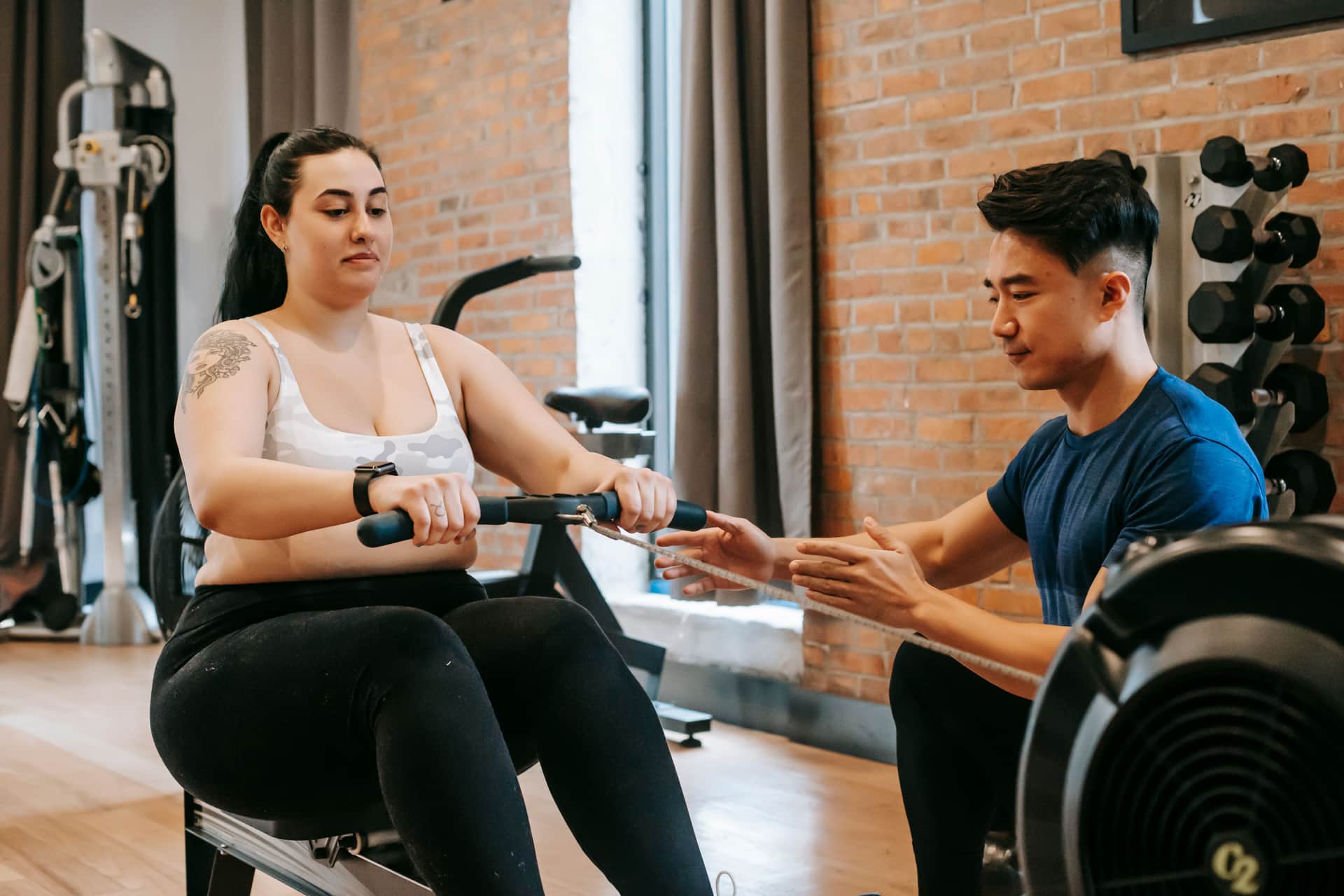
These two get compared because they belong to a very short list: genuinely full-body, genuinely low-impact workouts that are kind to your joints. On the fitness that matters, they are close cousins. The honest difference is not what they do to your body — it is access. One needs a pool. The other lives in your spare room.
That access gap decides this for most people, but it is worth understanding what you would be trading, because swimming has real advantages a machine cannot copy. Here is the honest face-off.
1. Full-body and low-impact — what they share
Swimming and rowing are two of the few cardio options that work nearly all of you at once while sparing your joints. Swimming is famously non-weight-bearing: the water supports you completely, so nothing lands and nothing is compressed. Rowing is non-weight-bearing in its own way — you sit, the seat carries your weight, your feet stay strapped in, and the drive comes from your legs without an impact spike. Neither involves the pounding of running, and both raise your heart rate as high as you are willing to push. If low-impact, full-body cardio is the brief, both pass with room to spare.
2. Muscles worked
Both are friendly to the posterior chain — the back-of-body muscles most machines ignore — but they emphasize different things. Swimming is upper-body-led for most strokes: lats, shoulders, chest and core do the bulk of the work, with the legs kicking for propulsion and balance. It is wonderful for the shoulders and back, provided the shoulders are healthy.
Rowing is leg-drive dominant: roughly 60% legs, 20% core and back, 20% arms. The power starts from the floor through your legs and finishes with the back and arms, so it loads the big lower-body muscles harder than swimming does while still training the upper back. The full muscle breakdown is here. Broadly: swimming leans upper, rowing leans lower, and both hit far more of you than a treadmill or a bike.
3. Access, cost and consistency
This is the section that actually decides it. Swimming requires a pool, and everything that comes with one: a membership or entry fee, a commute, opening hours, lane availability, and the whole friction of a bag, a change and a shower. None of that is a dealbreaker if you have a good pool nearby and enjoy the ritual — but each step is a chance for the session to not happen.
A rowing machine removes the access problem entirely. It is a one-time purchase that then sits in your home, available at any hour, in any weather, with zero commute and no recurring fee on the best-known machines. Over a year, the exercise you can start in ten seconds usually beats the one that needs a drive and a locker room — consistency is where a home machine quietly wins. If you want to weigh a buy-once rower against ongoing pool fees, our rowing machine roundups lay out the options from budget to premium, and the cardio-benefits guide covers what you get for it.
4. Skill and joints
Swimming is the more technical of the two by a wide margin. Efficient freestyle takes real practice, and poor technique does not just slow you down — it can load the shoulders in a way that aggravates them, which is the most common swimming complaint. If you are not already a comfortable swimmer, the learning curve is steep enough to be its own barrier.
Rowing has a learning curve too, but a gentler one: the stroke is legs, then back, then arms, and the reverse on the way in. It takes an afternoon to grasp and a couple of weeks to own. The main caution is your lower back — row with a rounded back and yank with your arms and you can strain it, so form matters. Both are low-impact, but they ask you to protect different things: swimming your shoulders, rowing your lower back. This is general information rather than medical advice — if you have an existing shoulder, back or heart condition, talk to a doctor before starting either.
5. Can you combine them
Yes, and they pair unusually well. Swimming and rowing share the low-impact, full-body character but split the emphasis — upper versus lower, water versus land — so alternating them gives you variety without adding joint stress. A common pattern is to swim when you can get to the pool and row on the days you cannot, which is really just another way of saying the machine covers the gaps the pool leaves. If you like the low-impact idea but want to see the other home options in that lane, rowing versus an elliptical is the next comparison to read.
The short answer
If you have easy pool access and you love the water, swimming is a superb full-body, low-impact workout and there is no reason to talk you out of it. For nearly everyone else, the deciding factor is not the exercise — it is the pool, and the friction of getting to it. A rowing machine gives you the same full-body, low-impact, joint-sparing workout without the membership, the commute or the opening hours.
If a home rower is the answer, the benchmark is the Concept2 RowErg: full-body, non-weight-bearing, no motor, no subscription, and it splits in half for storage. If your budget is nearer the bottom of the range, a budget magnetic rower like the MERACH Q1S does the same low-impact job for a fraction of the price and still folds away.
| Machine | Machine price | Subscription | Year 1 | Year 3 | Year 5 |
|---|---|---|---|---|---|
| Concept2 RowErg | $990 | None | $990 | $990 | $990 |
Machine prices are live from Amazon as of September 14, 2026 and change without notice. Subscription figures are the published month-to-month rates, each cited on the subscriptions page. Totals are machine price plus the monthly rate multiplied by 12, 36 and 60. We do not model electricity, shipping, floor mats or resale value — each would need an assumption we cannot source, and adding them would make the number look more precise while making it less true.
Our pick
Concept2 RowErg
It removes swimming's access problem entirely - the same full-body, non-weight-bearing, low-impact workout, available at home with no pool, no membership and no subscription, and it splits in half for storage. If budget is the constraint, a magnetic rower like the MERACH Q1S does the same job for far less.
Price as of September 14, 2026. #ad How we’re funded
Straight answers
Questions people actually ask
Is rowing as good as swimming for a full-body workout?
Very close. Both are among the few genuinely full-body, low-impact workouts, and both spare your joints. The emphasis differs - swimming leans upper-body, rowing leans lower-body with its leg-driven stroke - but each trains far more of you than a treadmill or bike. For most people the deciding factor is access, not the workout itself.
Which is easier on the joints, rowing or swimming?
Both are excellent - neither involves the impact of running. Swimming is non-weight-bearing because the water supports you; rowing is non-weight-bearing because you sit and the seat carries your weight. They ask you to protect different things: swimming loads the shoulders, rowing loads the lower back if your form is poor. This is general information, not medical advice; talk to a doctor about an existing condition.
Can a rowing machine replace swimming?
For the fitness, largely yes - a rower delivers the same full-body, low-impact, high-heart-rate workout without needing a pool. What it cannot replace is the water itself: the feel of swimming, the shoulder-led movement pattern, and the specific skill. But if the reason you are considering a machine is that pool access is inconvenient, a rower solves exactly that.
Do I need a pool to get a swimming-style workout at home?
No. A rowing machine gives you the same full-body, low-impact, joint-sparing cardio at home, with no pool, no membership and no commute. It is the closest common home machine to swimming in character - full-body and easy on the joints - which is why people who cannot get pool time regularly often switch to a rower.
Show your working
Sources
- Concept2 — Compare indoor rowers (official specifications)Accessed 2026-07-24. https://www.concept2.com/indoor-rowers/compare
- Concept2 RowErg - published specificationsAccessed 2026-07-24. https://www.amazon.com/dp/B00NH9WEUA?tag=t5fitness-20
Keep going